THE ADVENTURE COLLECTIVE® · Independent discovery and booking for outdoor travel

Ride along Bali’s black-sand shore at Saba Bay for a one-hour guided coastal loop that passes Segara Wilis Temple and bamboo plantations. Expect steady horses, ocean views of Nusa Penida, hotel pickup, and clear safety rules.
Ride along Bali’s black-sand shore at Saba Bay for a one-hour guided coastal loop that passes Segara Wilis Temple and bamboo plantations. Expect steady horses, ocean views of Nusa Penida, hotel pickup, and clear safety rules.
The sun presses warm against your neck as the tide hisses at the edge of the black sand. On horseback, riders move in a loose line along Saba Bay, mane and sea breeze answering one another while Nusa Penida sits like a hulking island on the horizon. Guides call instructions softly; the animals respond with steady, accustomed gaits.
Verified experiences and guided adventures in the surrounding area.
Operated by Telaga Waja Rafting Bali · Seminyak, Bali
The sun presses warm against your neck as the tide hisses at the edge of the black sand. On horseback, riders move in a loose line along Saba Bay, mane and sea breeze answering one another while Nusa Penida sits like a hulking island on the horizon. Guides call instructions softly; the animals respond with steady, accustomed gaits.
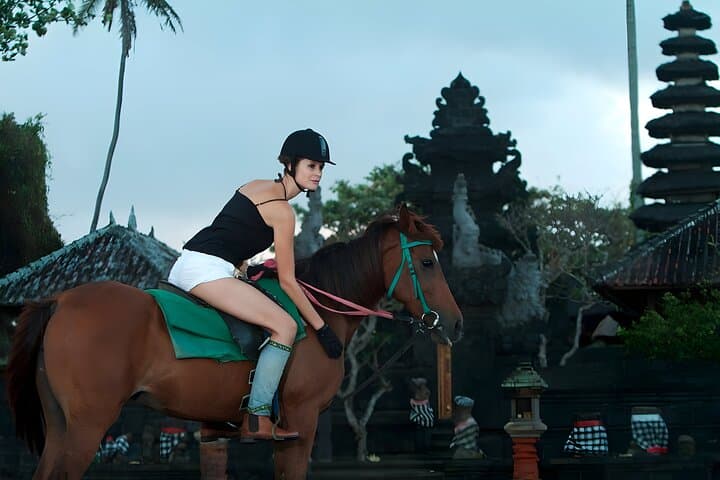
Saba Bay’s dark shoreline is a product of Bali’s volcanic geology—sand ground from lava flows and coral fragments—framing a coast long used by fishing villages and temple communities. Segara Wilis Temple sits near the ride’s path, a modest seaside shrine where offerings are still made to ocean spirits. The trail threads past bamboo stands and alang-alang grass, plants that stabilize dunes and give the area its quiet, rustling soundtrack.
Practically, the experience is an accessible coastal loop: a one-hour guided ride covering roughly 10 km of packed black sand and short plantation tracks. Riders receive a safety briefing, helmets, and basic instruction; hosts provide hotel pickup and a private vehicle transfer. Operators enforce a 90 kg weight limit and age range (5–60 years) and advise those with spinal, cardiac conditions or pregnancy to refrain.
Plan for sun and spray—sunscreen, secure footwear, and a small water bottle are the baseline. Morning or late-afternoon departures keep heat low and light flattering for photos. Respect local customs at the temple, keep distance from nesting shorebirds, and choose operators who prioritize horse welfare and responsible beach use. The ride is straightforward but vivid: the ocean pushes, the horses answer, and Bali’s east coast keeps its steady, elemental pace.
easy.
1 hour.
Suitable for most fitness levels; riders should be steady in the saddle and able to mount and dismount with minimal help.
No—rides are suitable for beginners; guides give a safety briefing and basic instruction before departure.
Operators typically enforce a maximum weight of 90 kg and allow participants aged 5 to 60 years for safety reasons.
Yes—private, air-conditioned pickup and drop-off from many hotels in the main tourist areas is included in the package.
Yes—operators may cancel due to heavy rain, rough seas, or unsafe footing; they usually offer refunds for weather cancellations.
The east Bali coastline reflects volcanic origins and long-standing fishing and temple traditions; small seaside shrines like Segara Wilis remain active community sites.
Choose operators that practice responsible horse care and avoid rides that push animals during high tide or crowded tourist periods; respect nesting shorebirds and dune vegetation.
Telaga Waja Rafting Bali operates guided outdoor trips and adventures with an emphasis on safety, stewardship, and memorable experiences.
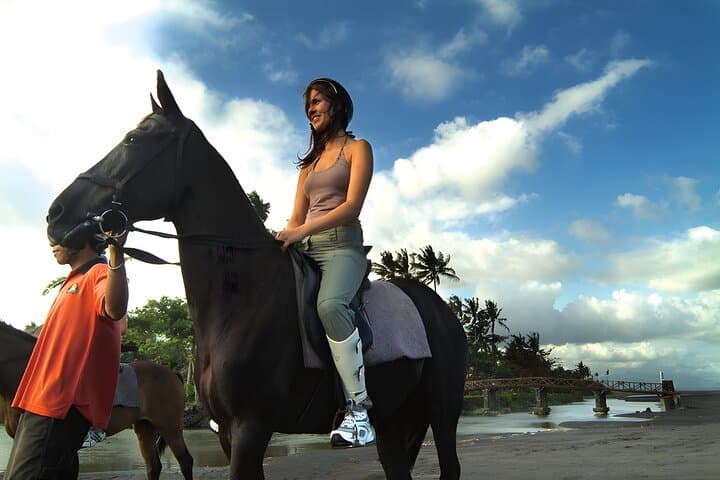

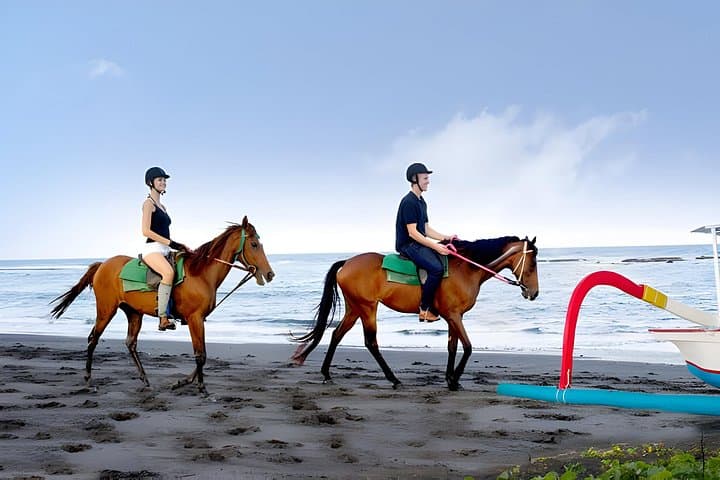
The sun presses warm against your neck as the tide hisses at the edge of the black sand. On horseback, riders move in a loose line along Saba Bay, mane and sea breeze answering one another while Nusa Penida sits like a hulking island on the horizon. Guides call instructions softly; the animals respond with steady, accustomed gaits.
The sun presses warm against your neck as the tide hisses at the edge of the black sand. On horseback, riders move in a loose line along Saba Bay, mane and sea breeze answering one another while Nusa Penida sits like a hulking island on the horizon. Guides call instructions softly; the animals respond with steady, accustomed gaits.
Saba Bay’s dark shoreline is a product of Bali’s volcanic geology—sand ground from lava flows and coral fragments—framing a coast long used by fishing villages and temple communities. Segara Wilis Temple sits near the ride’s path, a modest seaside shrine where offerings are still made to ocean spirits. The trail threads past bamboo stands and alang-alang grass, plants that stabilize dunes and give the area its quiet, rustling soundtrack.
Practically, the experience is an accessible coastal loop: a one-hour guided ride covering roughly 10 km of packed black sand and short plantation tracks. Riders receive a safety briefing, helmets, and basic instruction; hosts provide hotel pickup and a private vehicle transfer. Operators enforce a 90 kg weight limit and age range (5–60 years) and advise those with spinal, cardiac conditions or pregnancy to refrain.
Plan for sun and spray—sunscreen, secure footwear, and a small water bottle are the baseline. Morning or late-afternoon departures keep heat low and light flattering for photos. Respect local customs at the temple, keep distance from nesting shorebirds, and choose operators who prioritize horse welfare and responsible beach use. The ride is straightforward but vivid: the ocean pushes, the horses answer, and Bali’s east coast keeps its steady, elemental pace.