THE ADVENTURE COLLECTIVE® · Independent discovery and booking for outdoor travel

A full-day coastal hike on Sardinia’s red-porphyry shore that links a dramatic rock window, a Bronze Age nuraghe, and natural mountain pools. Expect rocky singletrack, a packed lunch break, and chances to swim in carved basins.
A full-day coastal hike on Sardinia’s red-porphyry shore that links a dramatic rock window, a Bronze Age nuraghe, and natural mountain pools. Expect rocky singletrack, a packed lunch break, and chances to swim in carved basins.
Salt-laden wind pushes at the cliffs as you climb from the shore toward Sa Perda Stampada, a sculpted coastal rock with a window framing Coccorrocci beach. The trail moves between low scrub and ferruginous porphyry, drops to volcanic sands at Cala Niedda, then climbs again toward Punta Cartucceddu, where the path opens onto shallow, eroded basins—the Piscine di Monte Ferru—pools carved smooth by centuries of water and red stone.
Verified experiences and guided adventures in the surrounding area.
Operated by Go Comida - Experience Sardinia · Buggerru, Sardinia
Salt-laden wind pushes at the cliffs as you climb from the shore toward Sa Perda Stampada, a sculpted coastal rock with a window framing Coccorrocci beach. The trail moves between low scrub and ferruginous porphyry, drops to volcanic sands at Cala Niedda, then climbs again toward Punta Cartucceddu, where the path opens onto shallow, eroded basins—the Piscine di Monte Ferru—pools carved smooth by centuries of water and red stone.
This route threads human history and hard geology. A short diversion brings you to Nuraghe Aleri, a tholos structure dating roughly to 1500–1200 BC with an uncommon five-lobed plan, evidence of Sardinia’s Bronze Age communities. The red porphyry here records ancient volcanic activity; streams and waves did the slow work of sculpting the pools you’ll dip into.
Expect 10–12 km of mixed coastal singletrack and rocky scraping, roughly 350–450 m of cumulative ascent across the day, and several steep sections where hands-on scrambling helps your footing. The terrain alternates packed earth, loose scree and flat rock slabs—sturdy boots and poles will pay dividends.
Practical rhythm: start early to avoid heat, carry 2–3 liters of water, a packed lunch, and swim kit for quick refreshes in the pools. Respect archaeological sites—no climbing on Nuraghe masonry—and pack out all waste. Weather can swing quickly near the shore; a light waterproof and sun protection are both essential. Done right, this is a full-day coastal hike that mixes seaside drama, Bronze Age stones, and the quiet reward of natural mountain pools.
moderate.
8–10 hours.
Moderate fitness with the ability to handle several hours of hiking, some sustained climbs and short scrambles.
The full experience is a full-day outing (8–10 hours including breaks and transfers); expect 10–12 km of walking with 350–450 m of cumulative ascent—moderate difficulty with some steep sections.
Yes, the Piscine di Monte Ferru are popular for quick dips—water can be cool and sometimes deep in spots, so assess conditions before entering.
There are no formal facilities on the trail; bring your own food, water, and a small first-aid kit—toilets and shops are only in nearby towns.
Children used to hiking may manage parts of the trail, but exposed rocks and scrambling sections make it less suitable for very young kids or those with limited mobility.
Nuraghe Aleri is a tholos-style Bronze Age tower (c.1500–1200 BC) with an irregular five-lobed layout, reflecting local prehistoric settlement patterns.
Trails run through sensitive coastal and archaeological zones—stay on marked paths, pack out trash, and avoid disturbing vegetation or ruins.
Go Comida - Experience Sardinia operates guided outdoor trips and adventures with an emphasis on safety, stewardship, and memorable experiences.
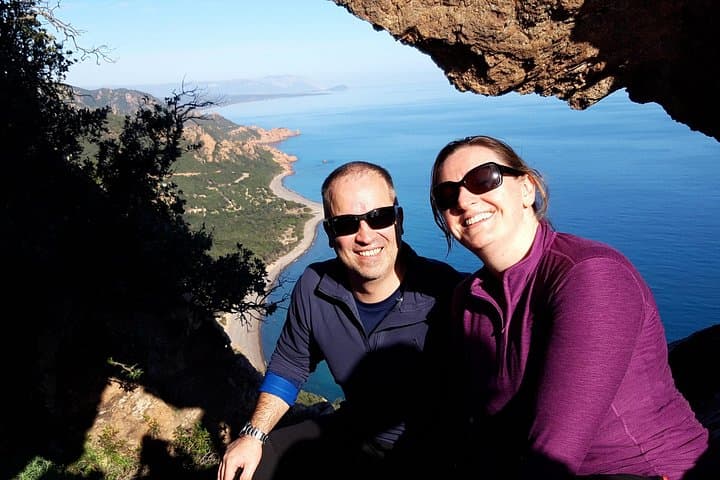
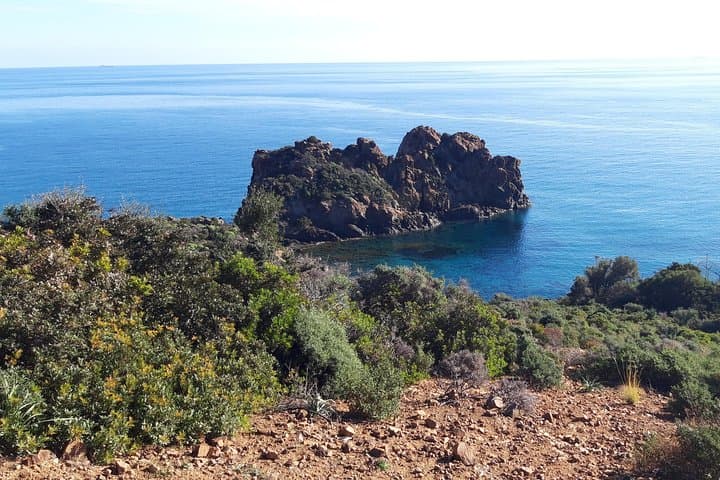
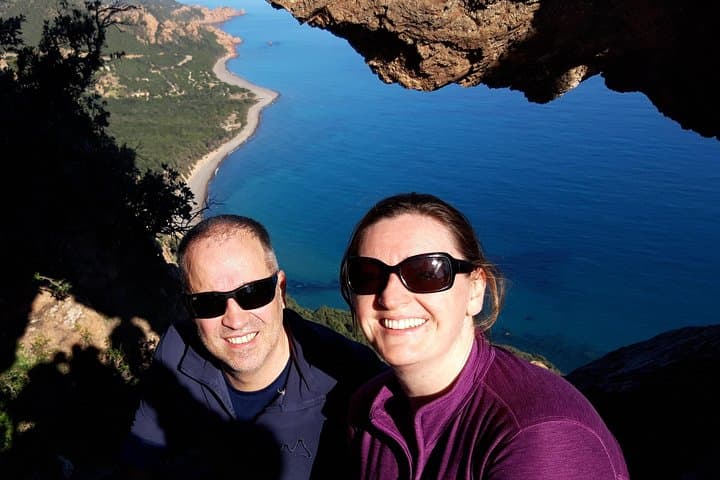
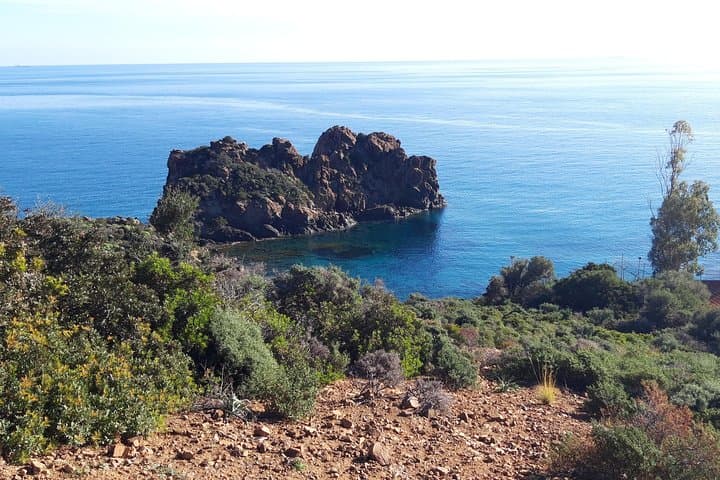
Salt-laden wind pushes at the cliffs as you climb from the shore toward Sa Perda Stampada, a sculpted coastal rock with a window framing Coccorrocci beach. The trail moves between low scrub and ferruginous porphyry, drops to volcanic sands at Cala Niedda, then climbs again toward Punta Cartucceddu, where the path opens onto shallow, eroded basins—the Piscine di Monte Ferru—pools carved smooth by centuries of water and red stone.
Salt-laden wind pushes at the cliffs as you climb from the shore toward Sa Perda Stampada, a sculpted coastal rock with a window framing Coccorrocci beach. The trail moves between low scrub and ferruginous porphyry, drops to volcanic sands at Cala Niedda, then climbs again toward Punta Cartucceddu, where the path opens onto shallow, eroded basins—the Piscine di Monte Ferru—pools carved smooth by centuries of water and red stone.
This route threads human history and hard geology. A short diversion brings you to Nuraghe Aleri, a tholos structure dating roughly to 1500–1200 BC with an uncommon five-lobed plan, evidence of Sardinia’s Bronze Age communities. The red porphyry here records ancient volcanic activity; streams and waves did the slow work of sculpting the pools you’ll dip into.
Expect 10–12 km of mixed coastal singletrack and rocky scraping, roughly 350–450 m of cumulative ascent across the day, and several steep sections where hands-on scrambling helps your footing. The terrain alternates packed earth, loose scree and flat rock slabs—sturdy boots and poles will pay dividends.
Practical rhythm: start early to avoid heat, carry 2–3 liters of water, a packed lunch, and swim kit for quick refreshes in the pools. Respect archaeological sites—no climbing on Nuraghe masonry—and pack out all waste. Weather can swing quickly near the shore; a light waterproof and sun protection are both essential. Done right, this is a full-day coastal hike that mixes seaside drama, Bronze Age stones, and the quiet reward of natural mountain pools.