THE ADVENTURE COLLECTIVE® · Independent discovery and booking for outdoor travel

Join a private, hands-on forestry tour on the flanks of Mt. Aso to learn cedar management from a local lumberjack, eat home-cooked farmhouse food, and visit a working mill and woodshop. Expect active fieldwork, meaningful local interaction, and a deep dive into Japan’s rural timber culture.
Join a private, hands-on forestry tour on the flanks of Mt. Aso to learn cedar management from a local lumberjack, eat home-cooked farmhouse food, and visit a working mill and woodshop. Expect active fieldwork, meaningful local interaction, and a deep dive into Japan’s rural timber culture.
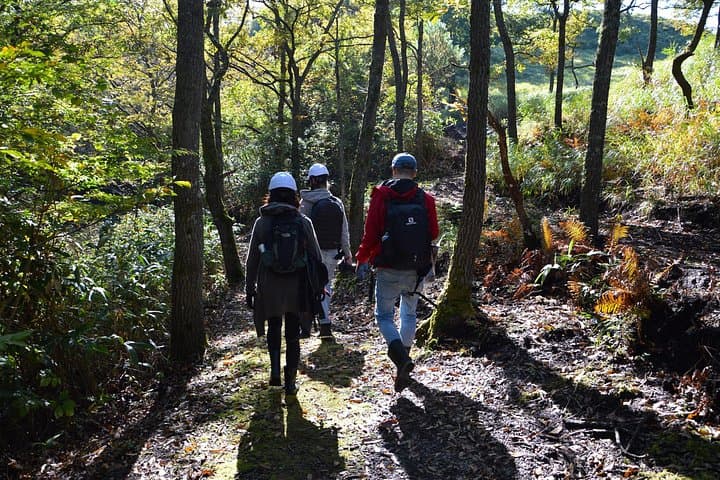
The morning fog lifts off Aso’s slopes and the scent of fresh-cut cedar drifts through narrow mountain roads. You step from an air-conditioned van and follow a local guide into centuries-old cedar stands, where sunlight slices between trunks and the forest floor hums with moss and insect life.
Verified experiences and guided adventures in the surrounding area.
Operated by Satoyama Journey · Minamioguni, Kumamoto Prefecture
The morning fog lifts off Aso’s slopes and the scent of fresh-cut cedar drifts through narrow mountain roads. You step from an air-conditioned van and follow a local guide into centuries-old cedar stands, where sunlight slices between trunks and the forest floor hums with moss and insect life.
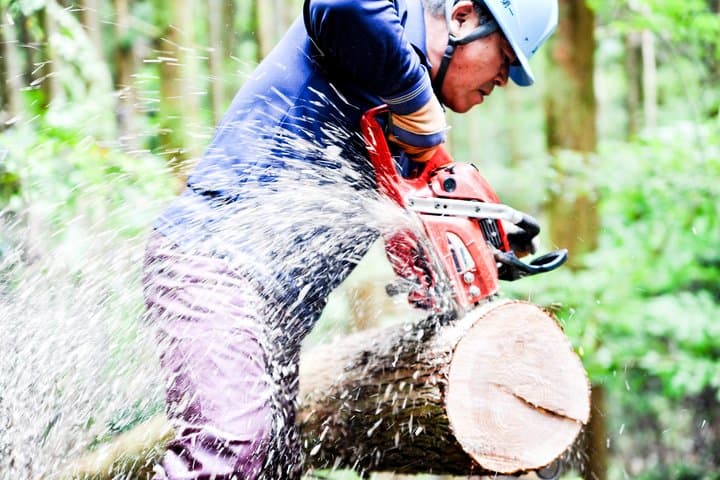
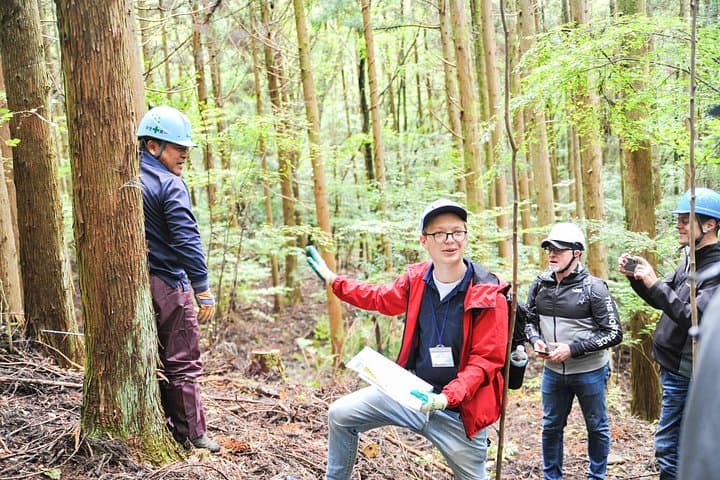
This tour places you in the practical heart of Japan’s forestry culture: hands-on work with a local lumberjack, demonstrations of tree felling and log construction, and a close look at a small-town lumber mill. Geologically, you are on the flanks of the Aso caldera—black volcanic soil and rolling grasslands nearby have shaped a landscape where farming, forestry, and human settlement have adapted over generations. Culturally, cedar (sugi) is both utilitarian and symbolic here; planted and tended for timber and ritual use, these trees tell a story of post-war forestry practices and modern challenges from imported timber.
You’ll visit two family-run farmhouses for a locally sourced kaiseki-style lunch and end at a woodshop making aroma candles from cedar leaf oil. Conversation with villagers is central: expect warm, unscripted interaction rather than a staged performance.
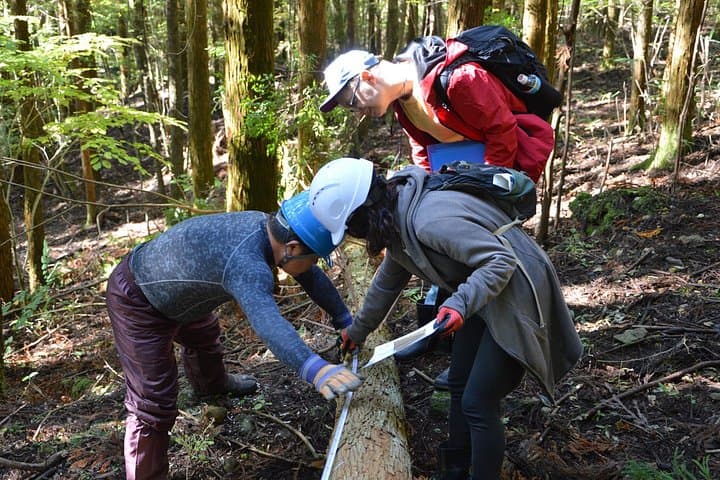
Practical notes: this is a private, roughly 6½-hour experience with moderate physical demands—short uphill walks, uneven forest terrain, and hands-on tasks. Wear sturdy shoes, bring layered clothing and rain protection, and carry water and sunscreen. The guide provides local transport between sites; the meeting point is typically in Minamioguni/Aso area. The tour is an excellent choice for travelers who want immersive cultural exchange alongside outdoor, tactile learning.
moderate.
6–7 hours.
Moderate fitness; comfortable walking on uneven ground and short uphill sections, able to stand and participate in light physical tasks.
The day involves several short hikes and hands-on forestry tasks; travelers should be in moderate physical condition and able to walk on uneven ground.
Older children who can walk and follow safety instructions typically enjoy the experience; infants must sit on laps and the operator notes physical limits for young children.
Guides are local and often provide basic English; confirm language needs at booking as interpretation levels may vary.
The tour can be canceled for poor weather; the policy allows full refund if canceled 24 hours in advance or by the operator for unsafe conditions.
The Aso foothills have been managed for centuries; post-war cedar planting transformed the landscape and sustained local economies until global timber markets shifted supply chains.
Active forest tending is crucial here—sustainable practices and local stewardship aim to balance timber needs with biodiversity and erosion control.
Satoyama Journey operates guided outdoor trips and adventures with an emphasis on safety, stewardship, and memorable experiences.
The morning fog lifts off Aso’s slopes and the scent of fresh-cut cedar drifts through narrow mountain roads. You step from an air-conditioned van and follow a local guide into centuries-old cedar stands, where sunlight slices between trunks and the forest floor hums with moss and insect life.
The morning fog lifts off Aso’s slopes and the scent of fresh-cut cedar drifts through narrow mountain roads. You step from an air-conditioned van and follow a local guide into centuries-old cedar stands, where sunlight slices between trunks and the forest floor hums with moss and insect life.
This tour places you in the practical heart of Japan’s forestry culture: hands-on work with a local lumberjack, demonstrations of tree felling and log construction, and a close look at a small-town lumber mill. Geologically, you are on the flanks of the Aso caldera—black volcanic soil and rolling grasslands nearby have shaped a landscape where farming, forestry, and human settlement have adapted over generations. Culturally, cedar (sugi) is both utilitarian and symbolic here; planted and tended for timber and ritual use, these trees tell a story of post-war forestry practices and modern challenges from imported timber.
You’ll visit two family-run farmhouses for a locally sourced kaiseki-style lunch and end at a woodshop making aroma candles from cedar leaf oil. Conversation with villagers is central: expect warm, unscripted interaction rather than a staged performance.
Practical notes: this is a private, roughly 6½-hour experience with moderate physical demands—short uphill walks, uneven forest terrain, and hands-on tasks. Wear sturdy shoes, bring layered clothing and rain protection, and carry water and sunscreen. The guide provides local transport between sites; the meeting point is typically in Minamioguni/Aso area. The tour is an excellent choice for travelers who want immersive cultural exchange alongside outdoor, tactile learning.