THE ADVENTURE COLLECTIVE® · Independent discovery and booking for outdoor travel

Spend a day beyond Barcelona’s bustle exploring Rupit’s stone lanes, Besalú’s Romanesque bridge and the basalt ridge of Castellfollit de la Roca. This full‑day private tour balances history, geology and local gastronomy with easy walking through preserved medieval towns.
Spend a day beyond Barcelona’s bustle exploring Rupit’s stone lanes, Besalú’s Romanesque bridge and the basalt ridge of Castellfollit de la Roca. This full‑day private tour balances history, geology and local gastronomy with easy walking through preserved medieval towns.
Morning light leaves Barcelona behind and the roads open into high, folded countryside: oak and pine give way to basalt cliffs and stone streets where medieval masonry still leans against the sky.
Verified experiences and guided adventures in the surrounding area.
Operated by Antonio Falcon · Barcelona, Catalonia
Morning light leaves Barcelona behind and the roads open into high, folded countryside: oak and pine give way to basalt cliffs and stone streets where medieval masonry still leans against the sky.
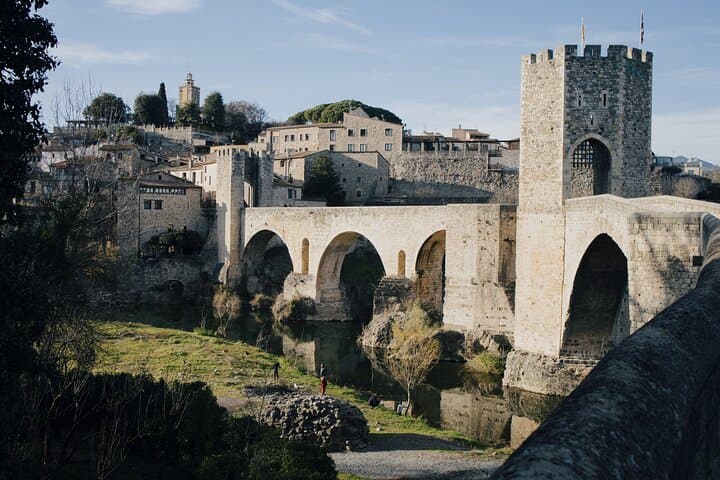
The day unfolds as a study in continuity. Rupit greets visitors with narrow lanes, a 16th–18th century streetscape and a suspension bridge that channels the village’s slow pace. Nearby the Sau reservoir, when water levels drop, reveals the spire and roofs of the submerged Sant Romà de Sau — a visible consequence of changing climate and water management. Castellfollit de la Roca perches on a razor of basalt formed by ancient volcanic flows about 200,000 years ago; its cliff-built facades reflect that raw geology. Besalú closes the loop with a photogenic Romanesque bridge and one of Spain’s best-preserved mikve, reminders of the town’s medieval political and commercial role and its once-thriving Jewish community.
Culturally the route is as much about tastes and routines as stones: Vic’s market and cured meats (fuet, llonganissa) show regional foodways still in practice. The guide emphasizes living traditions — bakeries, pastry workshops and small producers — so plan for short stops to sample and shop.
Practical edge: this is a full 10‑hour private day trip with easy walking in towns but uneven cobbles and occasional short climbs. Wear sturdy shoes, layer for variable mountain-to-coast weather, bring water and small cash for local vendors. Start early in summer, respect private properties and follow local signs near sensitive sites like Sau; doing so keeps these villages welcoming for future visitors.
easy.
10 hours.
Suitable for most fitness levels; expect short walks on uneven cobbles and brief climbs in village centers
The tour is a full 10‑hour private day trip with driving between sites and easy-paced walking at each town (short sessions of 30–90 minutes).
Walking is gentle but cobbles and short steep sections can be challenging; children are welcome but strollers may be impractical—notify the guide in advance for accommodations.
Yes—stops in Vic, Rupit and Besalú include time for tasting local products and a sit‑down lunch; bring small cash for market purchases.
Visibility depends on reservoir levels; at low water part of the old village and the church tower can be seen from viewpoints, but access is limited and managed locally.
Besalú was a medieval county seat with significant trade and a long-standing Jewish quarter; Rupit preserves rural Catalan domestic architecture from the 16th–18th centuries.
The Sau reservoir’s changing levels illustrate regional water stress; visitors can support local conservation by following paths, limiting waste and buying from local producers.
Antonio Falcon operates guided outdoor trips and adventures with an emphasis on safety, stewardship, and memorable experiences.
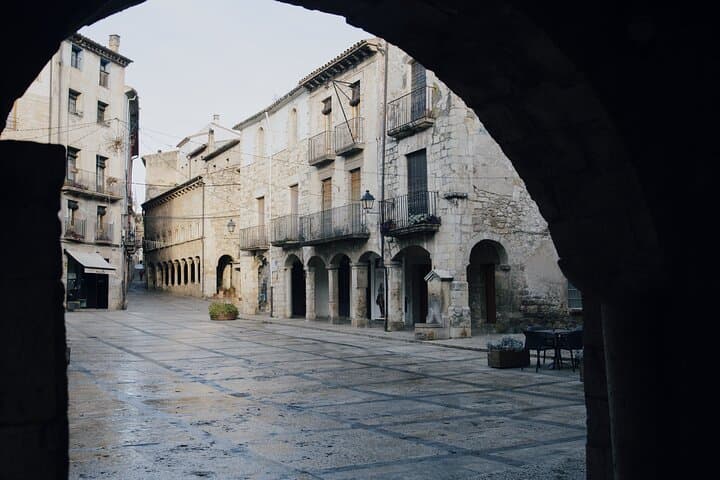
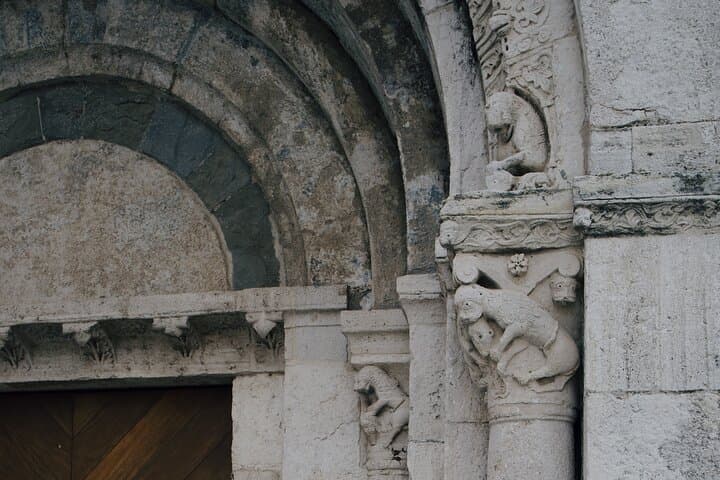
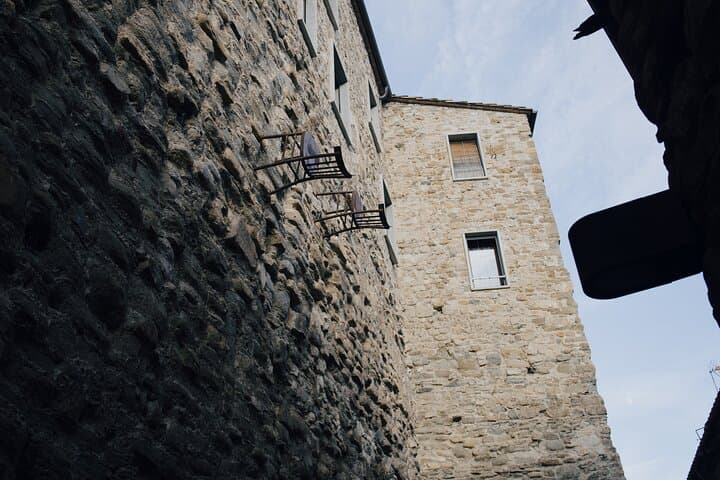
Morning light leaves Barcelona behind and the roads open into high, folded countryside: oak and pine give way to basalt cliffs and stone streets where medieval masonry still leans against the sky.
Morning light leaves Barcelona behind and the roads open into high, folded countryside: oak and pine give way to basalt cliffs and stone streets where medieval masonry still leans against the sky.
The day unfolds as a study in continuity. Rupit greets visitors with narrow lanes, a 16th–18th century streetscape and a suspension bridge that channels the village’s slow pace. Nearby the Sau reservoir, when water levels drop, reveals the spire and roofs of the submerged Sant Romà de Sau — a visible consequence of changing climate and water management. Castellfollit de la Roca perches on a razor of basalt formed by ancient volcanic flows about 200,000 years ago; its cliff-built facades reflect that raw geology. Besalú closes the loop with a photogenic Romanesque bridge and one of Spain’s best-preserved mikve, reminders of the town’s medieval political and commercial role and its once-thriving Jewish community.
Culturally the route is as much about tastes and routines as stones: Vic’s market and cured meats (fuet, llonganissa) show regional foodways still in practice. The guide emphasizes living traditions — bakeries, pastry workshops and small producers — so plan for short stops to sample and shop.
Practical edge: this is a full 10‑hour private day trip with easy walking in towns but uneven cobbles and occasional short climbs. Wear sturdy shoes, layer for variable mountain-to-coast weather, bring water and small cash for local vendors. Start early in summer, respect private properties and follow local signs near sensitive sites like Sau; doing so keeps these villages welcoming for future visitors.