THE ADVENTURE COLLECTIVE® · Independent discovery and booking for outdoor travel

A one-hour guided run from Logan Circle through the National Mall, this tour pairs steady pavement with landmark views and local storytelling. Ideal for runners who want history, fast photo stops, and an urban course that moves.
A one-hour guided run from Logan Circle through the National Mall, this tour pairs steady pavement with landmark views and local storytelling. Ideal for runners who want history, fast photo stops, and an urban course that moves.
The city breathes through pavement and stone as you clip past rowhouses and into the open geometry of the National Mall. Starting outside the St. Regis by Logan Circle, the group peels off into L'Enfant's axial plan — avenues that feel designed to keep you moving. The Washington Monument rises ahead like a spool of history; the Capitol sits patient to the east while the Lincoln Memorial looks back across the Reflecting Pool.
Verified experiences and guided adventures in the surrounding area.
Operated by Go! Running Tours · Washington, DC
The city breathes through pavement and stone as you clip past rowhouses and into the open geometry of the National Mall. Starting outside the St. Regis by Logan Circle, the group peels off into L'Enfant's axial plan — avenues that feel designed to keep you moving. The Washington Monument rises ahead like a spool of history; the Capitol sits patient to the east while the Lincoln Memorial looks back across the Reflecting Pool.
This route threads 19th- and 20th-century civic ambition with quieter chapters: the Tidal Basin's low, echoing water and the Jefferson and Martin Luther King Jr. memorials' carved phrases. Geology here is subtle — reclaimed river plain and engineered landfill shaping the mall's flat, fast surfaces — and the monuments are civic markers of wars, ideals, and design debates that reshaped the capital.
Expect mostly flat, paved surfaces and steady urban sightlines; uneven flagstone steps appear at a few memorials. The pace is conversational but brisk — a running tour, not a race — and guides punctuate miles with historical context and photo stops. Public transit and tree-shaded sidewalks make logistics simple, though cherry blossom season increases crowds.
Practical edge: wear road-ready running shoes, carry a small hand-held bottle or hydration pack, and plan for bathroom breaks at museums or park facilities. Morning slots offer cooler temperatures and softer light for photos; afternoons bring more tourists and louder streets. Leave no trace on memorial lawns, give space to pedestrians, and let the city's architecture and civic stories set the rhythm of the run.
easy.
1 hour.
Suitable for regular recreational runners or walkers who can sustain a steady 60-minute effort; basic cardiovascular fitness recommended
The tour meets outside the St. Regis Hotel at Logan Circle; the guide will assemble the group curbside near the hotel entrance.
Pace is conversational and steady — suitable for recreational runners; group size is capped (around 15) so the guide can manage stops and questions.
Yes — the tour is labeled suitable for all fitness levels and can accommodate walkers, though it maintains a continuous one-hour route.
The operator may cancel for severe weather; check the cancellation policy for full refunds if canceled at least 24 hours in advance.
The route follows Pierre L'Enfant's original 1791 plan for the capital and passes memorials that span the 19th and 20th centuries, reflecting evolving national narratives.
Stay on paved paths and use designated facilities — the Mall's turf and Tidal Basin habitats are fragile and heavily managed, especially during cherry blossom season.
Go! Running Tours operates guided outdoor trips and adventures with an emphasis on safety, stewardship, and memorable experiences.
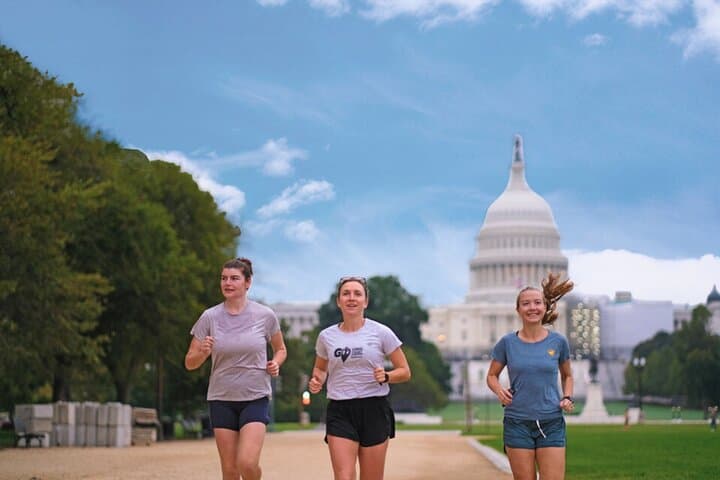

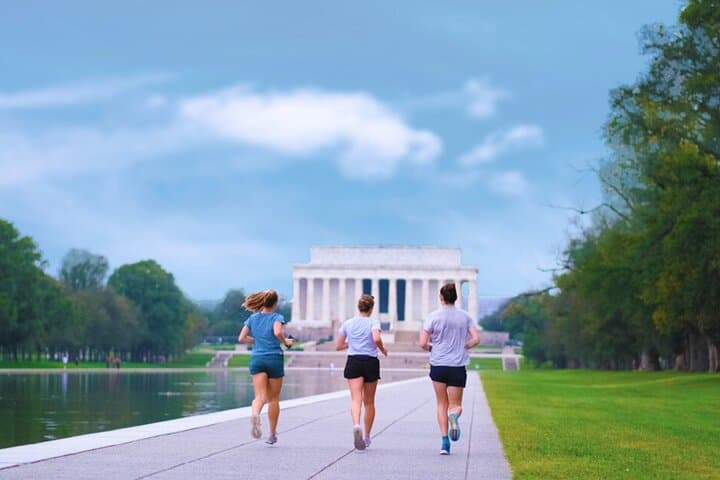
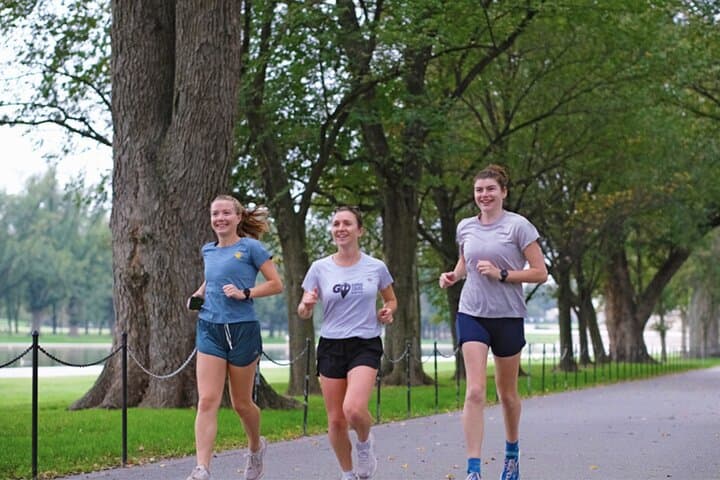
The city breathes through pavement and stone as you clip past rowhouses and into the open geometry of the National Mall. Starting outside the St. Regis by Logan Circle, the group peels off into L'Enfant's axial plan — avenues that feel designed to keep you moving. The Washington Monument rises ahead like a spool of history; the Capitol sits patient to the east while the Lincoln Memorial looks back across the Reflecting Pool.
The city breathes through pavement and stone as you clip past rowhouses and into the open geometry of the National Mall. Starting outside the St. Regis by Logan Circle, the group peels off into L'Enfant's axial plan — avenues that feel designed to keep you moving. The Washington Monument rises ahead like a spool of history; the Capitol sits patient to the east while the Lincoln Memorial looks back across the Reflecting Pool.
This route threads 19th- and 20th-century civic ambition with quieter chapters: the Tidal Basin's low, echoing water and the Jefferson and Martin Luther King Jr. memorials' carved phrases. Geology here is subtle — reclaimed river plain and engineered landfill shaping the mall's flat, fast surfaces — and the monuments are civic markers of wars, ideals, and design debates that reshaped the capital.
Expect mostly flat, paved surfaces and steady urban sightlines; uneven flagstone steps appear at a few memorials. The pace is conversational but brisk — a running tour, not a race — and guides punctuate miles with historical context and photo stops. Public transit and tree-shaded sidewalks make logistics simple, though cherry blossom season increases crowds.
Practical edge: wear road-ready running shoes, carry a small hand-held bottle or hydration pack, and plan for bathroom breaks at museums or park facilities. Morning slots offer cooler temperatures and softer light for photos; afternoons bring more tourists and louder streets. Leave no trace on memorial lawns, give space to pedestrians, and let the city's architecture and civic stories set the rhythm of the run.