THE ADVENTURE COLLECTIVE® · Independent discovery and booking for outdoor travel

Trade Marrakech’s medina for mule tracks and mountain air on a full-day guided trail run through Imlil and the Toubkal foothills. Expect steady climbs, technical descents, local guesthouse tea, and panoramic passes.
Trade Marrakech’s medina for mule tracks and mountain air on a full-day guided trail run through Imlil and the Toubkal foothills. Expect steady climbs, technical descents, local guesthouse tea, and panoramic passes.
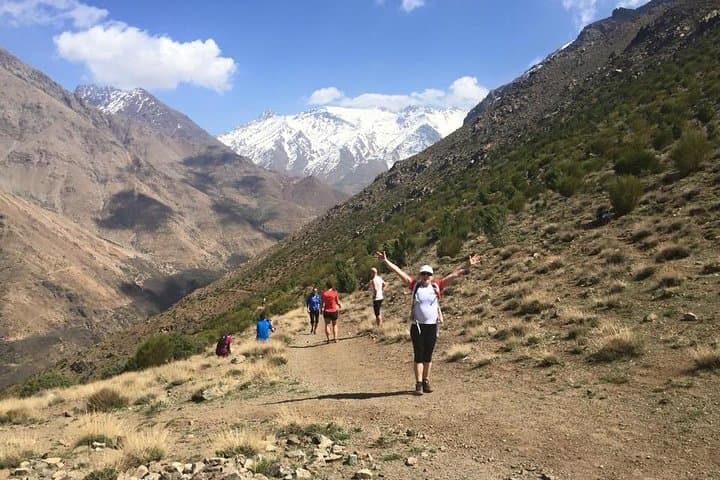
A cold cup of tea, a diesel engine’s low grumble, and the city shrinking in the rearview — that’s the opening beat of a day spent running the High Atlas. Within an hour the air thins, the roads narrow, and stone villages pin themselves to the slopes. Runners step out onto dirt tracks that thread terraces, gullies, and walnut groves, moving from valley floor toward sunlit passes.
Verified experiences and guided adventures in the surrounding area.
Operated by Toubkal Trekking · Marrakech, Marrakech-Safi
A cold cup of tea, a diesel engine’s low grumble, and the city shrinking in the rearview — that’s the opening beat of a day spent running the High Atlas. Within an hour the air thins, the roads narrow, and stone villages pin themselves to the slopes. Runners step out onto dirt tracks that thread terraces, gullies, and walnut groves, moving from valley floor toward sunlit passes.
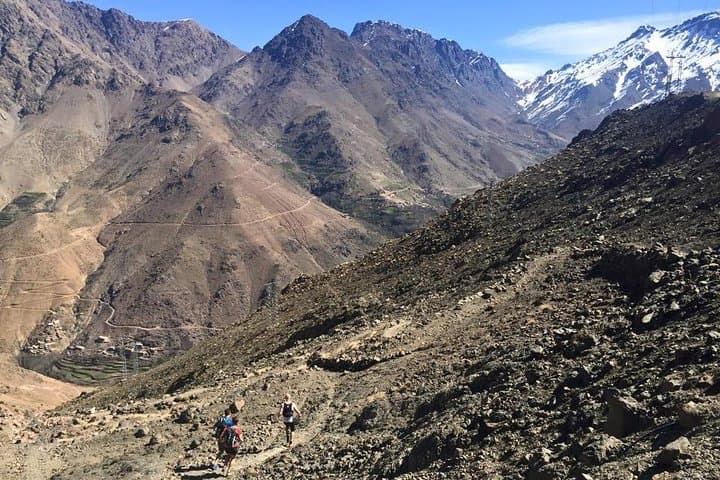
The route winds through Imlil and the Toubkal foothills, land carved by glaciation and seasonal torrents that expose schist and igneous outcrops. These paths follow centuries-old mule routes that linked Berber villages; local guides often point out kasbah foundations and irrigation channels still in use. Culture here is village-scale — greetings in Amazigh, tea shared at guesthouses, and a pace governed by livestock crossings and midday heat.
Expect shifting terrain: rocky ascents, exposed ridgelines, and long technical descents. The highlight is the climb to Tizi n'Tamatert, a pass that opens to sweeping views over Imlil and the Imnane valley. Runners should budget energy for continuous uphill efforts and technical downhill stretches that demand attention more than speed.
Practical notes: arrive with trail-running shoes and layered clothing for temperature swings; carry 1–2 liters of water, electrolytes, and a light first-aid kit. The tour includes pickup from Marrakech, a local guide, snacks, and lunch in a valley guesthouse. Weather can change fast above 2,000 m — plan for sun, wind, and sudden cool. For fit trail runners wanting a full-day mountain outing, this is a compact, guide-led introduction to the High Atlas’ rhythms and views.
moderate.
8–10 hours.
Good aerobic fitness with experience running on uneven trails and sustained climbs is recommended
Distances vary by route but expect 15–25 km with cumulative elevation gains of 600–1,100 m on a full-day itinerary.
Moderate trail-running experience is recommended due to technical descents and sustained climbs; the guide will set pace and offer route support.
Hotel pickup from Marrakech, local guide, transport to Imlil, snacks, mineral water, and a valley lunch are included.
Layer clothing for temperature swings, start hydrated, and avoid hard efforts the day before; the highest points are typically around 1,800–2,200 m.
The High Atlas has long been home to Amazigh (Berber) communities whose settlements and irrigation systems shaped valley routes used for trade and pastoralism.
Stick to marked tracks, avoid disturbing village water sources, and carry out all non-biodegradable waste to protect fragile mountain soils and local water supplies.
Toubkal Trekking operates guided outdoor trips and adventures with an emphasis on safety, stewardship, and memorable experiences.
A cold cup of tea, a diesel engine’s low grumble, and the city shrinking in the rearview — that’s the opening beat of a day spent running the High Atlas. Within an hour the air thins, the roads narrow, and stone villages pin themselves to the slopes. Runners step out onto dirt tracks that thread terraces, gullies, and walnut groves, moving from valley floor toward sunlit passes.
A cold cup of tea, a diesel engine’s low grumble, and the city shrinking in the rearview — that’s the opening beat of a day spent running the High Atlas. Within an hour the air thins, the roads narrow, and stone villages pin themselves to the slopes. Runners step out onto dirt tracks that thread terraces, gullies, and walnut groves, moving from valley floor toward sunlit passes.
The route winds through Imlil and the Toubkal foothills, land carved by glaciation and seasonal torrents that expose schist and igneous outcrops. These paths follow centuries-old mule routes that linked Berber villages; local guides often point out kasbah foundations and irrigation channels still in use. Culture here is village-scale — greetings in Amazigh, tea shared at guesthouses, and a pace governed by livestock crossings and midday heat.
Expect shifting terrain: rocky ascents, exposed ridgelines, and long technical descents. The highlight is the climb to Tizi n'Tamatert, a pass that opens to sweeping views over Imlil and the Imnane valley. Runners should budget energy for continuous uphill efforts and technical downhill stretches that demand attention more than speed.
Practical notes: arrive with trail-running shoes and layered clothing for temperature swings; carry 1–2 liters of water, electrolytes, and a light first-aid kit. The tour includes pickup from Marrakech, a local guide, snacks, and lunch in a valley guesthouse. Weather can change fast above 2,000 m — plan for sun, wind, and sudden cool. For fit trail runners wanting a full-day mountain outing, this is a compact, guide-led introduction to the High Atlas’ rhythms and views.