THE ADVENTURE COLLECTIVE® · Independent discovery and booking for outdoor travel

A single‑day trek into Ruc Mon mixes forested approaches, cave ladders and an underground river you can swim or kayak. Expect 6–7 hours of steady hiking, spelunking and local village flavor near Phong Nha.
A single‑day trek into Ruc Mon mixes forested approaches, cave ladders and an underground river you can swim or kayak. Expect 6–7 hours of steady hiking, spelunking and local village flavor near Phong Nha.
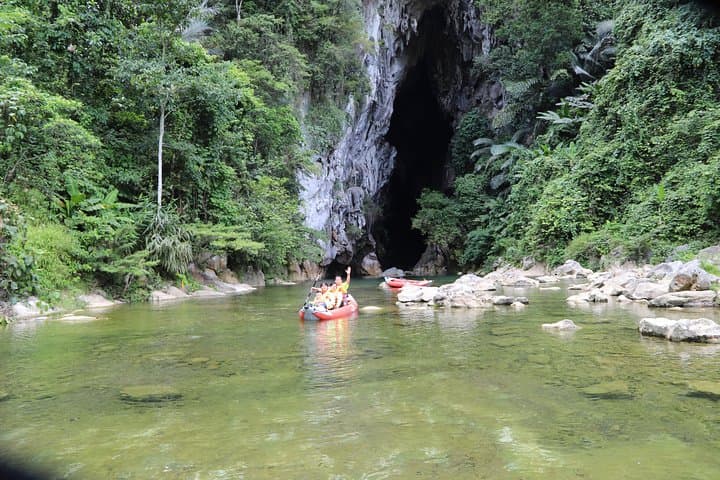
You leave Phong Nha town before dawn and the minivan drops you at a narrow track where jungle claims the road margins. The forest smells of wet limestone and green leaf mold; bird calls punctuate the hum of insects. A short push through farmland leads to a 350‑metre jungle approach where roots and rocks set the rhythm before the cave mouth opens like a cool, shadowed room.
Verified experiences and guided adventures in the surrounding area.
Operated by Phong Nha Trekking Tours · Phong Nha, Quang Binh
You leave Phong Nha town before dawn and the minivan drops you at a narrow track where jungle claims the road margins. The forest smells of wet limestone and green leaf mold; bird calls punctuate the hum of insects. A short push through farmland leads to a 350‑metre jungle approach where roots and rocks set the rhythm before the cave mouth opens like a cool, shadowed room.
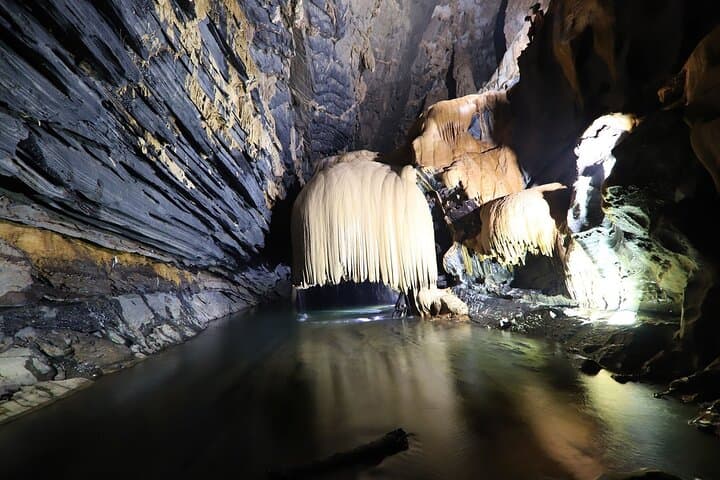
This landscape is part of the greater Phong Nha–Ke Bang karst system, one of the oldest karst regions on Earth. Limestone dissolved by underground rivers has carved dry galleries and river caves over millions of years; local villages such as Yen Phu have long used these passages for water, shelter and seasonal hunting. Culture here is rural—small farms, simple houses and guides whose knowledge of routes and pools is borne of daily practice.
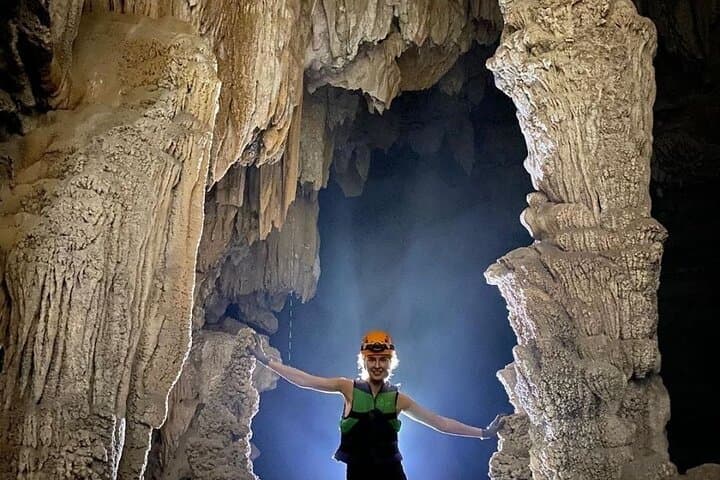
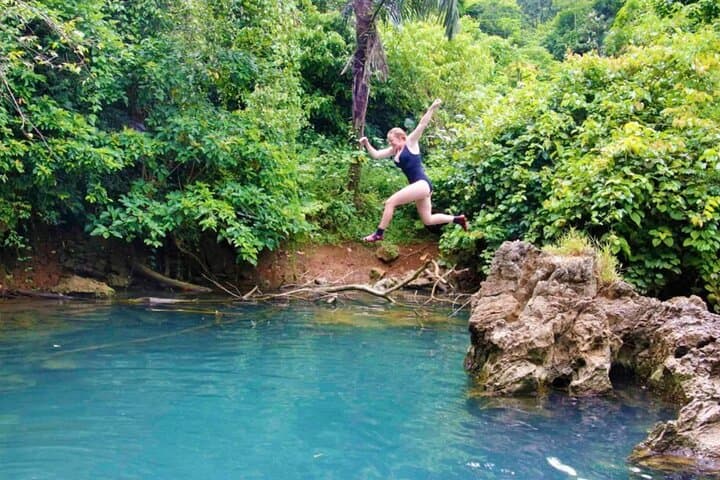
The route itself balances hiking and spelunking: two floors of dry cave with narrow squeezes, a 70‑metre downward ladder to a river cave, then up to 500 metres of optional swimming through an illuminated underground channel. If you prefer, guides provide a kayak for the return instead of swimming. Expect rocky terrain, stream crossings and periods of stooped walking. Total time on the ground is about 6–7 hours.
Practical notes: wear grippy footwear that can get wet, carry a reliable headlamp, and pack a small drybag for electronics. Bring cash for tips and snacks; phone signal is intermittent. Move deliberately through tight sections, respect formations (don’t touch stalactites) and follow your guide—this trip is as much technical cave navigation as it is a jungle trek.
moderate.
6–7 hours.
Moderate fitness required: able to hike uneven, rocky trails, climb ladders and swim short underground stretches or sit in a kayak.
No — swimming the 500m river section is optional; guides can provide a kayak for return if you prefer not to swim.
Moderate fitness: you should be comfortable hiking uneven terrain for several hours, climbing a ladder, and either swimming short distances or sitting in a kayak.
Not recommended for pregnant travelers or people with serious back/heart problems; children may participate but consider swimming ability and comfort with confined spaces.
Guides pick up travelers from hotels in Phong Nha town—confirm your pickup point and time on booking (the tour runs roughly 6–7 hours).
Ruc Mon sits within the ancient Phong Nha–Ke Bang karst; communities here have a long relationship with caves for water, shelter and seasonal use, and the park is part of a UNESCO World Heritage Site.
Stay on established paths, avoid touching formations (oils damage stalactites), and pack out all waste; high visitor awareness helps protect fragile cave ecosystems.
Phong Nha Trekking Tours operates guided outdoor trips and adventures with an emphasis on safety, stewardship, and memorable experiences.
You leave Phong Nha town before dawn and the minivan drops you at a narrow track where jungle claims the road margins. The forest smells of wet limestone and green leaf mold; bird calls punctuate the hum of insects. A short push through farmland leads to a 350‑metre jungle approach where roots and rocks set the rhythm before the cave mouth opens like a cool, shadowed room.
You leave Phong Nha town before dawn and the minivan drops you at a narrow track where jungle claims the road margins. The forest smells of wet limestone and green leaf mold; bird calls punctuate the hum of insects. A short push through farmland leads to a 350‑metre jungle approach where roots and rocks set the rhythm before the cave mouth opens like a cool, shadowed room.
This landscape is part of the greater Phong Nha–Ke Bang karst system, one of the oldest karst regions on Earth. Limestone dissolved by underground rivers has carved dry galleries and river caves over millions of years; local villages such as Yen Phu have long used these passages for water, shelter and seasonal hunting. Culture here is rural—small farms, simple houses and guides whose knowledge of routes and pools is borne of daily practice.
The route itself balances hiking and spelunking: two floors of dry cave with narrow squeezes, a 70‑metre downward ladder to a river cave, then up to 500 metres of optional swimming through an illuminated underground channel. If you prefer, guides provide a kayak for the return instead of swimming. Expect rocky terrain, stream crossings and periods of stooped walking. Total time on the ground is about 6–7 hours.
Practical notes: wear grippy footwear that can get wet, carry a reliable headlamp, and pack a small drybag for electronics. Bring cash for tips and snacks; phone signal is intermittent. Move deliberately through tight sections, respect formations (don’t touch stalactites) and follow your guide—this trip is as much technical cave navigation as it is a jungle trek.