THE ADVENTURE COLLECTIVE® · Independent discovery and booking for outdoor travel

Follow the E4 from Lake Zaros into Rouvas Gorge for a private day of river-walking, waterfalls and a rare holly forest. This guided trek pairs manageable distances with big central-Crete views and an option to continue to Dyo Prini viewpoint.
Follow the E4 from Lake Zaros into Rouvas Gorge for a private day of river-walking, waterfalls and a rare holly forest. This guided trek pairs manageable distances with big central-Crete views and an option to continue to Dyo Prini viewpoint.
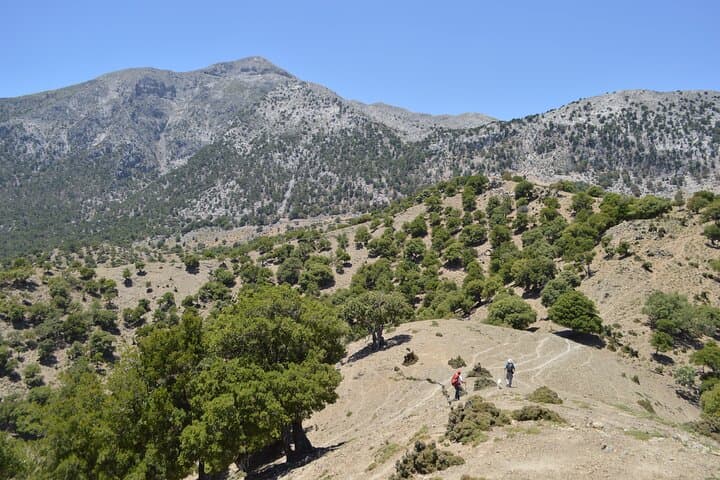
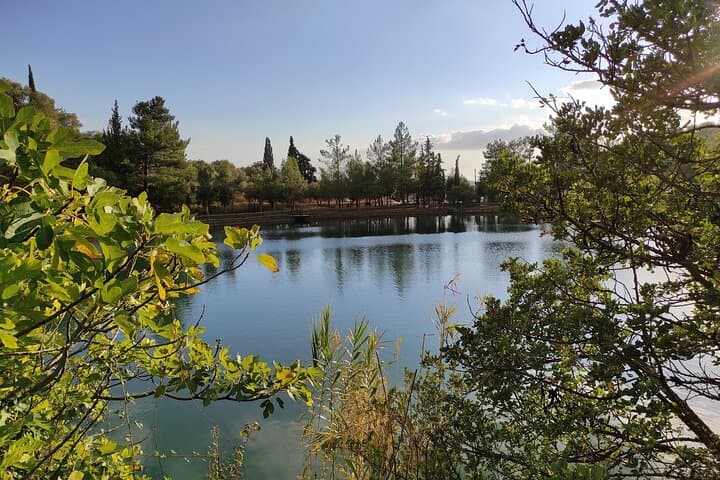
A narrow trail unfurls from the still surface of Lake Zaros and dives into a green throat: the gorge of Agios Nikolaos. Early on, the river dares you to keep pace—pools reflecting the sky, small waterfalls announcing themselves, and a cool, shaded bed that softens the step. The path follows the E4 long-distance route for about 5 km, moving from lake shore to an old holly stand where sunlight sifts through dense branches.
Verified experiences and guided adventures in the surrounding area.
Operated by Explor.gr, Safari Tours, Outdoor Activities, 4WD & Off-Road Tours, Alternartive tourism · Zaros, Crete
A narrow trail unfurls from the still surface of Lake Zaros and dives into a green throat: the gorge of Agios Nikolaos. Early on, the river dares you to keep pace—pools reflecting the sky, small waterfalls announcing themselves, and a cool, shaded bed that softens the step. The path follows the E4 long-distance route for about 5 km, moving from lake shore to an old holly stand where sunlight sifts through dense branches.
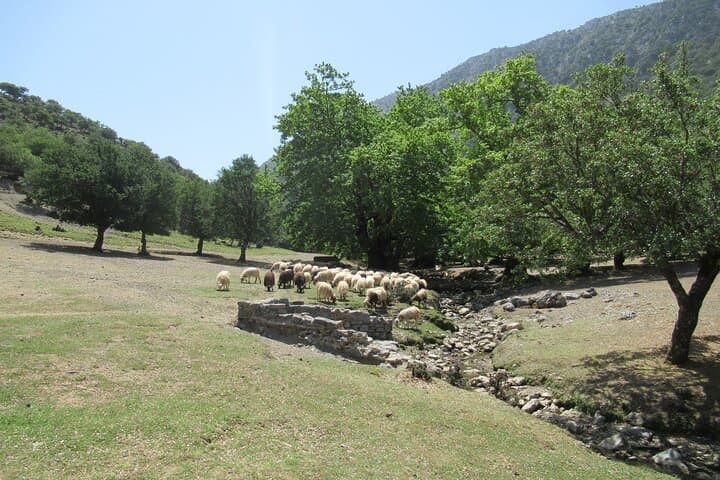
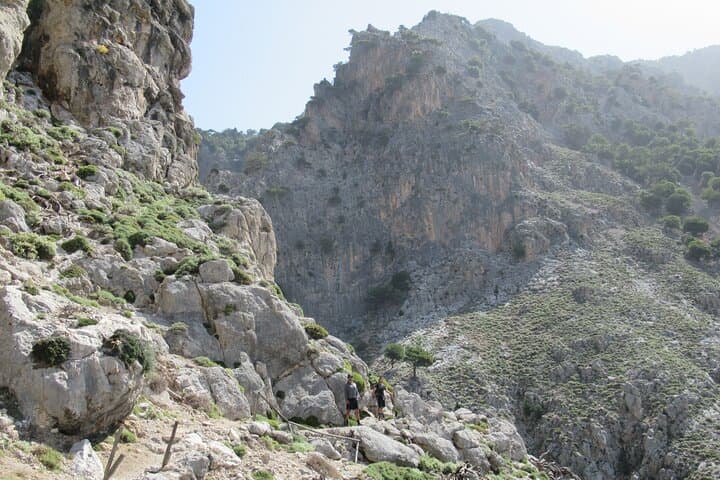
Geology here is blunt and honest: limestone bedrock carved by seasonal torrents, creating clefts and shallow basins that hold water through spring. The Rouvas forest is ecologically notable for its Ilex (holly) groves, a remnant woodland of the central Cretan ranges that has supported local shepherding and small-scale wood use for centuries.
Culturally, Zaros grew around the Votomos spring—still a community water source—and the picnic area at Ai Giannis has benches, toilets and a spring-fed tap that feels like local hospitality. From the optional Dyo Prini viewpoint the Messara plain and the scatter of villages look measured and human below the forest’s green sweep.
Practically, expect rocky, sometimes wet trail underfoot and limited shade in brief clearings. A guided, private trek usually takes most of a day (including transport), with an initial 2-hour, 5 km approach to the holly stand, then options to continue or return. Bring sturdy shoes, layered clothing, 2 liters of water, and a light snack; trekking poles are helpful on river-bed sections. Spring is lush and wet; summer can be hot—start early. The route suits hikers in moderate condition and rewards steady pacing with quiet forest and clear, wide views of central Crete.
moderate.
4–6 hours.
Moderate—comfortable with repeated ascents and uneven footing for several hours
Expect roughly 5 km and about 2 hours from Lake Zaros to the Rouvas holly stand on typical footpaths, longer if you stop frequently.
Fit children used to hiking can do sections, but river-bed terrain and stream crossings require close supervision and surefootedness.
The E4 route is marked, but a local guide improves route-finding, explains natural and cultural history, and arranges transport and logistics.
Late spring brings full water flows and green forest; early morning in summer avoids heat. Autumn offers cooler hikes and clearer light for views.
Zaros has long been tied to its springs; Votomos lake and local water sources have supplied communities since antiquity and shaped settlement patterns on the southern slope of Mount Ida.
Rouvas is an ecologically significant remnant woodland—stick to established trails to protect holly regeneration, avoid disturbing springs, and pack out all waste.
Explor.gr, Safari Tours, Outdoor Activities, 4WD & Off-Road Tours, Alternartive tourism operates guided outdoor trips and adventures with an emphasis on safety, stewardship, and memorable experiences.
A narrow trail unfurls from the still surface of Lake Zaros and dives into a green throat: the gorge of Agios Nikolaos. Early on, the river dares you to keep pace—pools reflecting the sky, small waterfalls announcing themselves, and a cool, shaded bed that softens the step. The path follows the E4 long-distance route for about 5 km, moving from lake shore to an old holly stand where sunlight sifts through dense branches.
A narrow trail unfurls from the still surface of Lake Zaros and dives into a green throat: the gorge of Agios Nikolaos. Early on, the river dares you to keep pace—pools reflecting the sky, small waterfalls announcing themselves, and a cool, shaded bed that softens the step. The path follows the E4 long-distance route for about 5 km, moving from lake shore to an old holly stand where sunlight sifts through dense branches.
Geology here is blunt and honest: limestone bedrock carved by seasonal torrents, creating clefts and shallow basins that hold water through spring. The Rouvas forest is ecologically notable for its Ilex (holly) groves, a remnant woodland of the central Cretan ranges that has supported local shepherding and small-scale wood use for centuries.
Culturally, Zaros grew around the Votomos spring—still a community water source—and the picnic area at Ai Giannis has benches, toilets and a spring-fed tap that feels like local hospitality. From the optional Dyo Prini viewpoint the Messara plain and the scatter of villages look measured and human below the forest’s green sweep.
Practically, expect rocky, sometimes wet trail underfoot and limited shade in brief clearings. A guided, private trek usually takes most of a day (including transport), with an initial 2-hour, 5 km approach to the holly stand, then options to continue or return. Bring sturdy shoes, layered clothing, 2 liters of water, and a light snack; trekking poles are helpful on river-bed sections. Spring is lush and wet; summer can be hot—start early. The route suits hikers in moderate condition and rewards steady pacing with quiet forest and clear, wide views of central Crete.