THE ADVENTURE COLLECTIVE® · Independent discovery and booking for outdoor travel

Circle Phewa Lake on a technical singletrack loop that stitches forest, paddy fields and lakeshore with views of the Annapurna range. Expect 3–5 hours of rolling climbs, tight descents, cultural stops and a fresh juice at the end.
Circle Phewa Lake on a technical singletrack loop that stitches forest, paddy fields and lakeshore with views of the Annapurna range. Expect 3–5 hours of rolling climbs, tight descents, cultural stops and a fresh juice at the end.
The ride starts with the lake on your right, water silvering under the Annapurna slopes while distant peaks push the sky downward. Pedals click and a singletrack peels off into Queen's Forest; shade tightens, roots and rocks test line choice, and the air smells of wet earth and paddy. You feel the climb before you see it — a steady pull that rewards with a sweeping view of Phewa Lake and Machapuchare’s jagged silhouette.
Verified experiences and guided adventures in the surrounding area.
Operated by Cycle Tours & Travel · Pokhara, Gandaki Province
The ride starts with the lake on your right, water silvering under the Annapurna slopes while distant peaks push the sky downward. Pedals click and a singletrack peels off into Queen's Forest; shade tightens, roots and rocks test line choice, and the air smells of wet earth and paddy. You feel the climb before you see it — a steady pull that rewards with a sweeping view of Phewa Lake and Machapuchare’s jagged silhouette.
This loop follows routes used by local villagers for decades, threading lakeshore, riverbed and terraced fields. Geologically, the Annapurna foothills are young, steeply folded Himalayan slopes carved by monsoon-fed streams; trails here move quickly from bedrock to soft silt. Culturally, the route touches World Peace Pagoda and the Tibetan Refugee Camp, offering a glimpse of Pokhara’s religious mix and recent migration histories. Devi’s Fall nearby demonstrates the power of monsoon-fed underground channels that drain the valley.
Expect rolling but technical terrain: tight singletrack, short steep pitches and playful downhills across wooden and suspension bridges. The tour runs 3–5 hours and often finishes with a complimentary glass of fresh juice — a welcome reset.
Practical edge: bring a well-fitting helmet, puncture-resistant tires and enough water for several hours; monsoon seasons make sections slippery, while winter mornings are crisp and clear for peak views. A guide familiar with local lines improves safety and points out cultural stops; the operator can provide female guides on request. This is a route that rewards careful line choice and respectful riding through working farmland and lakeside communities.
moderate.
3–5 hours.
Moderate fitness required: regular cardio and leg strength help on sustained climbs and technical sections.
The operator lists 3–5 hours depending on group pace and stops; expect a moderate pace with technical sections that slow progress and short climbs that require effort.
Bicycle use is provided; check with the operator regarding helmet availability — they note female guides are available on request.
Yes, typical stops include World Peace Pagoda, Devi's Fall and the Tibetan Refugee Camp, allowing time for photos and short visits.
Riders should have at least moderate fitness and basic MTB handling; novices may struggle on steep pitches and technical singletrack and should consider a private guide or shorter route.
The trail network grew from village footpaths and trade routes around Phewa Lake; sites like the World Peace Pagoda were built in recent decades to promote peace and tourism.
Ride responsibly to avoid widening trails through fields and forest; local groups run lake-cleaning initiatives and rely on visitors to pack out waste.
Cycle Tours & Travel operates guided outdoor trips and adventures with an emphasis on safety, stewardship, and memorable experiences.

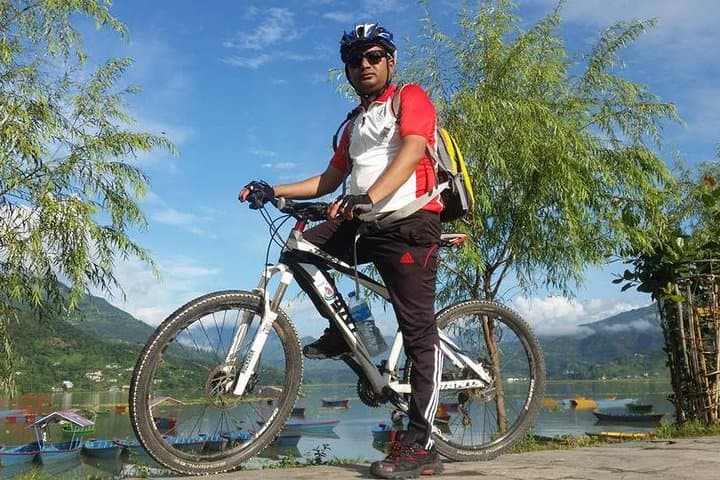

The ride starts with the lake on your right, water silvering under the Annapurna slopes while distant peaks push the sky downward. Pedals click and a singletrack peels off into Queen's Forest; shade tightens, roots and rocks test line choice, and the air smells of wet earth and paddy. You feel the climb before you see it — a steady pull that rewards with a sweeping view of Phewa Lake and Machapuchare’s jagged silhouette.
The ride starts with the lake on your right, water silvering under the Annapurna slopes while distant peaks push the sky downward. Pedals click and a singletrack peels off into Queen's Forest; shade tightens, roots and rocks test line choice, and the air smells of wet earth and paddy. You feel the climb before you see it — a steady pull that rewards with a sweeping view of Phewa Lake and Machapuchare’s jagged silhouette.
This loop follows routes used by local villagers for decades, threading lakeshore, riverbed and terraced fields. Geologically, the Annapurna foothills are young, steeply folded Himalayan slopes carved by monsoon-fed streams; trails here move quickly from bedrock to soft silt. Culturally, the route touches World Peace Pagoda and the Tibetan Refugee Camp, offering a glimpse of Pokhara’s religious mix and recent migration histories. Devi’s Fall nearby demonstrates the power of monsoon-fed underground channels that drain the valley.
Expect rolling but technical terrain: tight singletrack, short steep pitches and playful downhills across wooden and suspension bridges. The tour runs 3–5 hours and often finishes with a complimentary glass of fresh juice — a welcome reset.
Practical edge: bring a well-fitting helmet, puncture-resistant tires and enough water for several hours; monsoon seasons make sections slippery, while winter mornings are crisp and clear for peak views. A guide familiar with local lines improves safety and points out cultural stops; the operator can provide female guides on request. This is a route that rewards careful line choice and respectful riding through working farmland and lakeside communities.