THE ADVENTURE COLLECTIVE® · Independent discovery and booking for outdoor travel

Cruise the Maas on a scheduled Waterbus between Rotterdam, Kinderdijk and Dordrecht with a GPS-driven audio guide. Experience industrial harbor panoramas, UNESCO-listed windmills, and Dordrecht’s medieval canals in a compact, self-guided outing.
Cruise the Maas on a scheduled Waterbus between Rotterdam, Kinderdijk and Dordrecht with a GPS-driven audio guide. Experience industrial harbor panoramas, UNESCO-listed windmills, and Dordrecht’s medieval canals in a compact, self-guided outing.
You step onto the low-slung Waterbus as the Maas pushes the ferry away from the quay, Rotterdam’s cranes sliding past like industrial teeth. The city recedes into a mix of concrete docks and modern architecture; the water dares you to look farther, toward a chain of green fields and wooden sails.
Verified experiences and guided adventures in the surrounding area.
Operated by WGTickets · Rotterdam, South Holland
You step onto the low-slung Waterbus as the Maas pushes the ferry away from the quay, Rotterdam’s cranes sliding past like industrial teeth. The city recedes into a mix of concrete docks and modern architecture; the water dares you to look farther, toward a chain of green fields and wooden sails.
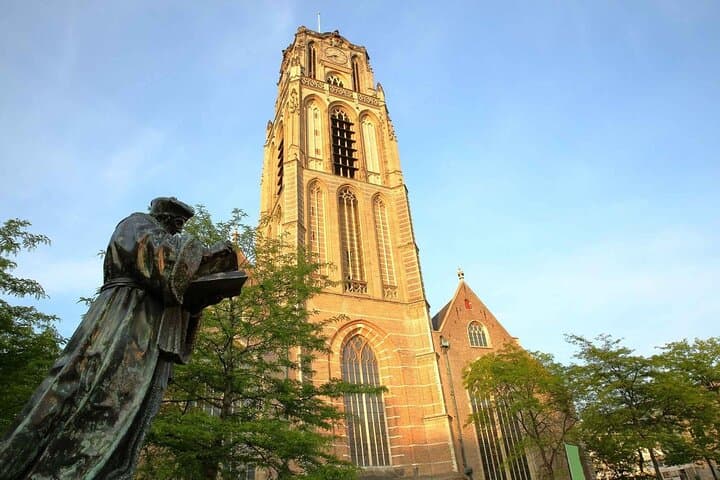
History and engineering follow the route. Kinderdijk’s 19 windmills stand where Dutch ingenuity once battled the sea—centuries of polder drainage that made these lowlands livable. Dordrecht answers with medieval stone, narrow canals, and a Grote Kerk tower that once guided mariners. Rotterdam itself is a lesson in continuous reinvention, its port reshaped by trade, war, and modern logistics.
Geology here is flattened by glacial deposits and reshaped by human hands: dikes, canals, and reclaimed land that craft the landscape you’ll see from the water.
Practical guidance: the Waterbus runs hourly (approx. 9:15–17:15 departures) and the round-trip with onboard stops fits a two-hour window. The included digital guide provides GPS-triggered audio and maps in the WeGoTrip app—download before boarding and bring a charger. Comfortable, water-resistant shoes and a windproof layer make the short walks at Kinderdijk and Dordrecht easier; paths are mostly flat but can be muddy after rain.
Timing tip: early morning or late afternoon light gives the windmills and canals the best reflections. Allow time to walk between mills and to climb select windmill platforms if open. Check local notices for events or closures—these towns are active working landscapes as well as tourist sites, so plan for practical travel time between stops.
easy.
2 hours.
Suitable for all fitness levels; involves short, flat walks at stops and barrier-free boarding in most cases—check operator accessibility details if you need ramps.
The scheduled experience aligns with a two-hour loop; Waterbus departures run roughly hourly between about 9:15 and 17:15, with return departures around 9:45–17:45—check the local timetable for exact times.
Yes—the digital audio guide is delivered via the WeGoTrip app; you’ll receive instructions by email/SMS/WhatsApp and should download content before boarding for the best performance.
Bicycles are commonly used between stops on local routes but policies vary by service—contact the operator for bike carriage rules; the Waterbus and docks are generally accessible, but request operator confirmation for specific mobility needs.
The itinerary allows short shore visits; some windmills and sites like Dordrecht’s Grote Kerk open to visitors seasonally—check opening times locally if you plan to enter buildings.
Kinderdijk’s mills are part of a centuries-long Dutch system of polders and water management; Dordrecht is one of the Netherlands’ oldest cities with maritime trade roots.
The riverine and polder landscapes are actively managed to balance agriculture, heritage preservation, and flood protection—stay on paths and respect local signage to protect fragile banks and birdlife.
WGTickets operates guided outdoor trips and adventures with an emphasis on safety, stewardship, and memorable experiences.



You step onto the low-slung Waterbus as the Maas pushes the ferry away from the quay, Rotterdam’s cranes sliding past like industrial teeth. The city recedes into a mix of concrete docks and modern architecture; the water dares you to look farther, toward a chain of green fields and wooden sails.
You step onto the low-slung Waterbus as the Maas pushes the ferry away from the quay, Rotterdam’s cranes sliding past like industrial teeth. The city recedes into a mix of concrete docks and modern architecture; the water dares you to look farther, toward a chain of green fields and wooden sails.
History and engineering follow the route. Kinderdijk’s 19 windmills stand where Dutch ingenuity once battled the sea—centuries of polder drainage that made these lowlands livable. Dordrecht answers with medieval stone, narrow canals, and a Grote Kerk tower that once guided mariners. Rotterdam itself is a lesson in continuous reinvention, its port reshaped by trade, war, and modern logistics.
Geology here is flattened by glacial deposits and reshaped by human hands: dikes, canals, and reclaimed land that craft the landscape you’ll see from the water.
Practical guidance: the Waterbus runs hourly (approx. 9:15–17:15 departures) and the round-trip with onboard stops fits a two-hour window. The included digital guide provides GPS-triggered audio and maps in the WeGoTrip app—download before boarding and bring a charger. Comfortable, water-resistant shoes and a windproof layer make the short walks at Kinderdijk and Dordrecht easier; paths are mostly flat but can be muddy after rain.
Timing tip: early morning or late afternoon light gives the windmills and canals the best reflections. Allow time to walk between mills and to climb select windmill platforms if open. Check local notices for events or closures—these towns are active working landscapes as well as tourist sites, so plan for practical travel time between stops.