THE ADVENTURE COLLECTIVE® · Independent discovery and booking for outdoor travel

Walk Rotterdam’s bold skyline on a private, guided route that spans Central Station, the Cube Houses, Market Hall and Erasmus Bridge. Learn how wartime ruin turned into an open-air laboratory of modern architecture.
Walk Rotterdam’s bold skyline on a private, guided route that spans Central Station, the Cube Houses, Market Hall and Erasmus Bridge. Learn how wartime ruin turned into an open-air laboratory of modern architecture.
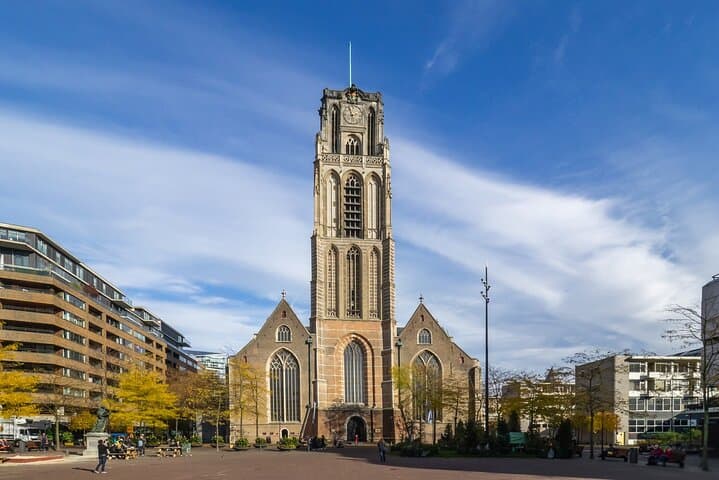
You step off the tram into a skyline that looks as if its plans were sketched while the city was in motion: glass facets, tilted cubes, and a single white pylon reaching over the river like a mast. This private walking tour threads through Rotterdam’s rebuilt heart—Central Station’s solar-roofed sweep, the Market Hall’s painted vault, Piet Blom’s cube houses tipped on their corners, and the Swan-like Erasmus Bridge daring the Nieuwe Maas.
Verified experiences and guided adventures in the surrounding area.
Operated by Uopera tours · Rotterdam, South Holland
You step off the tram into a skyline that looks as if its plans were sketched while the city was in motion: glass facets, tilted cubes, and a single white pylon reaching over the river like a mast. This private walking tour threads through Rotterdam’s rebuilt heart—Central Station’s solar-roofed sweep, the Market Hall’s painted vault, Piet Blom’s cube houses tipped on their corners, and the Swan-like Erasmus Bridge daring the Nieuwe Maas.
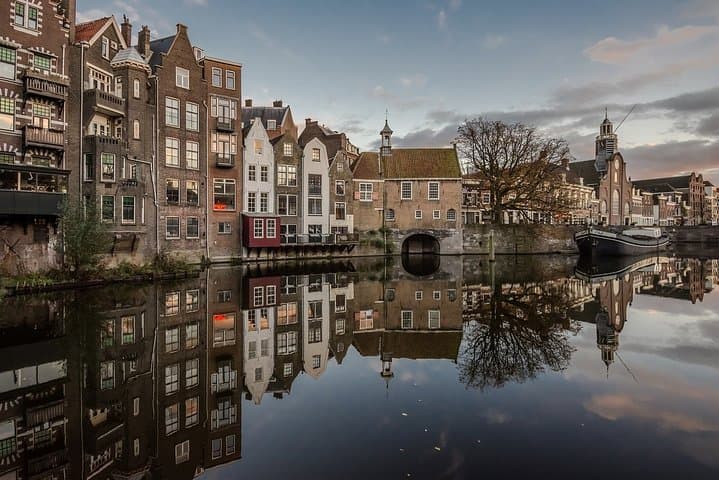
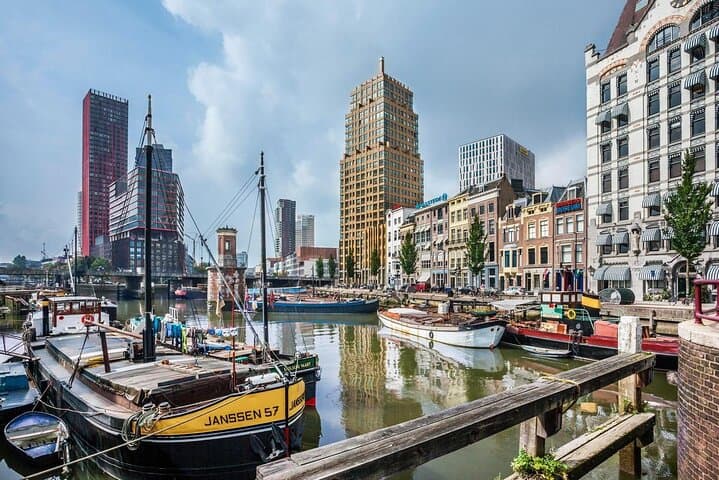
Rotterdam wears its history on its facades. After the devastating 1940 bombardment the city chose experimentation over reconstruction; the result is a 20th-century laboratory of modernism and bold structural gestures. Geologically, the city sits on reclaimed river clay and engineered quays, which shaped its canals, ports, and dense urban waterfront. Culturally, Rotterdam is a working port—multicultural, pragmatic, and quietly proud of its maritime roots; pockets like Delfshaven preserve pre-war streets and taverns where sailors once stopped for gin.
Practical guidance: expect 3–4 hours of mostly flat walking with frequent stops for commentary and photos. Wear sturdy shoes for cobbles and riverside promenades, and carry a lightweight rain layer—weather changes quickly near the water. Bring a charged phone for maps and the Market Hall’s ceiling mural. Meeting points are flexible (Cruise Port, hotel, or Central Station), and guides tailor the route to your interests—architecture, history, or local food. This tour is private, accessible for most fitness levels, and ideal for travelers who want the city’s past and present explained on foot rather than from a bus window.
easy.
3–4 hours.
Suitable for most fitness levels; participants should be comfortable walking for a few hours with short standing stops.
The tour runs about 3–4 hours at an easy pace with frequent stops for explanation and photos; guides adapt pacing to the group.
Children and most walkers can join, but if you use mobility aids contact the operator in advance so the route can be adjusted and accessibility arranged.
Standard tour stops are viewed from outside; specific admissions (Euromast, Kijk-Kubus) are not included but can be added at extra cost if requested.
You can choose to start at the Cruise Port, a central hotel, or Central Station; the tour can end at the cruise terminal or another central drop-off point you prefer.
Rotterdam was heavily bombed in May 1940; the subsequent rebuild encouraged experimental architecture, making the city a 20th-century laboratory of forms and materials.
The city emphasizes sustainable redevelopment—solar panels, green roofs, and river management projects balance urban density with flood resilience and reduced emissions.
Uopera tours operates guided outdoor trips and adventures with an emphasis on safety, stewardship, and memorable experiences.
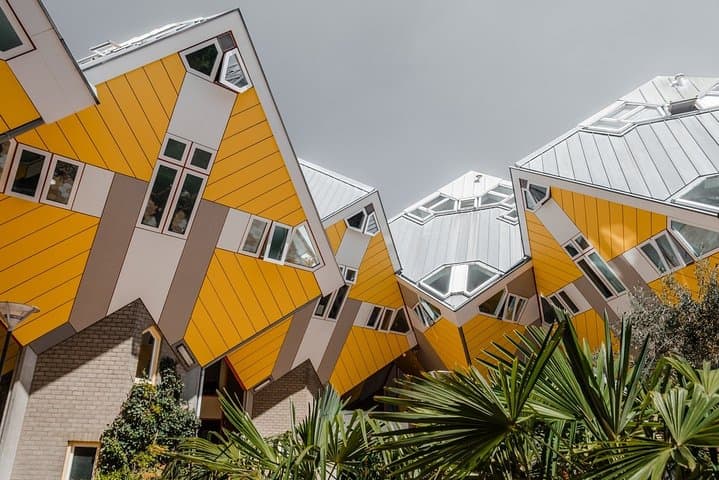
You step off the tram into a skyline that looks as if its plans were sketched while the city was in motion: glass facets, tilted cubes, and a single white pylon reaching over the river like a mast. This private walking tour threads through Rotterdam’s rebuilt heart—Central Station’s solar-roofed sweep, the Market Hall’s painted vault, Piet Blom’s cube houses tipped on their corners, and the Swan-like Erasmus Bridge daring the Nieuwe Maas.
You step off the tram into a skyline that looks as if its plans were sketched while the city was in motion: glass facets, tilted cubes, and a single white pylon reaching over the river like a mast. This private walking tour threads through Rotterdam’s rebuilt heart—Central Station’s solar-roofed sweep, the Market Hall’s painted vault, Piet Blom’s cube houses tipped on their corners, and the Swan-like Erasmus Bridge daring the Nieuwe Maas.
Rotterdam wears its history on its facades. After the devastating 1940 bombardment the city chose experimentation over reconstruction; the result is a 20th-century laboratory of modernism and bold structural gestures. Geologically, the city sits on reclaimed river clay and engineered quays, which shaped its canals, ports, and dense urban waterfront. Culturally, Rotterdam is a working port—multicultural, pragmatic, and quietly proud of its maritime roots; pockets like Delfshaven preserve pre-war streets and taverns where sailors once stopped for gin.
Practical guidance: expect 3–4 hours of mostly flat walking with frequent stops for commentary and photos. Wear sturdy shoes for cobbles and riverside promenades, and carry a lightweight rain layer—weather changes quickly near the water. Bring a charged phone for maps and the Market Hall’s ceiling mural. Meeting points are flexible (Cruise Port, hotel, or Central Station), and guides tailor the route to your interests—architecture, history, or local food. This tour is private, accessible for most fitness levels, and ideal for travelers who want the city’s past and present explained on foot rather than from a bus window.