THE ADVENTURE COLLECTIVE® · Independent discovery and booking for outdoor travel

Walk from Rotterdam Central Station past the Sint-Laurenskerk to the Markthal and Cube Houses on a focused two-hour tour that mixes wartime history with modern architecture. Ideal for travelers who want a compact, informative introduction to the city’s bold rebuilding and design culture.
Walk from Rotterdam Central Station past the Sint-Laurenskerk to the Markthal and Cube Houses on a focused two-hour tour that mixes wartime history with modern architecture. Ideal for travelers who want a compact, informative introduction to the city’s bold rebuilding and design culture.
The city opens like a ledger as you step out of Rotterdam Central Station: clean lines, exposed concrete, and the Maas keeping time at the edge of sight. On a two-hour guided walk you move from transit hub to historic church ruins to jaw-dropping contemporary structures, the guide pointing out design choices as easily as telling a wartime story.
Verified experiences and guided adventures in the surrounding area.
Operated by Trigger Tours · Rotterdam, Zuid-Holland
The city opens like a ledger as you step out of Rotterdam Central Station: clean lines, exposed concrete, and the Maas keeping time at the edge of sight. On a two-hour guided walk you move from transit hub to historic church ruins to jaw-dropping contemporary structures, the guide pointing out design choices as easily as telling a wartime story.
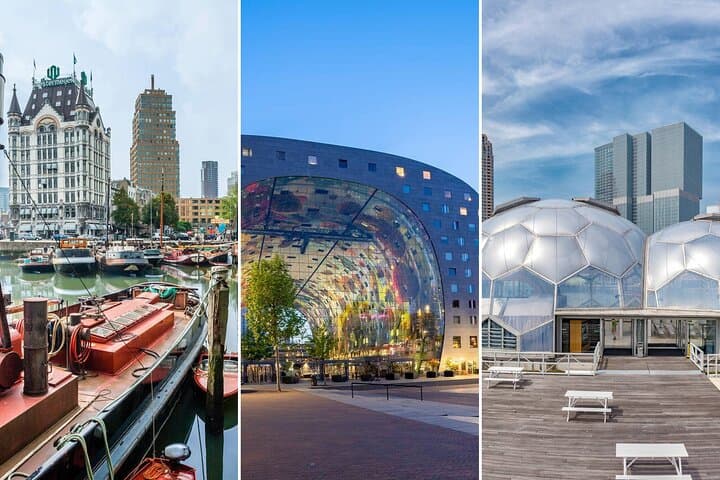
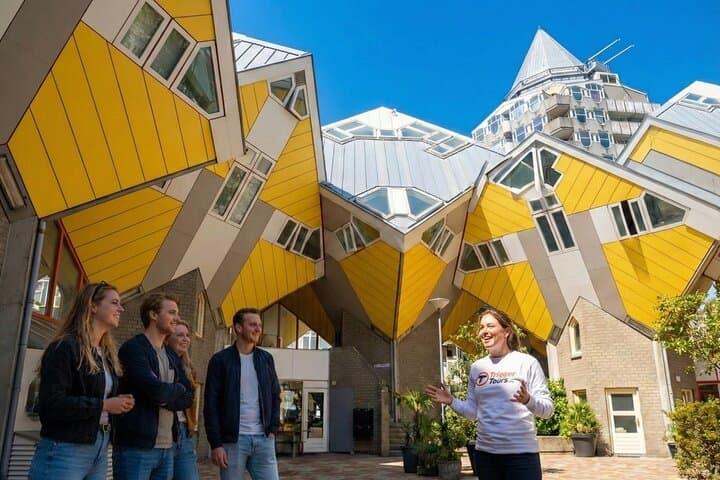
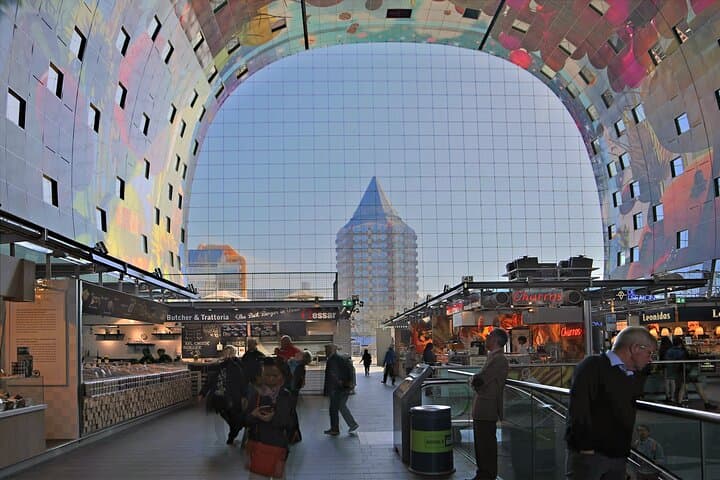
Rotterdam was largely rebuilt after the devastating May 1940 bombing; where medieval streets once stood now rise bold experiments in post-war planning and contemporary architecture. The Sint-Laurenskerk is a rare medieval relic framed by modern façades. The Markthal folds its market stalls under a painted arch while the Cube Houses tilt homes on a diagonal, forcing you to rethink how a building should sit on a street.
Geology and the river matter here — the Maas carved trade routes that made Rotterdam a port of scale, and reclaimed land and dikes shaped the city’s expansion. Culturally, Rotterdam leans pragmatic and direct: architects are celebrities, municipal planning is visible, and everyday life plays out in markets and cafés.
Practicalities are straightforward: meet at Central Station, wear comfortable shoes, and expect roughly two hours on mostly flat, paved streets with frequent stops. The tour is stroller- and wheelchair-friendly on main routes, but some historic interiors may be limited. Bring a rain jacket during shoulder seasons and ask your guide for local cafés or a detour to the Luchtsingel bridge. This is an urban walk that reads like a crash course in twentieth-century reinvention — brisk, informative, and easy to fit into a city day.
easy.
2 hours.
Suitable for most fitness levels; requires walking and standing for short periods.
Meet at the main plaza outside Rotterdam Central Station; guides typically hold a sign and start introductions a few minutes before departure.
Yes—the route is largely flat and stroller-accessible; some indoor stops may have limited access, so check with the guide on site.
No—this is a walking tour that looks at exterior architecture and public spaces; entrances to paid attractions are not included.
The tour runs in most weather; bring rain gear. Cancellation policy allows refunds if canceled at least 24 hours in advance.
Rotterdam was heavily bombed in May 1940; the resulting reconstruction led to its reputation for bold, modern architecture and experimental urban planning.
Use public transport, follow local signage, and avoid blocking narrow sidewalks—sustainable tourism here means respecting shared urban spaces and waterways.
Trigger Tours operates guided outdoor trips and adventures with an emphasis on safety, stewardship, and memorable experiences.
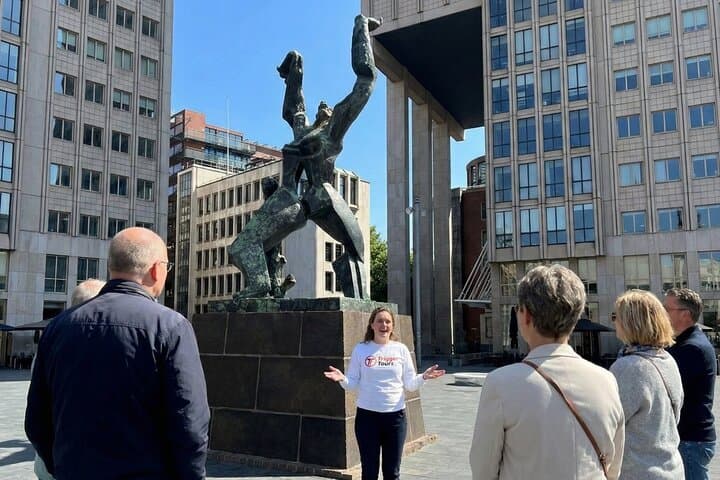
The city opens like a ledger as you step out of Rotterdam Central Station: clean lines, exposed concrete, and the Maas keeping time at the edge of sight. On a two-hour guided walk you move from transit hub to historic church ruins to jaw-dropping contemporary structures, the guide pointing out design choices as easily as telling a wartime story.
The city opens like a ledger as you step out of Rotterdam Central Station: clean lines, exposed concrete, and the Maas keeping time at the edge of sight. On a two-hour guided walk you move from transit hub to historic church ruins to jaw-dropping contemporary structures, the guide pointing out design choices as easily as telling a wartime story.
Rotterdam was largely rebuilt after the devastating May 1940 bombing; where medieval streets once stood now rise bold experiments in post-war planning and contemporary architecture. The Sint-Laurenskerk is a rare medieval relic framed by modern façades. The Markthal folds its market stalls under a painted arch while the Cube Houses tilt homes on a diagonal, forcing you to rethink how a building should sit on a street.
Geology and the river matter here — the Maas carved trade routes that made Rotterdam a port of scale, and reclaimed land and dikes shaped the city’s expansion. Culturally, Rotterdam leans pragmatic and direct: architects are celebrities, municipal planning is visible, and everyday life plays out in markets and cafés.
Practicalities are straightforward: meet at Central Station, wear comfortable shoes, and expect roughly two hours on mostly flat, paved streets with frequent stops. The tour is stroller- and wheelchair-friendly on main routes, but some historic interiors may be limited. Bring a rain jacket during shoulder seasons and ask your guide for local cafés or a detour to the Luchtsingel bridge. This is an urban walk that reads like a crash course in twentieth-century reinvention — brisk, informative, and easy to fit into a city day.