THE ADVENTURE COLLECTIVE® · Independent discovery and booking for outdoor travel

Explore Rotterdam at your own pace with a GPS-driven e-scavenger hunt that guides teams across modern landmarks, markets and hidden squares. Playable 24/7 and family-friendly, the trail blends architecture, local culture and playful challenges into a 2–3 hour city walk.
Explore Rotterdam at your own pace with a GPS-driven e-scavenger hunt that guides teams across modern landmarks, markets and hidden squares. Playable 24/7 and family-friendly, the trail blends architecture, local culture and playful challenges into a 2–3 hour city walk.
The Maas winds through Rotterdam like a current with a purpose, nudging you from one sharp-edged skyline to the next. Start near the river and the city opens as a sequence of contrasts: the modern sweep of Erasmus Bridge, the angled Cube Houses, and the vaulted glass of the Markthal. An app pings; the game has begun.
Verified experiences and guided adventures in the surrounding area.
Operated by Qula · Rotterdam, South Holland
The Maas winds through Rotterdam like a current with a purpose, nudging you from one sharp-edged skyline to the next. Start near the river and the city opens as a sequence of contrasts: the modern sweep of Erasmus Bridge, the angled Cube Houses, and the vaulted glass of the Markthal. An app pings; the game has begun.
This self-guided e-scavenger hunt uses GPS and riddles to point players toward squares, monuments and hidden corners across Rotterdam. The experience highlights the city’s post‑war rebuilding — a story of wholesale reinvention after the WWII bombardment — and the modernist experiments in architecture and urban planning that followed. Geology plays a quiet role too: the low-lying polder landscape and the Maas estuary shaped shipping routes and the city’s mercantile culture.
Culturally the trail threads through multicultural neighborhoods, offering stops where local cafés, market stalls and public art tell Rotterdam’s evolving story. The format is flexible: teams of 2–6, available in multiple languages, playable 24/7 with no fixed start time.
Practical guidance: expect 2–3 hours of walking on paved city streets; carry a fully charged smartphone and small power bank, and plan for cyclists and tramlines when crossing roads. The app allows pauses, making it family-friendly and accessible; stroller and wheelchair-friendly routes are included but check specific waypoints if mobility is a concern. Start early on weekends to avoid crowds at market hubs and bring light rainwear — Dutch weather changes fast. This is a low‑impact urban adventure that rewards curiosity and a readiness to read the city on foot.
easy.
2–3 hours.
Light walking fitness; suitable for families, older adults and most fitness levels
Plan on roughly 2–3 hours to complete the main trail at a relaxed pace; you can pause or extend time at points of interest.
The trail is offered in multiple languages including English, German, French, Dutch, Spanish and Italian.
Yes—routes and surfaces are generally wheelchair and stroller accessible, but check the app for any location-specific notes before you go.
The experience is priced per group of 2–6 people; larger groups can book multiple trails or stagger start times.
Rotterdam was heavily bombed in WWII and rebuilt with ambitious modern architecture, giving the city its distinctive mix of post‑war and contemporary design.
The trail promotes low-impact urban tourism—stick to public paths, respect private property and support local businesses to keep neighborhoods vibrant.
Qula operates guided outdoor trips and adventures with an emphasis on safety, stewardship, and memorable experiences.


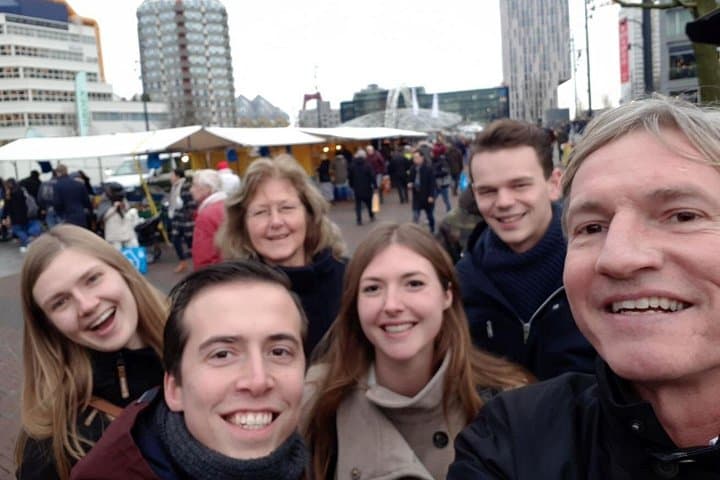

The Maas winds through Rotterdam like a current with a purpose, nudging you from one sharp-edged skyline to the next. Start near the river and the city opens as a sequence of contrasts: the modern sweep of Erasmus Bridge, the angled Cube Houses, and the vaulted glass of the Markthal. An app pings; the game has begun.
The Maas winds through Rotterdam like a current with a purpose, nudging you from one sharp-edged skyline to the next. Start near the river and the city opens as a sequence of contrasts: the modern sweep of Erasmus Bridge, the angled Cube Houses, and the vaulted glass of the Markthal. An app pings; the game has begun.
This self-guided e-scavenger hunt uses GPS and riddles to point players toward squares, monuments and hidden corners across Rotterdam. The experience highlights the city’s post‑war rebuilding — a story of wholesale reinvention after the WWII bombardment — and the modernist experiments in architecture and urban planning that followed. Geology plays a quiet role too: the low-lying polder landscape and the Maas estuary shaped shipping routes and the city’s mercantile culture.
Culturally the trail threads through multicultural neighborhoods, offering stops where local cafés, market stalls and public art tell Rotterdam’s evolving story. The format is flexible: teams of 2–6, available in multiple languages, playable 24/7 with no fixed start time.
Practical guidance: expect 2–3 hours of walking on paved city streets; carry a fully charged smartphone and small power bank, and plan for cyclists and tramlines when crossing roads. The app allows pauses, making it family-friendly and accessible; stroller and wheelchair-friendly routes are included but check specific waypoints if mobility is a concern. Start early on weekends to avoid crowds at market hubs and bring light rainwear — Dutch weather changes fast. This is a low‑impact urban adventure that rewards curiosity and a readiness to read the city on foot.