THE ADVENTURE COLLECTIVE® · Independent discovery and booking for outdoor travel

Explore Rotterdam’s bold contrasts on a guided two-hour walk from Gothic spire to avant-garde cube houses. Learn the wartime history, marvel at modern market architecture, and pick up local tips for navigating the city’s waterways and neighborhoods.
Explore Rotterdam’s bold contrasts on a guided two-hour walk from Gothic spire to avant-garde cube houses. Learn the wartime history, marvel at modern market architecture, and pick up local tips for navigating the city’s waterways and neighborhoods.
A cold breeze off the Maas nudges you toward a city that rebuilt itself with intention—steel, glass and angles catching the light as you step out from the tram stop. The first footsteps bring you to the soaring brick silhouette of St. Lawrence Church, its Gothic bones holding a quiet after the 1940 devastation. From there your guide leads you through a network of streets where old scars meet audacious modernism.
Verified experiences and guided adventures in the surrounding area.
Operated by Opatrip.com Netherlands · Rotterdam, Zuid-Holland
A cold breeze off the Maas nudges you toward a city that rebuilt itself with intention—steel, glass and angles catching the light as you step out from the tram stop. The first footsteps bring you to the soaring brick silhouette of St. Lawrence Church, its Gothic bones holding a quiet after the 1940 devastation. From there your guide leads you through a network of streets where old scars meet audacious modernism.
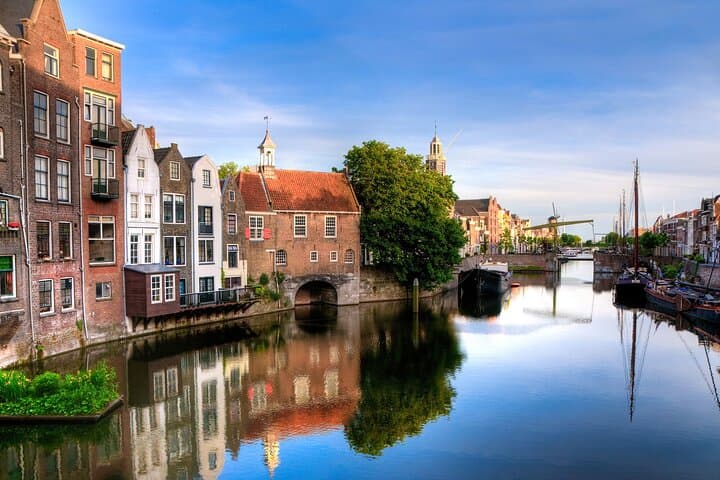
Rotterdam’s story is one of rupture and reinvention: the 1940 bombing leveled the medieval center and set a stage for postwar planners and daring architects to experiment. The Cube Houses tilt like geometric puzzles; the Markthal folds overhead into an indoor plaza of stalls and murals; Zadkine’s The Destroyed City gestures toward loss and recovery. Geologically the city sits on alluvial clay by the Rhine–Meuse–Scheldt delta, which explains the extensive waterways that shape urban life and logistics.
Culturally, Rotterdam prizes function and forward motion—industrial docks sit cheek-by-jowl with a buzzing culinary scene and multicultural neighborhoods. Your two-hour route mixes quick vantage points with pause-worthy markers: a market taste, a vaulted interior view, and a moment before City Hall to consider civic endurance.
Practical guidance: wear comfortable walking shoes and layers—weather changes off the river. The pace is gentle; expect paved sidewalks, occasional stairs, and crowds around popular sites. Public transit links back to central stations if you want to extend your exploration. Bring a compact umbrella, a charged phone for photographs, and a few euros for market treats. This walk is an efficient primer on Rotterdam’s architecture, history and contemporary pulse.
easy.
2 hours.
Suitable for most fitness levels; involves continuous walking on paved surfaces with a few stairs.
The tour is approximately two hours and covers a compact loop through central Rotterdam with short stops at major sights.
Yes—pacing is gentle and the route is paved, but participants should be able to walk for two hours with short standing stops.
No—this is an external walking tour that observes and explains sites from public areas; any paid entries are at your own expense.
Guides are typically local professionals; check booking details for language options or request special requirements when reserving.
Rotterdam was devastated by aerial bombing in May 1940; reconstruction after the war prioritized modern urban planning and bold architecture.
Cycling and public transit are central to Rotterdam’s low-impact mobility; visitors are encouraged to minimize waste at markets and respect canal habitats.
Opatrip.com Netherlands operates guided outdoor trips and adventures with an emphasis on safety, stewardship, and memorable experiences.


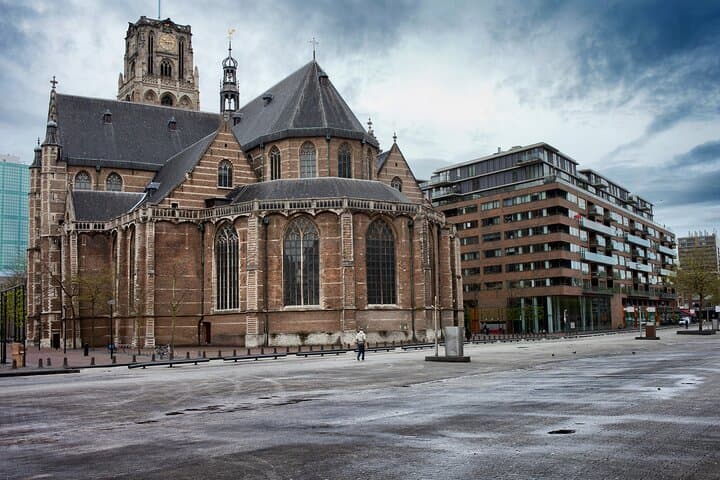
A cold breeze off the Maas nudges you toward a city that rebuilt itself with intention—steel, glass and angles catching the light as you step out from the tram stop. The first footsteps bring you to the soaring brick silhouette of St. Lawrence Church, its Gothic bones holding a quiet after the 1940 devastation. From there your guide leads you through a network of streets where old scars meet audacious modernism.
A cold breeze off the Maas nudges you toward a city that rebuilt itself with intention—steel, glass and angles catching the light as you step out from the tram stop. The first footsteps bring you to the soaring brick silhouette of St. Lawrence Church, its Gothic bones holding a quiet after the 1940 devastation. From there your guide leads you through a network of streets where old scars meet audacious modernism.
Rotterdam’s story is one of rupture and reinvention: the 1940 bombing leveled the medieval center and set a stage for postwar planners and daring architects to experiment. The Cube Houses tilt like geometric puzzles; the Markthal folds overhead into an indoor plaza of stalls and murals; Zadkine’s The Destroyed City gestures toward loss and recovery. Geologically the city sits on alluvial clay by the Rhine–Meuse–Scheldt delta, which explains the extensive waterways that shape urban life and logistics.
Culturally, Rotterdam prizes function and forward motion—industrial docks sit cheek-by-jowl with a buzzing culinary scene and multicultural neighborhoods. Your two-hour route mixes quick vantage points with pause-worthy markers: a market taste, a vaulted interior view, and a moment before City Hall to consider civic endurance.
Practical guidance: wear comfortable walking shoes and layers—weather changes off the river. The pace is gentle; expect paved sidewalks, occasional stairs, and crowds around popular sites. Public transit links back to central stations if you want to extend your exploration. Bring a compact umbrella, a charged phone for photographs, and a few euros for market treats. This walk is an efficient primer on Rotterdam’s architecture, history and contemporary pulse.