THE ADVENTURE COLLECTIVE® · Independent discovery and booking for outdoor travel

Walk Rotterdam’s resilient streets at your own pace—discover surviving landmarks, daring modern architecture, and the riverfront that defines the city. This self-guided audio tour pairs historical context with practical route guidance for a focused 2–2.5 hour exploration.
Walk Rotterdam’s resilient streets at your own pace—discover surviving landmarks, daring modern architecture, and the riverfront that defines the city. This self-guided audio tour pairs historical context with practical route guidance for a focused 2–2.5 hour exploration.
You step out onto Coolsingel and the city speaks in angles: glass, concrete, and the low rumble of barges on the Maas daring you to follow the waterfront. This two-hour self-guided audio walk threads surviving pre-war façades, bold postwar experiments, and contemporary interventions where citizens and industry collide.
Verified experiences and guided adventures in the surrounding area.
Operated by VoiceMap Audio Tours · Rotterdam, Zuid-Holland
You step out onto Coolsingel and the city speaks in angles: glass, concrete, and the low rumble of barges on the Maas daring you to follow the waterfront. This two-hour self-guided audio walk threads surviving pre-war façades, bold postwar experiments, and contemporary interventions where citizens and industry collide.
Rotterdam’s story is written in reconstruction. A devastating 1940 bombing erased much of the old city, creating a blank slate for mid-century architects who embraced light, speed, and engineered optimism. Geology here matters less than hydraulics—the Maas shaped trade routes, flood defenses, and the port that grew into Europe’s largest. Culture sprawls from the Old Harbor’s taverns to Witte de Withstraat’s galleries; street art elbows modern sculpture in public squares.
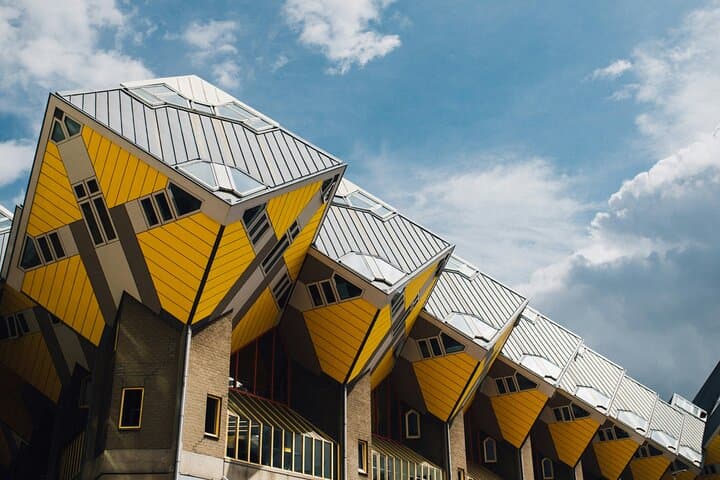
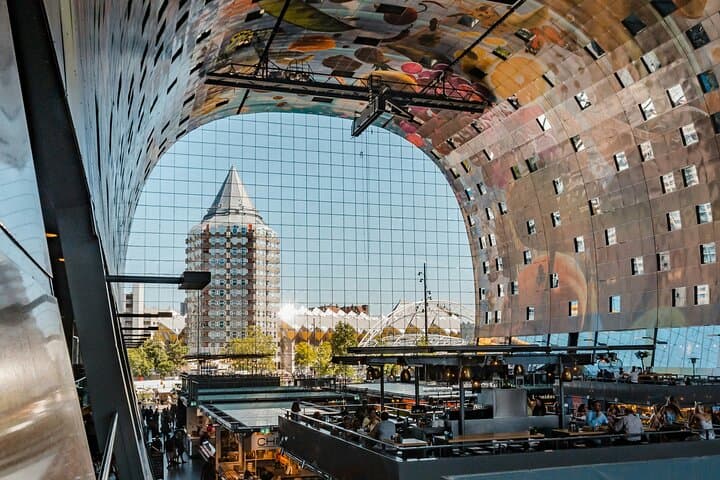
Expect highlights: the ornate City Hall that survived the Blitz, the Cube Houses’ tilted geometry, the arch of the Erasmus Bridge, the iridescent Markthal, and the chrome depot of Boijmans. The walk alternates paved promenades, cobbles, and stepped quays—easy underfoot but watch for cyclists.
Practical edge: download offline maps and your audio files; plan 2–2.5 hours with stops for photos or a market bite. Wear supportive shoes and a light waterproof—Rotterdam weather can shift from sun to squall in an hour. Bring a power bank for your phone and leave time to detour into Delfshaven or a canal-side café. This tour balances history, sharp modernism, and urban energy—ideal for travelers who want to read the city by foot.
easy.
2–2.5 hours.
Suitable for people who can walk steadily for a couple of hours and manage stairs and short cobbled sections.
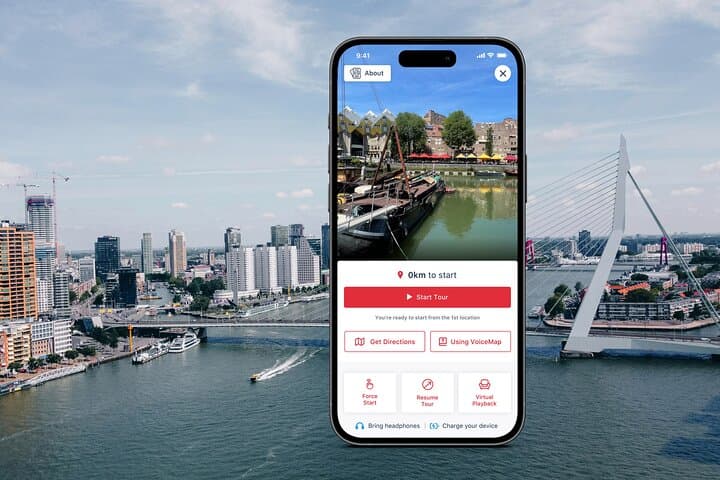
No—this is a self-guided audio tour that you can begin when you reach the starting point; the app will start the route for you.
Much of the central route is on paved streets and promenades, but some historic quays and cobbled sections may be uneven—check specific sights for accessibility details.
No—this tour passes landmarks and provides context; separate admission is required for museums and the Boijmans Depot.
The tour provides lifetime access in English via the app; check the product page for additional language options if needed.
Rotterdam was heavily bombed in May 1940; the postwar rebuilding shaped the city’s bold, modern architectural identity and expanded its role as a major European port.
Rotterdam promotes cycling and public transit to reduce car traffic; visitors are encouraged to respect waterways and local recycling practices to minimize impact.
VoiceMap Audio Tours operates guided outdoor trips and adventures with an emphasis on safety, stewardship, and memorable experiences.
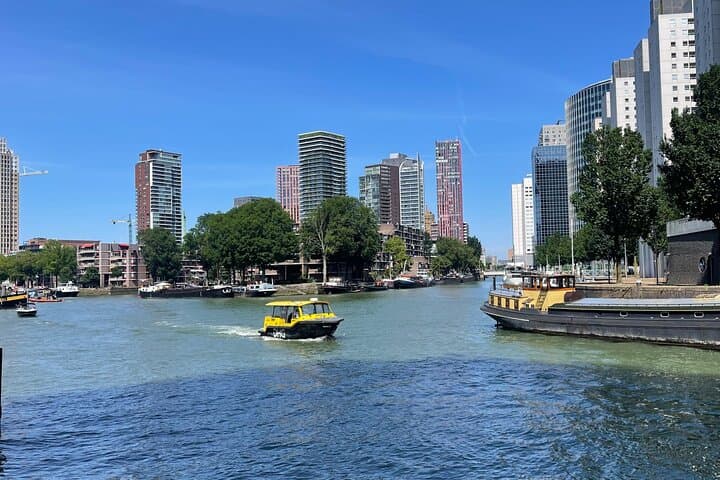
You step out onto Coolsingel and the city speaks in angles: glass, concrete, and the low rumble of barges on the Maas daring you to follow the waterfront. This two-hour self-guided audio walk threads surviving pre-war façades, bold postwar experiments, and contemporary interventions where citizens and industry collide.
You step out onto Coolsingel and the city speaks in angles: glass, concrete, and the low rumble of barges on the Maas daring you to follow the waterfront. This two-hour self-guided audio walk threads surviving pre-war façades, bold postwar experiments, and contemporary interventions where citizens and industry collide.
Rotterdam’s story is written in reconstruction. A devastating 1940 bombing erased much of the old city, creating a blank slate for mid-century architects who embraced light, speed, and engineered optimism. Geology here matters less than hydraulics—the Maas shaped trade routes, flood defenses, and the port that grew into Europe’s largest. Culture sprawls from the Old Harbor’s taverns to Witte de Withstraat’s galleries; street art elbows modern sculpture in public squares.
Expect highlights: the ornate City Hall that survived the Blitz, the Cube Houses’ tilted geometry, the arch of the Erasmus Bridge, the iridescent Markthal, and the chrome depot of Boijmans. The walk alternates paved promenades, cobbles, and stepped quays—easy underfoot but watch for cyclists.
Practical edge: download offline maps and your audio files; plan 2–2.5 hours with stops for photos or a market bite. Wear supportive shoes and a light waterproof—Rotterdam weather can shift from sun to squall in an hour. Bring a power bank for your phone and leave time to detour into Delfshaven or a canal-side café. This tour balances history, sharp modernism, and urban energy—ideal for travelers who want to read the city by foot.