THE ADVENTURE COLLECTIVE® · Independent discovery and booking for outdoor travel

This long day from Auckland pairs Rotorua’s steaming geothermal attractions and living Māori culture with the subterranean glowworm spectacle at Waitomo. Small groups and guided commentary make it a polished way to see two iconic North Island destinations in one trip.
This long day from Auckland pairs Rotorua’s steaming geothermal attractions and living Māori culture with the subterranean glowworm spectacle at Waitomo. Small groups and guided commentary make it a polished way to see two iconic North Island destinations in one trip.
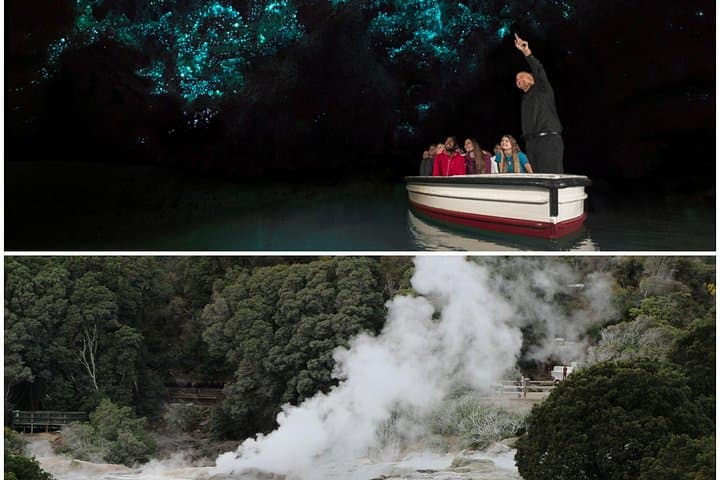
You leave Auckland before dawn and the city recedes; rolling pasture and live-sprayed forestry give way to geothermal steam and limestone country. By mid‑morning the air changes—sulphur threads the breeze as Pohutu geyser readies its plume and, later, a cathedral of glowworms punctures the cave dark with pinpricks of light.
Verified experiences and guided adventures in the surrounding area.
Operated by FlexiToursNZ · Auckland, Auckland
You leave Auckland before dawn and the city recedes; rolling pasture and live-sprayed forestry give way to geothermal steam and limestone country. By mid‑morning the air changes—sulphur threads the breeze as Pohutu geyser readies its plume and, later, a cathedral of glowworms punctures the cave dark with pinpricks of light.
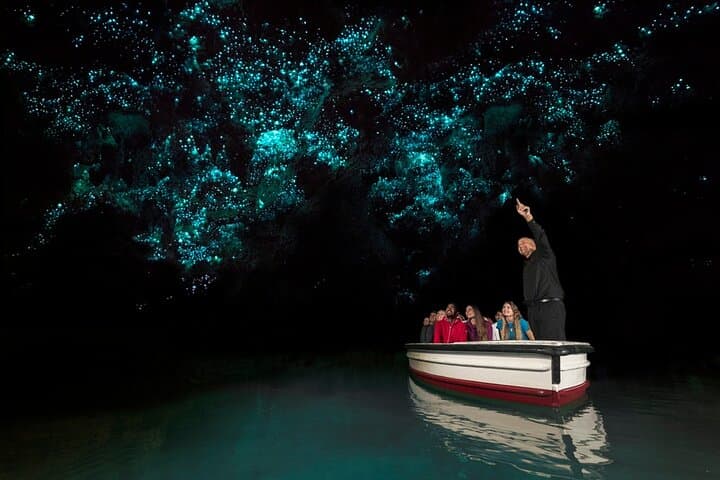
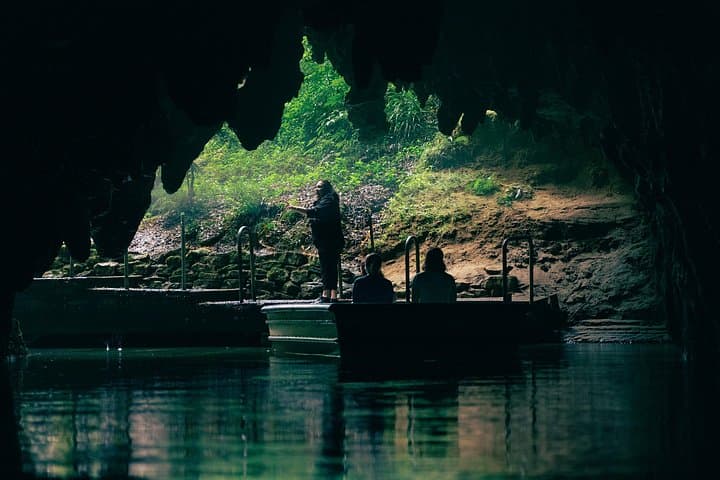
This full‑day loop links two distinct geological theatres. Rotorua sits on the Taupō volcanic zone: silica terraces, bubbling mud pools and the Pohutu geyser at Te Puia illustrate active geothermal processes that Māori iwi have managed for generations. Waitomo’s caves are karst limestone sculpted over millennia; stalactites and flowstone frame a black river where Arachnocampa luminosa — New Zealand’s native glowworm — dangles its bioluminescent lure.
Culture and interpretation are central: Te Puia hosts carving and weaving schools and guided explanations of Māori tikanga, while Waitomo guides describe cave formation, Māori use of caves historically, and the fragile glowworm ecology.
Practicalities matter on a 13‑hour day. Expect long drives, hotel pickup from about 6:30am and a small‑group minibus with leather seating. Wear closed, non‑slip shoes for cave walking and bring a compact rain jacket and layered clothing—the Rotorua basin can be markedly cooler and damper than Auckland. Photography is allowed in many outdoor areas but the glowworm grotto is best experienced quietly; flash will wash out the luminescence. Reconfirm your booking 24 hours ahead, carry water and any motion‑sickness remedies, and be ready to disembark on schedule: the itinerary keeps tight windows to fit both sites in one day.
easy.
12–13 hours.
Suitable for people of average fitness; involves short walks on uneven surfaces and one small boat ride inside the caves.
The tour lasts about 12–13 hours with hotel pickups from around 6:30am; exact pickup time depends on your location and must be reconfirmed 24 hours prior.
The operator advises that children under 2 are not suitable for the group tour; infant seats are available and the trip is otherwise family‑friendly with short, supervised cave walks.
You can take photos without flash in some areas, but the glowworm grotto experience is best without flash or bright lights—follow your guide’s instructions to avoid disturbing the insects.
Cave access includes steps, uneven surfaces, and a small boat; the tour is not fully wheelchair accessible—contact the operator in advance to discuss individual needs.
Rotorua lies on the Taupō Volcanic Zone and has been a center for Māori settlement and geothermal use for centuries; Waitomo’s caves were first explored and mapped by Māori and later by European cavers in the 19th century.
Both sites manage visitor impact: cave guides enforce low‑light and no‑touch policies to protect glowworms, while Rotorua reserves protect fragile silica and microbial formations from trampling.
FlexiToursNZ operates guided outdoor trips and adventures with an emphasis on safety, stewardship, and memorable experiences.
You leave Auckland before dawn and the city recedes; rolling pasture and live-sprayed forestry give way to geothermal steam and limestone country. By mid‑morning the air changes—sulphur threads the breeze as Pohutu geyser readies its plume and, later, a cathedral of glowworms punctures the cave dark with pinpricks of light.
You leave Auckland before dawn and the city recedes; rolling pasture and live-sprayed forestry give way to geothermal steam and limestone country. By mid‑morning the air changes—sulphur threads the breeze as Pohutu geyser readies its plume and, later, a cathedral of glowworms punctures the cave dark with pinpricks of light.
This full‑day loop links two distinct geological theatres. Rotorua sits on the Taupō volcanic zone: silica terraces, bubbling mud pools and the Pohutu geyser at Te Puia illustrate active geothermal processes that Māori iwi have managed for generations. Waitomo’s caves are karst limestone sculpted over millennia; stalactites and flowstone frame a black river where Arachnocampa luminosa — New Zealand’s native glowworm — dangles its bioluminescent lure.
Culture and interpretation are central: Te Puia hosts carving and weaving schools and guided explanations of Māori tikanga, while Waitomo guides describe cave formation, Māori use of caves historically, and the fragile glowworm ecology.
Practicalities matter on a 13‑hour day. Expect long drives, hotel pickup from about 6:30am and a small‑group minibus with leather seating. Wear closed, non‑slip shoes for cave walking and bring a compact rain jacket and layered clothing—the Rotorua basin can be markedly cooler and damper than Auckland. Photography is allowed in many outdoor areas but the glowworm grotto is best experienced quietly; flash will wash out the luminescence. Reconfirm your booking 24 hours ahead, carry water and any motion‑sickness remedies, and be ready to disembark on schedule: the itinerary keeps tight windows to fit both sites in one day.