THE ADVENTURE COLLECTIVE® · Independent discovery and booking for outdoor travel

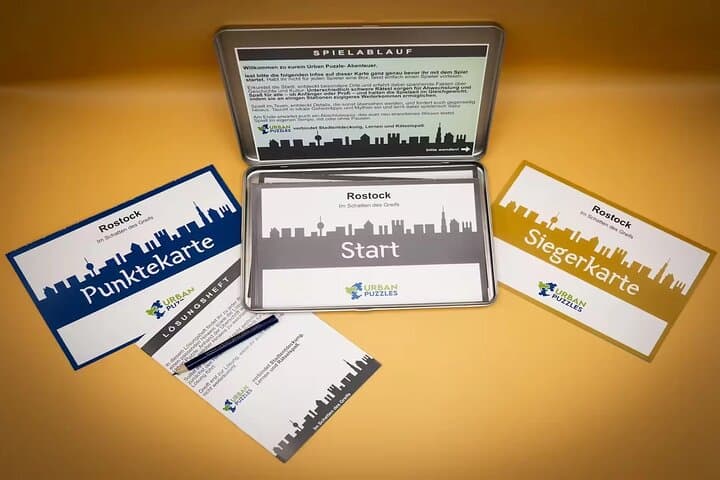
Walk through Rostock’s medieval gates and solve creative puzzles that lead you between Kröpeliner Tor, St. Mary’s Church and the Town Hall. This self‑paced, private city game blends Hanseatic history with an interactive scavenger hunt—ideal for families and curious travelers.
Walk through Rostock’s medieval gates and solve creative puzzles that lead you between Kröpeliner Tor, St. Mary’s Church and the Town Hall. This self‑paced, private city game blends Hanseatic history with an interactive scavenger hunt—ideal for families and curious travelers.
You step through Kröpeliner Tor and the city seems to test you: cobbles, carved stone, and a puzzle card that points to the next clue. The air carries salt from the nearby Warnow and the rhythm of trams; statues and Gothic steeples watch as you move through lanes that once guided medieval merchants.
Verified experiences and guided adventures in the surrounding area.
Operated by Urban Puzzles Stadtspiele · Rostock, Mecklenburg-Vorpommern
You step through Kröpeliner Tor and the city seems to test you: cobbles, carved stone, and a puzzle card that points to the next clue. The air carries salt from the nearby Warnow and the rhythm of trams; statues and Gothic steeples watch as you move through lanes that once guided medieval merchants.
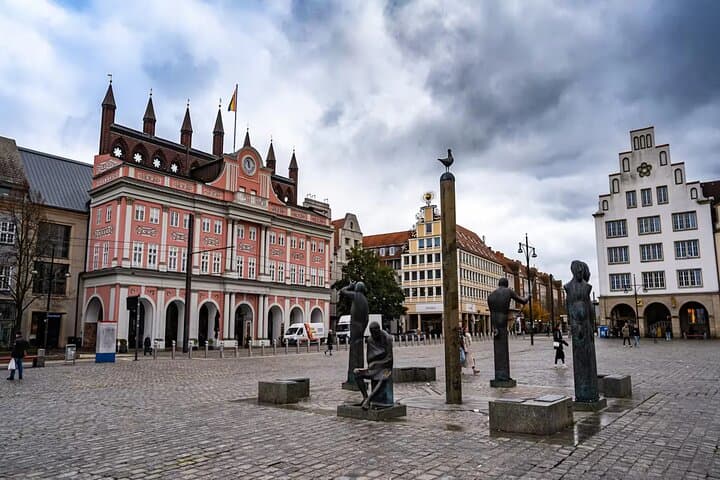
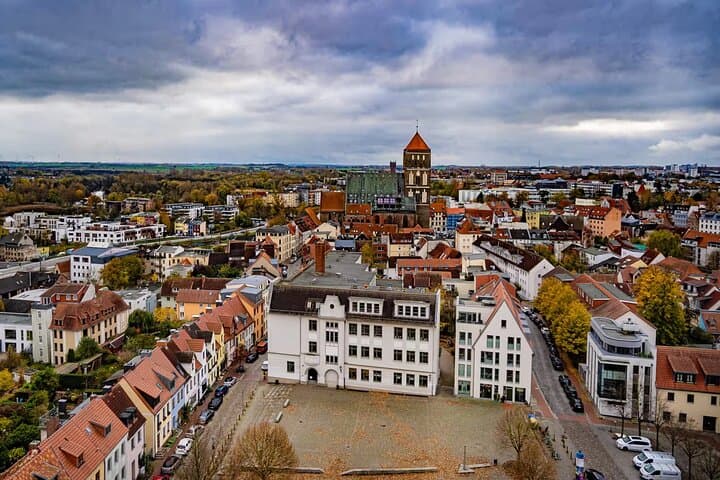
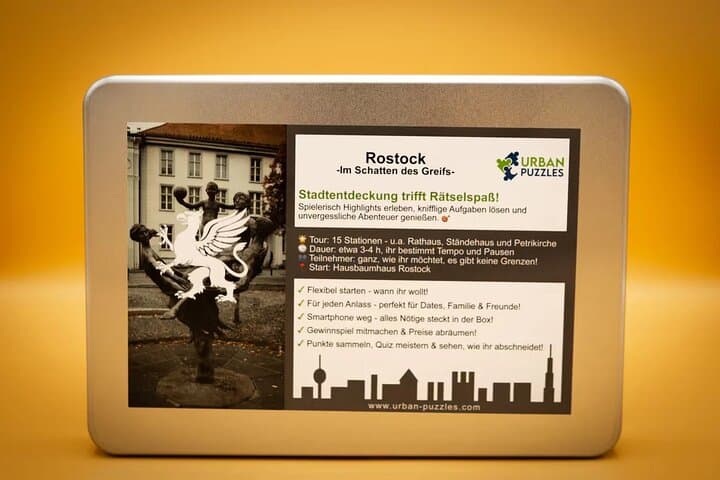
Rostock wears its Hanseatic past visibly—St. Mary's Church and the ornate Town Hall speak to a mercantile history stretching back to the 13th century. The game’s Griffin theme borrows from local heraldry and the city’s ties to maritime trade. Geologically the coast sits on glacially carved lowlands, and the Warnow estuary creates tidal flats and harbor views that frame the urban route.
Culturally, this is a walk that’s part scavenger hunt, part history lesson: creative puzzles lead you from landmark to landmark while revealing small details—stone inscriptions, courtyard façades, and market rhythms—that often go unnoticed.
Practical guidance: allow up to four hours at a relaxed pace, wear supportive shoes for cobbles and light steps, and bring a charged phone for map hints and scoring. Start mid-morning to avoid rush hours and catch museums or cafés open afterward. The experience is self-paced and private; it’s suitable for families, couples, or small groups. Expect moderate walking with short bursts of standing while solving clues.
Play mindedly: respect private courtyards, use marked public routes, and leave room for a cafe break—Rostock’s coffee culture is where answers often come to you.
easy.
3–4 hours.
Moderate walking fitness; comfortable standing and walking for up to four hours.
The experience is self‑paced but plan about 3–4 hours to complete the route and puzzles at a relaxed pace.
Yes — this is a flexible, private experience; start when your ticket becomes active and proceed at your own tempo.
Yes — puzzles are designed for mixed ages, but younger children may need adult help with some challenges.
Premium puzzle boxes may be shipped (allow 2–3 business days); mobile tickets are also accepted on arrival.
Rostock grew as a Hanseatic port from the 13th century; Kröpeliner Tor and St. Mary’s Church are reminders of the city’s medieval mercantile wealth.
Stay on public routes to protect historic fabric and private property; support local cafés and small museums to keep cultural tourism sustainable.
Urban Puzzles Stadtspiele operates guided outdoor trips and adventures with an emphasis on safety, stewardship, and memorable experiences.
You step through Kröpeliner Tor and the city seems to test you: cobbles, carved stone, and a puzzle card that points to the next clue. The air carries salt from the nearby Warnow and the rhythm of trams; statues and Gothic steeples watch as you move through lanes that once guided medieval merchants.
You step through Kröpeliner Tor and the city seems to test you: cobbles, carved stone, and a puzzle card that points to the next clue. The air carries salt from the nearby Warnow and the rhythm of trams; statues and Gothic steeples watch as you move through lanes that once guided medieval merchants.
Rostock wears its Hanseatic past visibly—St. Mary's Church and the ornate Town Hall speak to a mercantile history stretching back to the 13th century. The game’s Griffin theme borrows from local heraldry and the city’s ties to maritime trade. Geologically the coast sits on glacially carved lowlands, and the Warnow estuary creates tidal flats and harbor views that frame the urban route.
Culturally, this is a walk that’s part scavenger hunt, part history lesson: creative puzzles lead you from landmark to landmark while revealing small details—stone inscriptions, courtyard façades, and market rhythms—that often go unnoticed.
Practical guidance: allow up to four hours at a relaxed pace, wear supportive shoes for cobbles and light steps, and bring a charged phone for map hints and scoring. Start mid-morning to avoid rush hours and catch museums or cafés open afterward. The experience is self-paced and private; it’s suitable for families, couples, or small groups. Expect moderate walking with short bursts of standing while solving clues.
Play mindedly: respect private courtyards, use marked public routes, and leave room for a cafe break—Rostock’s coffee culture is where answers often come to you.