THE ADVENTURE COLLECTIVE® · Independent discovery and booking for outdoor travel

Wander Rostock’s Old Town with a private guide to see St. Mary’s Church, its 15th‑century astronomical clock and the medieval Neuer Markt. This 2–4 hour tour combines city history, maritime culture and accessible routes through cobbled streets.
Wander Rostock’s Old Town with a private guide to see St. Mary’s Church, its 15th‑century astronomical clock and the medieval Neuer Markt. This 2–4 hour tour combines city history, maritime culture and accessible routes through cobbled streets.
You step out onto cobbled streets that tilt toward the Warnow River, the Baltic breeze nudging at a loose scarf as the church tower of St. Mary’s keeps watch over the square. Begin at the neo‑Gothic Ständehaus and move through layers of city life: merchant houses, a bustling Neuer Markt and the playful Brunnen der Lebensfreude — bronze figures that catch the sun and the eye.
Verified experiences and guided adventures in the surrounding area.
Operated by Rosotravel - Munich · Rostock, Mecklenburg-Vorpommern
You step out onto cobbled streets that tilt toward the Warnow River, the Baltic breeze nudging at a loose scarf as the church tower of St. Mary’s keeps watch over the square. Begin at the neo‑Gothic Ständehaus and move through layers of city life: merchant houses, a bustling Neuer Markt and the playful Brunnen der Lebensfreude — bronze figures that catch the sun and the eye.
Rostock’s Old Town grew wealthy as a Hanseatic port from the 13th century; its stonework and spires still tell of maritime trade, guild power and wartime losses that reshaped collections and architecture. Geologically, the region is lowland Baltic plain — long, flat approaches gave rise to a busy harbor rather than dramatic peaks — and that maritime setting shapes local culture, from smoked fish stands to seafaring stories in the Culture Museum housed in a former Cistercian monastery.
On a 2–4 hour private walk, licensed guides point out the medieval astronomical clock in St. Mary’s (dating to the 15th century), the layered façades of Rathaus and the repurposed Nikolaikirche as a cultural venue. Expect narrow alleys, occasional steps and well‑worn paving stones; the tour adapts to mobility needs and can include museum entry on longer options.
Practical edge: wear comfortable, treaded shoes and layer for shifting coastal weather. Arrive early to avoid midday crowds in summer, and be mindful that church services limit access. Bring a charged phone or small camera — the clock’s mechanism and market façades reward a steady lens — and plan a café stop to sample local smoked fish after the tour.
easy.
2–4 hours.
Suitable for most fitness levels; involves steady walking at an easy pace and some standing during stops.
Yes — the operator lists wheelchair accessibility and can adapt the route; notify them in advance so pickup and pacing are arranged.
Admission to St Mary’s Church is included for all options; Nikolaikirche and Culture Museum entry are included on 3‑ and 4‑hour tours respectively.
Pickup is available within approximately 1.5 km of the Old Town meeting point; confirm your address when booking.
Tours are led by licensed guides fluent in multiple languages — specify your preferred language at booking to ensure availability.
Rostock prospered as a Hanseatic port from the 13th century; many civic buildings reflect its medieval trading wealth, while the Culture Museum occupies a Cistercian monastery founded in 1270.
Historic preservation is a priority — follow guide instructions and respect limited‑access churches; supporting the Culture Museum helps maintain regional collections restored after wartime losses.
Rosotravel - Munich operates guided outdoor trips and adventures with an emphasis on safety, stewardship, and memorable experiences.
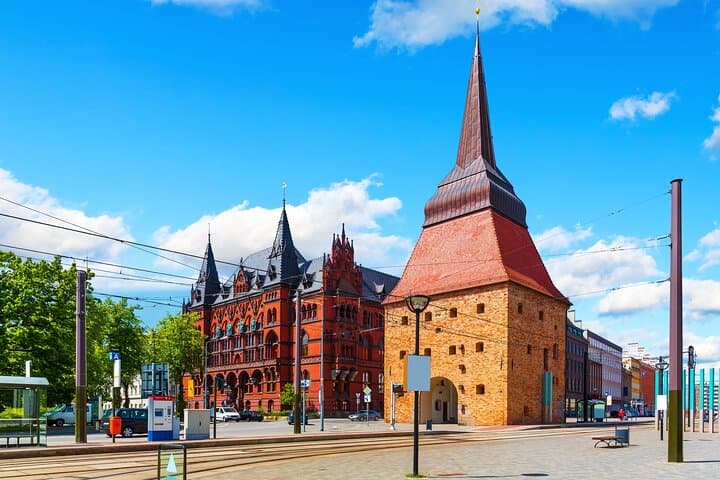

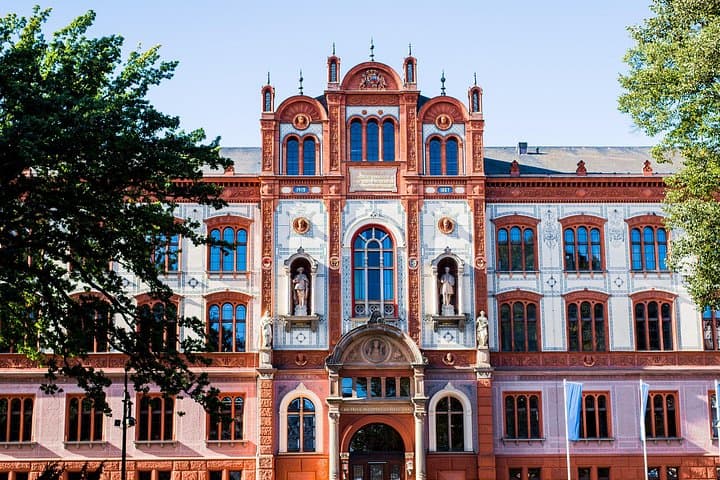
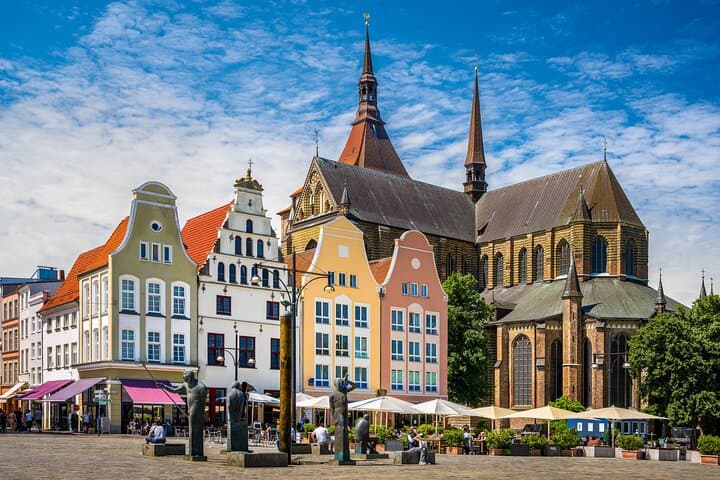
You step out onto cobbled streets that tilt toward the Warnow River, the Baltic breeze nudging at a loose scarf as the church tower of St. Mary’s keeps watch over the square. Begin at the neo‑Gothic Ständehaus and move through layers of city life: merchant houses, a bustling Neuer Markt and the playful Brunnen der Lebensfreude — bronze figures that catch the sun and the eye.
You step out onto cobbled streets that tilt toward the Warnow River, the Baltic breeze nudging at a loose scarf as the church tower of St. Mary’s keeps watch over the square. Begin at the neo‑Gothic Ständehaus and move through layers of city life: merchant houses, a bustling Neuer Markt and the playful Brunnen der Lebensfreude — bronze figures that catch the sun and the eye.
Rostock’s Old Town grew wealthy as a Hanseatic port from the 13th century; its stonework and spires still tell of maritime trade, guild power and wartime losses that reshaped collections and architecture. Geologically, the region is lowland Baltic plain — long, flat approaches gave rise to a busy harbor rather than dramatic peaks — and that maritime setting shapes local culture, from smoked fish stands to seafaring stories in the Culture Museum housed in a former Cistercian monastery.
On a 2–4 hour private walk, licensed guides point out the medieval astronomical clock in St. Mary’s (dating to the 15th century), the layered façades of Rathaus and the repurposed Nikolaikirche as a cultural venue. Expect narrow alleys, occasional steps and well‑worn paving stones; the tour adapts to mobility needs and can include museum entry on longer options.
Practical edge: wear comfortable, treaded shoes and layer for shifting coastal weather. Arrive early to avoid midday crowds in summer, and be mindful that church services limit access. Bring a charged phone or small camera — the clock’s mechanism and market façades reward a steady lens — and plan a café stop to sample local smoked fish after the tour.