THE ADVENTURE COLLECTIVE® · Independent discovery and booking for outdoor travel

Explore Rostock at your own pace with a smartphone-driven scavenger hunt that routes you past Hanseatic gates, university precincts, and riverside relics. Ideal for families and small teams, the game blends local history with playful challenges over 3–4 hours.
Explore Rostock at your own pace with a smartphone-driven scavenger hunt that routes you past Hanseatic gates, university precincts, and riverside relics. Ideal for families and small teams, the game blends local history with playful challenges over 3–4 hours.
You step out onto cobblestones that still remember the footsteps of medieval traders. The Warnow River threads past red-brick facades, gulls troubleshoot the harbor breeze, and the square at Neuer Markt opens like a map of the city's past waiting for a code to unlock it.
Verified experiences and guided adventures in the surrounding area.
Operated by Qula · Rostock, Mecklenburg-Vorpommern
You step out onto cobblestones that still remember the footsteps of medieval traders. The Warnow River threads past red-brick facades, gulls troubleshoot the harbor breeze, and the square at Neuer Markt opens like a map of the city's past waiting for a code to unlock it.
This self-guided e-scavenger hunt uses your phone to route you through Rostock’s highlights: Hanseatic gabled houses, the six-story city gate and Steintor, the playful Fountain of Joy, and the university precinct that dates to 1419. The route threads modern cafés with 14th-century civic architecture and quayside relics like the wooden pedal crane.
Geology here is subtle—sandy soils and post-glacial plains shaped the port’s shallow bays—while culture is bold: a northern German maritime identity, university energy, and a history tied to the Hanseatic League and centuries of trade.
Practically, the game runs 3–4 hours and lets you pause when you want. It’s designed for families, small teams, and solo explorers who prefer to move at their own pace. Routes are largely flat and wheelchair accessible; public transport hubs make arrival simple. Battery life is your main logistical concern—this is a phone-driven experience—so plan for a charger and comfortable walking shoes. Aim for morning or late afternoon to avoid midday crowds and to catch softer light on the brick façades.
Expect short puzzles, photo prompts, and local trivia that reward curiosity about side streets and market squares. Finish with a coffee on Kröpeliner Straße or a walk along the Warnow; the city keeps giving new corners to explore long after the game ends.
easy.
3–4 hours.
Minimal fitness required—long periods of standing and light walking (several kilometers) are expected.
The typical playtime is 3–4 hours, but you can pause and resume—many groups spread it over a half-day.
No—this is self-guided with instant confirmation; start whenever you like during daylight hours.
Yes—most areas and surfaces on the route are wheelchair and stroller accessible.
Yes—bookings support single or multiple small teams; teams compete to score by completing tasks and photo challenges.
Rostock grew as a Hanseatic port; its university, founded in 1419, is the oldest in Northern Europe and shaped the city’s civic life.
Stick to marked streets and public spaces, dispose of waste properly, and support local businesses to keep city tourism sustainable.
Qula operates guided outdoor trips and adventures with an emphasis on safety, stewardship, and memorable experiences.

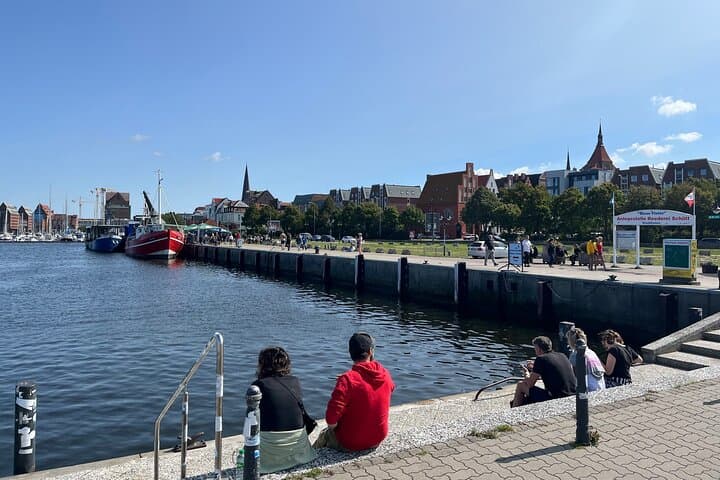
You step out onto cobblestones that still remember the footsteps of medieval traders. The Warnow River threads past red-brick facades, gulls troubleshoot the harbor breeze, and the square at Neuer Markt opens like a map of the city's past waiting for a code to unlock it.
You step out onto cobblestones that still remember the footsteps of medieval traders. The Warnow River threads past red-brick facades, gulls troubleshoot the harbor breeze, and the square at Neuer Markt opens like a map of the city's past waiting for a code to unlock it.
This self-guided e-scavenger hunt uses your phone to route you through Rostock’s highlights: Hanseatic gabled houses, the six-story city gate and Steintor, the playful Fountain of Joy, and the university precinct that dates to 1419. The route threads modern cafés with 14th-century civic architecture and quayside relics like the wooden pedal crane.
Geology here is subtle—sandy soils and post-glacial plains shaped the port’s shallow bays—while culture is bold: a northern German maritime identity, university energy, and a history tied to the Hanseatic League and centuries of trade.
Practically, the game runs 3–4 hours and lets you pause when you want. It’s designed for families, small teams, and solo explorers who prefer to move at their own pace. Routes are largely flat and wheelchair accessible; public transport hubs make arrival simple. Battery life is your main logistical concern—this is a phone-driven experience—so plan for a charger and comfortable walking shoes. Aim for morning or late afternoon to avoid midday crowds and to catch softer light on the brick façades.
Expect short puzzles, photo prompts, and local trivia that reward curiosity about side streets and market squares. Finish with a coffee on Kröpeliner Straße or a walk along the Warnow; the city keeps giving new corners to explore long after the game ends.