THE ADVENTURE COLLECTIVE® · Independent discovery and booking for outdoor travel

A private, guided 6 km loop through Anaga's Roque Negro combines laurel forests, phonolitic rock formations and rural farming terraces. Expect steep, uneven trails, sweeping viewpoints and a strong cultural thread of traditional Canary Island life.
A private, guided 6 km loop through Anaga's Roque Negro combines laurel forests, phonolitic rock formations and rural farming terraces. Expect steep, uneven trails, sweeping viewpoints and a strong cultural thread of traditional Canary Island life.
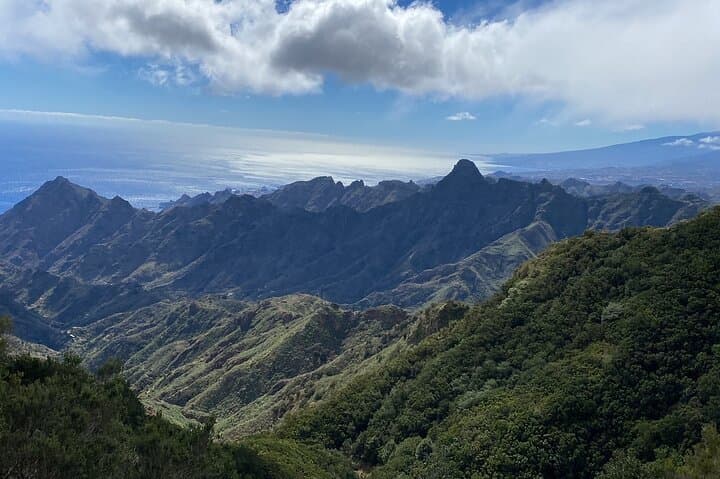
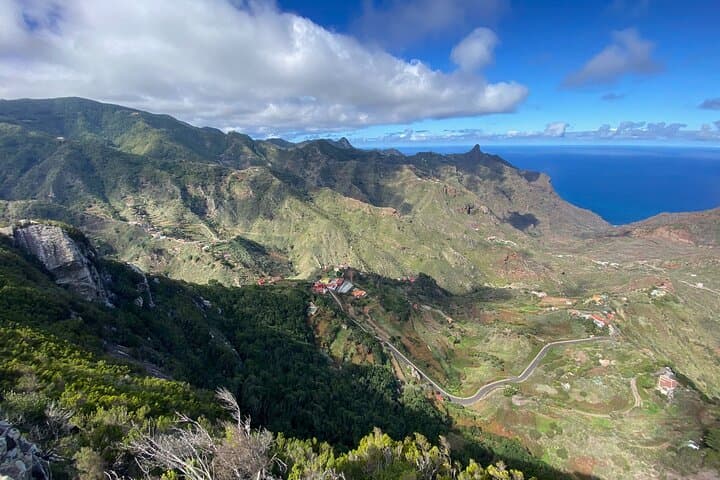
You step off the narrow lane and the island seems to inhale around you: laurel leaves whisper, a phonolitic outcrop darkens the sky, and terraces slope toward the sea.
Verified experiences and guided adventures in the surrounding area.
Operated by Capitán Anaga · Taganana, Santa Cruz de Tenerife
You step off the narrow lane and the island seems to inhale around you: laurel leaves whisper, a phonolitic outcrop darkens the sky, and terraces slope toward the sea.
This private 6-kilometer loop threads through the Caserío de Roque Negro in Anaga Rural Park, a corner of Tenerife declared a UNESCO Biosphere Reserve in 2015. Geologically, Anaga's steep ravines were carved by ancient streams cutting into basalt and phonolite, leaving the blackish Roque Negro rock that feeds lichens on its face. Cultural traces are constant—stone terraces, smallholdings, and farmhouses whose owners keep traditional grazing and cultivation alive.
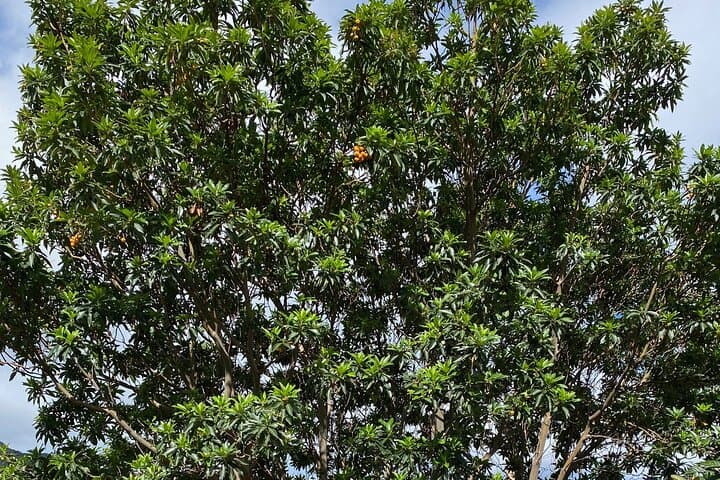
Walks here move between dense laurel forest—its humid canopy feels almost sentient—and exposed scrub and viewpoints that open to sheer drops and Atlantic light. Guides point out historic washing sites (lavaderos), old water channels, and the human scale of rural life that still tends these slopes. The route’s roughly 500 meters of ascent and descent reward steady effort with sweeping vantage points and intact forest that feels prehistoric.
Practical edge: this is a private, guided route of about 3–4 hours; expect uneven, sometimes steep trail underfoot and sections of loose scree. Wear supportive boots, pack 1–2 liters of water, sun protection and a waterproof layer—weather can shift quickly at Anaga’s altitude. Respect farm boundaries, stick to trails to protect the laurel understorey, and book with a guide who knows local footpaths and microclimates. The guide may refuse participants with significant health issues; plan accordingly and arrive prepared to move at a steady pace.
moderate.
3–4 hours.
Moderate fitness—comfortable with sustained climbs/descents and some loose terrain.
The guided loop is roughly 6 kilometers with about 500 meters of cumulative ascent and descent, typically completed in 3–4 hours.
The route includes steep and uneven sections; not recommended for strollers or those with significant mobility limitations—consult the operator for alternatives.
Most departures are from a meeting point near the Santiago house crossing in the Roque Negro area; public transport reaches nearby roads but private transfer or taxi is easiest.
Guides may refuse participation for those with serious heart, back, or pregnancy-related concerns; a moderate fitness level is required and standard travel insurance is recommended.
Anaga preserves centuries-old agricultural terraces and rural hamlets; Roque Negro’s name comes from a distinctive phonolitic rock that has long marked the landscape.
Anaga is a UNESCO Biosphere Reserve—stick to trails, avoid trampling laurel seedlings, and support local guides to minimize impacts.
Capitán Anaga operates guided outdoor trips and adventures with an emphasis on safety, stewardship, and memorable experiences.
You step off the narrow lane and the island seems to inhale around you: laurel leaves whisper, a phonolitic outcrop darkens the sky, and terraces slope toward the sea.
You step off the narrow lane and the island seems to inhale around you: laurel leaves whisper, a phonolitic outcrop darkens the sky, and terraces slope toward the sea.
This private 6-kilometer loop threads through the Caserío de Roque Negro in Anaga Rural Park, a corner of Tenerife declared a UNESCO Biosphere Reserve in 2015. Geologically, Anaga's steep ravines were carved by ancient streams cutting into basalt and phonolite, leaving the blackish Roque Negro rock that feeds lichens on its face. Cultural traces are constant—stone terraces, smallholdings, and farmhouses whose owners keep traditional grazing and cultivation alive.
Walks here move between dense laurel forest—its humid canopy feels almost sentient—and exposed scrub and viewpoints that open to sheer drops and Atlantic light. Guides point out historic washing sites (lavaderos), old water channels, and the human scale of rural life that still tends these slopes. The route’s roughly 500 meters of ascent and descent reward steady effort with sweeping vantage points and intact forest that feels prehistoric.
Practical edge: this is a private, guided route of about 3–4 hours; expect uneven, sometimes steep trail underfoot and sections of loose scree. Wear supportive boots, pack 1–2 liters of water, sun protection and a waterproof layer—weather can shift quickly at Anaga’s altitude. Respect farm boundaries, stick to trails to protect the laurel understorey, and book with a guide who knows local footpaths and microclimates. The guide may refuse participants with significant health issues; plan accordingly and arrive prepared to move at a steady pace.