THE ADVENTURE COLLECTIVE® · Independent discovery and booking for outdoor travel

Perched on Mount Rigi’s slopes, this high-ropes park delivers nine routes across 4 km of cables, bridges, and a 20-meter climbing snake. Plan 3–4 hours, arrive via cogwheel or cable car, and prepare for exposed traverses with professional instruction and full safety gear.
Perched on Mount Rigi’s slopes, this high-ropes park delivers nine routes across 4 km of cables, bridges, and a 20-meter climbing snake. Plan 3–4 hours, arrive via cogwheel or cable car, and prepare for exposed traverses with professional instruction and full safety gear.
A crisp alpine wind threads through the firs as climbers clip in and begin the first traverse — that immediate click of a carabiner punctuates the quiet of the slope. Ropes Park Rigi sits on the flanks of Mount Rigi in Central Switzerland, where nine routes spread across varied heights and roughly 4 km of cables and bridges. The park turns the mountain’s mixed spruce-and-beech slope into a vertical playground; trees bear the load, and the views push your eyes across Lake Lucerne.
Verified experiences and guided adventures in the surrounding area.
Operated by Outdoor · Weggis, Canton of Lucerne
A crisp alpine wind threads through the firs as climbers clip in and begin the first traverse — that immediate click of a carabiner punctuates the quiet of the slope. Ropes Park Rigi sits on the flanks of Mount Rigi in Central Switzerland, where nine routes spread across varied heights and roughly 4 km of cables and bridges. The park turns the mountain’s mixed spruce-and-beech slope into a vertical playground; trees bear the load, and the views push your eyes across Lake Lucerne.
Rigi’s railways and cableways date back to the 19th century — the Vitznau–Rigi Bahn opened in 1871 — and the region has long been a summer escape for Swiss visitors. Geologically the massif is a low-lying alpine outcrop of molasse and conglomerate that creates steep faces and ledges ideal for fixed-rope courses. Local culture leans toward active mountain tourism: expect day-trippers, cogwheel trains, and lakeside towns within easy reach.
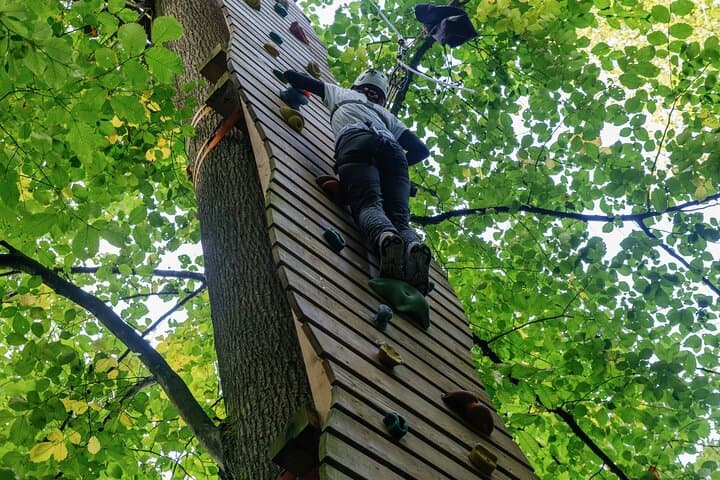
Practically, the park recommends 3–4 hours for a typical visit and a full day to attempt every route. Routes vary by exposure and difficulty; the 20-meter climbing snake is the signature challenge for those comfortable with height. Staff provide harnesses, helmets, and instruction; participants must be at least 120 cm tall. Public transport reaches the Rigi area — cogwheel trains and cable cars connect from Vitznau, Weggis, and Lucerne — and the park can close in bad weather.
Bring steady shoes, layer for sudden mountain winds, and plan for sun alternated with shade under the canopy. Expect a mix of balance, grip, and short bursts of upper-body effort — the park rewards steady pacing and a cautious sense of adventure.
moderate.
3–6 hours.
Moderate fitness: comfortable with heights, good balance, and short bursts of upper-body strength.
Most visitors spend 3–4 hours; plan a full day if you want to repeat routes or complete all nine courses.
No — staff provide instruction and safety gear; basic comfort with heights and balance is helpful.
Children under 120 cm are not allowed; age limits vary by route and staff will assess suitability on arrival.
The park can close in high winds or electrical storms; bookings usually allow a full refund if cancelled at least 24 hours in advance.
Mount Rigi has hosted tourists since the 19th century; the Vitznau–Rigi Bahn, opened in 1871, was among Europe’s first mountain railways.
Stick to marked paths and avoid attaching personal gear to trees; the park and local authorities monitor tree health and limit anchoring to preserve the forest.
Outdoor operates guided outdoor trips and adventures with an emphasis on safety, stewardship, and memorable experiences.
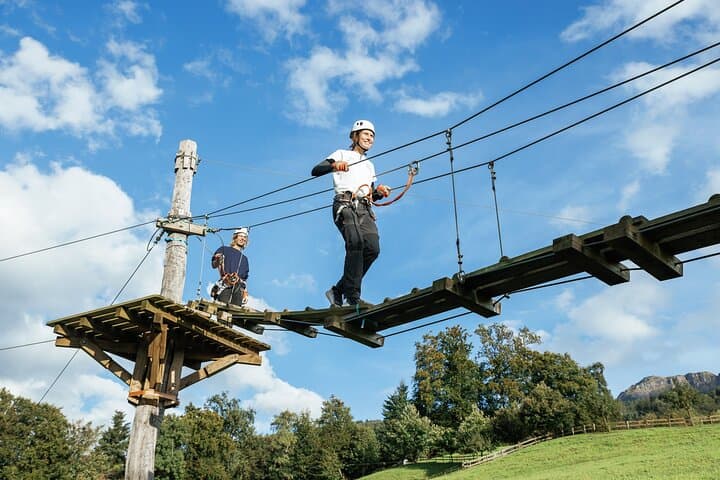
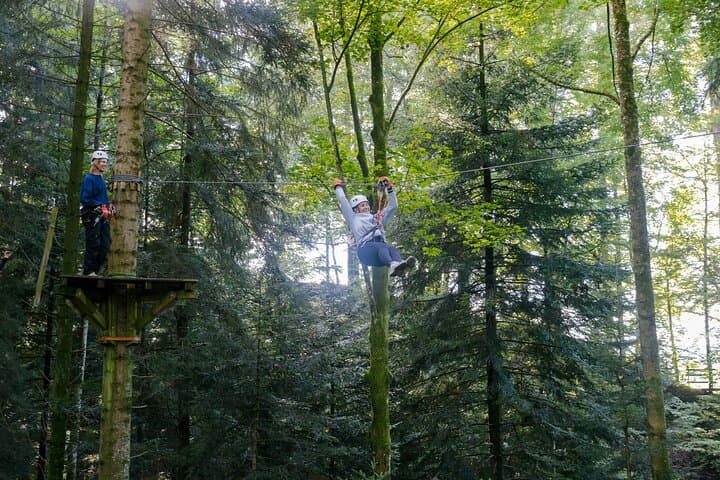
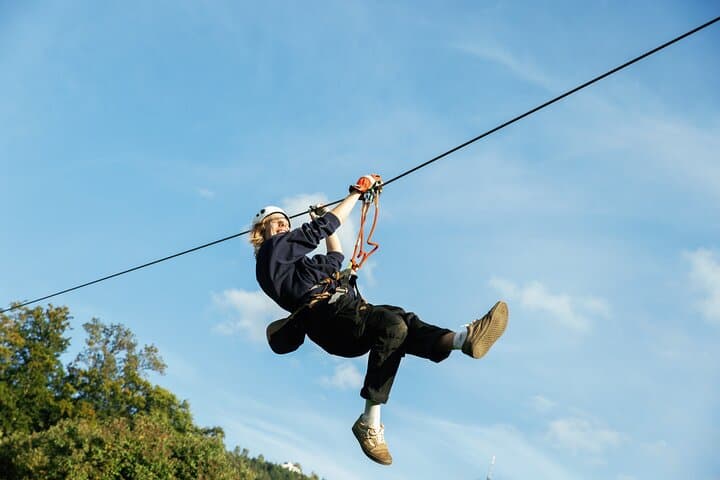
A crisp alpine wind threads through the firs as climbers clip in and begin the first traverse — that immediate click of a carabiner punctuates the quiet of the slope. Ropes Park Rigi sits on the flanks of Mount Rigi in Central Switzerland, where nine routes spread across varied heights and roughly 4 km of cables and bridges. The park turns the mountain’s mixed spruce-and-beech slope into a vertical playground; trees bear the load, and the views push your eyes across Lake Lucerne.
A crisp alpine wind threads through the firs as climbers clip in and begin the first traverse — that immediate click of a carabiner punctuates the quiet of the slope. Ropes Park Rigi sits on the flanks of Mount Rigi in Central Switzerland, where nine routes spread across varied heights and roughly 4 km of cables and bridges. The park turns the mountain’s mixed spruce-and-beech slope into a vertical playground; trees bear the load, and the views push your eyes across Lake Lucerne.
Rigi’s railways and cableways date back to the 19th century — the Vitznau–Rigi Bahn opened in 1871 — and the region has long been a summer escape for Swiss visitors. Geologically the massif is a low-lying alpine outcrop of molasse and conglomerate that creates steep faces and ledges ideal for fixed-rope courses. Local culture leans toward active mountain tourism: expect day-trippers, cogwheel trains, and lakeside towns within easy reach.
Practically, the park recommends 3–4 hours for a typical visit and a full day to attempt every route. Routes vary by exposure and difficulty; the 20-meter climbing snake is the signature challenge for those comfortable with height. Staff provide harnesses, helmets, and instruction; participants must be at least 120 cm tall. Public transport reaches the Rigi area — cogwheel trains and cable cars connect from Vitznau, Weggis, and Lucerne — and the park can close in bad weather.
Bring steady shoes, layer for sudden mountain winds, and plan for sun alternated with shade under the canopy. Expect a mix of balance, grip, and short bursts of upper-body effort — the park rewards steady pacing and a cautious sense of adventure.