THE ADVENTURE COLLECTIVE® · Independent discovery and booking for outdoor travel

A quieter northern approach to Kilimanjaro, the Rongai route spreads ascent over six days—more acclimatization, fewer people, and varied habitats from pine forest to an icy summit. Expect long, steady days, expert guides, and camping under high-altitude skies.
A quieter northern approach to Kilimanjaro, the Rongai route spreads ascent over six days—more acclimatization, fewer people, and varied habitats from pine forest to an icy summit. Expect long, steady days, expert guides, and camping under high-altitude skies.
Dawn lifts over the northern flank of Kilimanjaro and the Rongai trail unfurls into tall maize fields and cool, pine-scented forest. The ascent is deliberate here—longer switchbacks, fewer crowds—giving the mountain time to reveal itself: moorland lobelias, the raw sweep of the Saddle between Mawenzi and Kibo, and the final icy knife of the crater rim.
Verified experiences and guided adventures in the surrounding area.
Operated by Alkanjaoi Tours and Safaris · Moshi, Kilimanjaro Region
Dawn lifts over the northern flank of Kilimanjaro and the Rongai trail unfurls into tall maize fields and cool, pine-scented forest. The ascent is deliberate here—longer switchbacks, fewer crowds—giving the mountain time to reveal itself: moorland lobelias, the raw sweep of the Saddle between Mawenzi and Kibo, and the final icy knife of the crater rim.
The Rongai approach follows old caravan tracks and the mountain’s volcanic anatomy. Kibo’s peak is the remnant of a collapsed cone atop Kilimanjaro’s volcanic shield; Hans Meyer’s 19th-century explorations formalized the summit’s place on every peak-bagger’s list. The Chagga people who live on Kilimanjaro’s lower slopes have tended the land for generations; you'll see their terraced agriculture and meet the guides and porters whose knowledge is essential to successful summit bids.
Practically, plan for rapid altitude change: the route climbs from roughly 1,980 m at Marangu Gate to 5,895 m at Uhuru Peak—a nearly 4,000 m gain across six days. Daily hiking ranges from 3–7 hours with varied terrain: pine forest, moorland, alpine desert, and scree/ice near the summit. Nights are in camps where staff set tents, boil water, and serve hot meals—expect temperatures below freezing above 3,500 m.
Bring layered insulation, a warm sleeping bag, and trekking poles to manage scree. Hydrate, maintain a slow, steady pace for acclimatization, and lean on your guides: they read weather windows and body signals. Summit night is an early, slow push—mental endurance matters as much as legs. Finish at Marangu Gate with the ritual sign-out and the hard-earned view back across Africa’s highest free-standing mountain.
challenging.
6 days.
Good cardiovascular fitness and previous multi-day hiking experience; able to walk 4–7 hours per day and manage cold nights.
Rongai’s gradual profile and extra acclimatization days improve success rates, but individual fitness, acclimatization response, weather, and adherence to guide instructions determine outcomes.
Prior multi-day trekking is strongly recommended; while technical climbing isn’t required, you must handle long days and altitude-related symptoms.
TANAPA park permits and park fees are required and typically included by the operator; always confirm inclusion on booking.
Tipping is customary—wait until the group and all equipment reach Marangu Gate; recommended amounts vary, so ask your operator for current guidance.
Kilimanjaro’s slopes are home to the Chagga people; European summit records date to Hans Meyer’s 1889 ascent, but local knowledge sustained mountain travel long before.
Tanzania National Parks (TANAPA) manages permits to limit impact; popular operators follow leave-no-trace rules and support porter welfare and waste management.
Alkanjaoi Tours and Safaris operates guided outdoor trips and adventures with an emphasis on safety, stewardship, and memorable experiences.


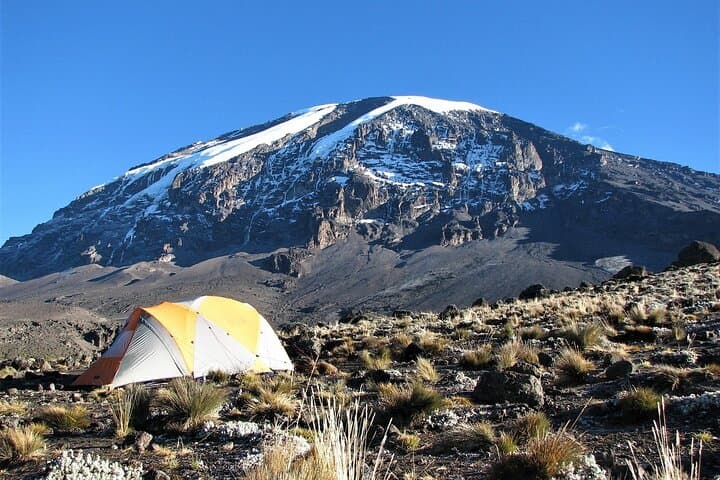
Dawn lifts over the northern flank of Kilimanjaro and the Rongai trail unfurls into tall maize fields and cool, pine-scented forest. The ascent is deliberate here—longer switchbacks, fewer crowds—giving the mountain time to reveal itself: moorland lobelias, the raw sweep of the Saddle between Mawenzi and Kibo, and the final icy knife of the crater rim.
Dawn lifts over the northern flank of Kilimanjaro and the Rongai trail unfurls into tall maize fields and cool, pine-scented forest. The ascent is deliberate here—longer switchbacks, fewer crowds—giving the mountain time to reveal itself: moorland lobelias, the raw sweep of the Saddle between Mawenzi and Kibo, and the final icy knife of the crater rim.
The Rongai approach follows old caravan tracks and the mountain’s volcanic anatomy. Kibo’s peak is the remnant of a collapsed cone atop Kilimanjaro’s volcanic shield; Hans Meyer’s 19th-century explorations formalized the summit’s place on every peak-bagger’s list. The Chagga people who live on Kilimanjaro’s lower slopes have tended the land for generations; you'll see their terraced agriculture and meet the guides and porters whose knowledge is essential to successful summit bids.
Practically, plan for rapid altitude change: the route climbs from roughly 1,980 m at Marangu Gate to 5,895 m at Uhuru Peak—a nearly 4,000 m gain across six days. Daily hiking ranges from 3–7 hours with varied terrain: pine forest, moorland, alpine desert, and scree/ice near the summit. Nights are in camps where staff set tents, boil water, and serve hot meals—expect temperatures below freezing above 3,500 m.
Bring layered insulation, a warm sleeping bag, and trekking poles to manage scree. Hydrate, maintain a slow, steady pace for acclimatization, and lean on your guides: they read weather windows and body signals. Summit night is an early, slow push—mental endurance matters as much as legs. Finish at Marangu Gate with the ritual sign-out and the hard-earned view back across Africa’s highest free-standing mountain.