THE ADVENTURE COLLECTIVE® · Independent discovery and booking for outdoor travel

Take the quieter northern approach to Kilimanjaro on the Rongai Route—five days that move from forest to lunar saddle and a summit push to Uhuru Peak. Expect long walking days, high-altitude desert, and close-up views of Mawenzi.
Take the quieter northern approach to Kilimanjaro on the Rongai Route—five days that move from forest to lunar saddle and a summit push to Uhuru Peak. Expect long walking days, high-altitude desert, and close-up views of Mawenzi.
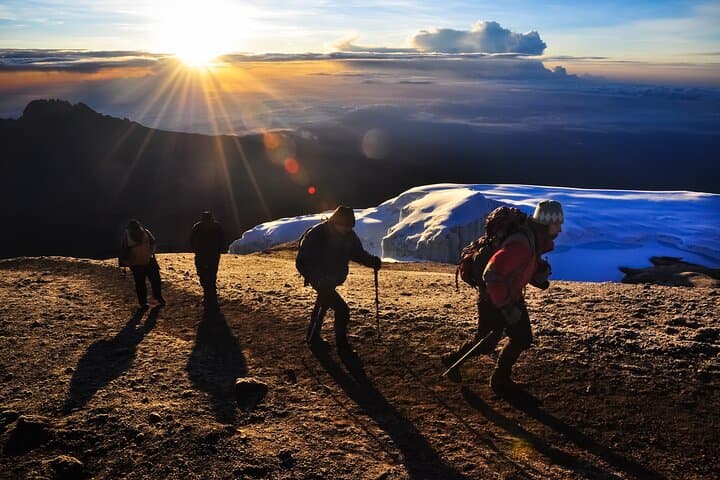
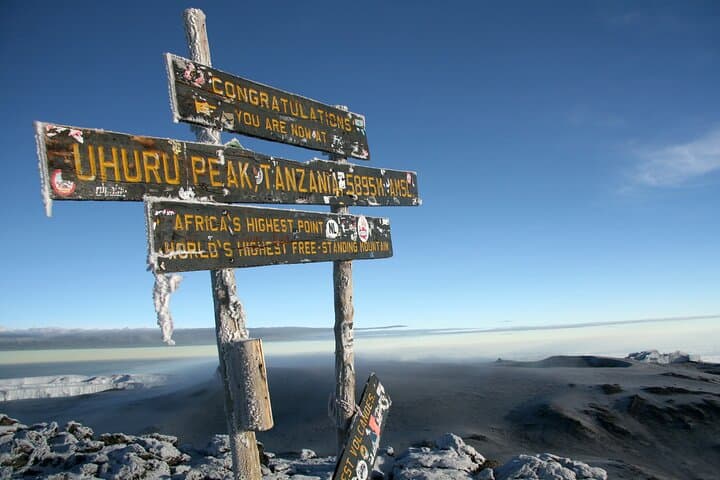
You step off the vehicle at Rongai Gate (2,020m) and the air immediately shifts—cooler, thinner, the slopes opening into high grasses and pine. The trail climbs gently at first, through maize fields and montane forest, then unfurls into the moorland and volcanic saddle between Mawenzi and Kibo. Over five days you move from verdant forest to alpine desert, finishing under the ice cliffs near Uhuru Peak (5,895m).
Verified experiences and guided adventures in the surrounding area.
Operated by Mountain Warriors Tours and Safaris · Moshi, Kilimanjaro Region
You step off the vehicle at Rongai Gate (2,020m) and the air immediately shifts—cooler, thinner, the slopes opening into high grasses and pine. The trail climbs gently at first, through maize fields and montane forest, then unfurls into the moorland and volcanic saddle between Mawenzi and Kibo. Over five days you move from verdant forest to alpine desert, finishing under the ice cliffs near Uhuru Peak (5,895m).
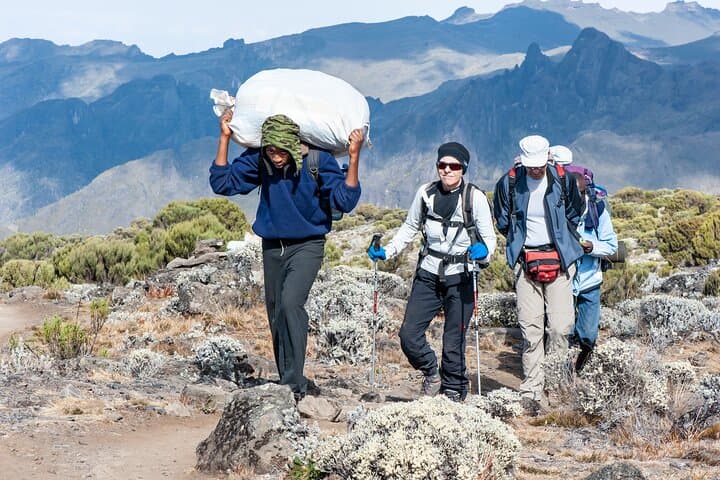
The Rongai approach begins on Kilimanjaro’s quieter northern flank, historically used by local traders and close to the Kenyan border. Geologically Kibo is a dormant stratovolcano; Mawenzi’s jagged cone offers constant visual company on the ascent, its eroded ridges contrasting Kibo’s broad crater rim. Local Chagga culture surrounds the mountain—villages cluster lower down, and porters and guides bring practical mountain knowledge and traditional hospitality to each camp.
Expect long, deliberate walking days rather than technical climbing: typical stage elevations include Simba Camp (~2,600m), Third Cave (~3,800m), Kibo Hut (~4,720m) and a summit push to Gilman’s Point (5,685m) and Uhuru. Summit day is the hardest: ~16.5km and 10–12 hours round trip on steep scree and icy sections.
Practical guidance: pace conservatively for acclimatization, carry layered clothing for rapid temperature swings, and use trekking poles on loose scree. Hydrate frequently and monitor for altitude symptoms—turning back is a sound decision. With a competent guide, good footwear, and respect for the mountain, the Rongai route delivers solitude, consistent views of Mawenzi, and a realistic shot at Africa’s highest point.
challenging.
5 days.
Good cardiovascular fitness and experience with multi-day trekking; ability to walk 6–10 hours on uneven terrain and tolerate altitude.
No technical climbing gear is required for the Rongai route; the summit is a strenuous hike over scree and ice but doesn’t require ropes or crampons for standard seasonal conditions.
You should be in good aerobic shape, used to multi-day hikes and able to walk 6–10 hours on uneven ground; prior altitude experience is an advantage.
A 5-day schedule is ambitious; success rates improve with a 6–7 day itinerary that allows better acclimatization—consider extending if possible.
Yes—this itinerary includes all meals on the mountain and purified drinking water; bring personal snacks and electrolyte mixes if you prefer them.
Local Chagga communities have long interacted with Kilimanjaro for agriculture and spiritual practices; colonial-era routes concentrated traffic on the southern slopes, making Rongai comparatively less traveled.
The mountain sits in Kilimanjaro National Park—stay on trails, carry out all waste, and respect porter welfare; supporting licensed operators promotes sustainable practices.
Mountain Warriors Tours and Safaris operates guided outdoor trips and adventures with an emphasis on safety, stewardship, and memorable experiences.
You step off the vehicle at Rongai Gate (2,020m) and the air immediately shifts—cooler, thinner, the slopes opening into high grasses and pine. The trail climbs gently at first, through maize fields and montane forest, then unfurls into the moorland and volcanic saddle between Mawenzi and Kibo. Over five days you move from verdant forest to alpine desert, finishing under the ice cliffs near Uhuru Peak (5,895m).
You step off the vehicle at Rongai Gate (2,020m) and the air immediately shifts—cooler, thinner, the slopes opening into high grasses and pine. The trail climbs gently at first, through maize fields and montane forest, then unfurls into the moorland and volcanic saddle between Mawenzi and Kibo. Over five days you move from verdant forest to alpine desert, finishing under the ice cliffs near Uhuru Peak (5,895m).
The Rongai approach begins on Kilimanjaro’s quieter northern flank, historically used by local traders and close to the Kenyan border. Geologically Kibo is a dormant stratovolcano; Mawenzi’s jagged cone offers constant visual company on the ascent, its eroded ridges contrasting Kibo’s broad crater rim. Local Chagga culture surrounds the mountain—villages cluster lower down, and porters and guides bring practical mountain knowledge and traditional hospitality to each camp.
Expect long, deliberate walking days rather than technical climbing: typical stage elevations include Simba Camp (~2,600m), Third Cave (~3,800m), Kibo Hut (~4,720m) and a summit push to Gilman’s Point (5,685m) and Uhuru. Summit day is the hardest: ~16.5km and 10–12 hours round trip on steep scree and icy sections.
Practical guidance: pace conservatively for acclimatization, carry layered clothing for rapid temperature swings, and use trekking poles on loose scree. Hydrate frequently and monitor for altitude symptoms—turning back is a sound decision. With a competent guide, good footwear, and respect for the mountain, the Rongai route delivers solitude, consistent views of Mawenzi, and a realistic shot at Africa’s highest point.