THE ADVENTURE COLLECTIVE® · Independent discovery and booking for outdoor travel

Walk Ronda’s dramatic cliffside streets with an official guide: start by the historic bullring, cross the Puente Nuevo for cliff-top panoramas, and learn the Roman, Moorish and 18th‑century stories that shaped this Andalusian town. Practical for first-time visitors and photographers alike.
Walk Ronda’s dramatic cliffside streets with an official guide: start by the historic bullring, cross the Puente Nuevo for cliff-top panoramas, and learn the Roman, Moorish and 18th‑century stories that shaped this Andalusian town. Practical for first-time visitors and photographers alike.
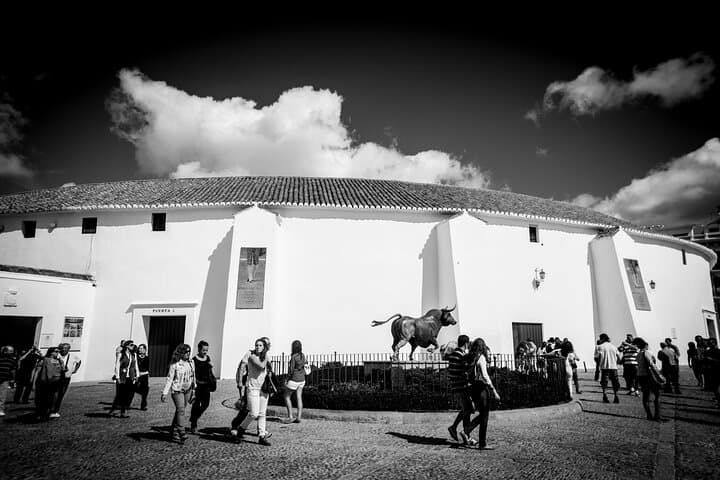
You step onto the sun-warmed stone outside the Plaza de Toros de Ronda and the city opens like a layered map: white houses clinging to a jaw of limestone, the Guadalevín River daring you from far below. The guide gathers the small group and, with the bullring at your back, leads you through alleys where centuries of trade and conquest are still readable in carved lintels and tiled facades.
Verified experiences and guided adventures in the surrounding area.
Operated by Discovering Spain · Ronda, Andalusia
You step onto the sun-warmed stone outside the Plaza de Toros de Ronda and the city opens like a layered map: white houses clinging to a jaw of limestone, the Guadalevín River daring you from far below. The guide gathers the small group and, with the bullring at your back, leads you through alleys where centuries of trade and conquest are still readable in carved lintels and tiled facades.
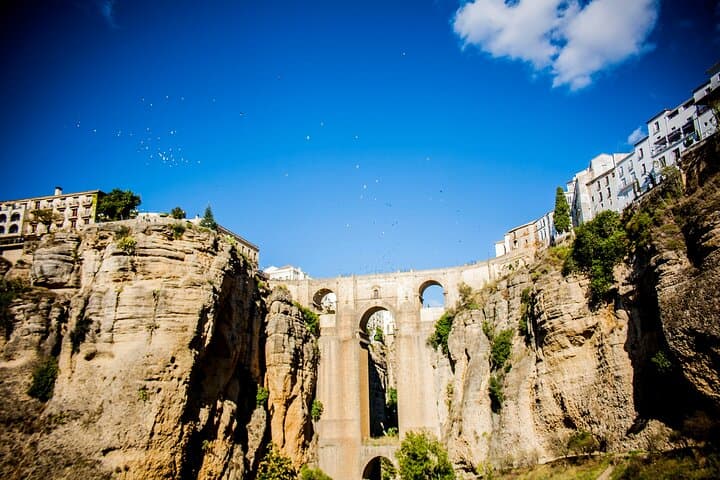
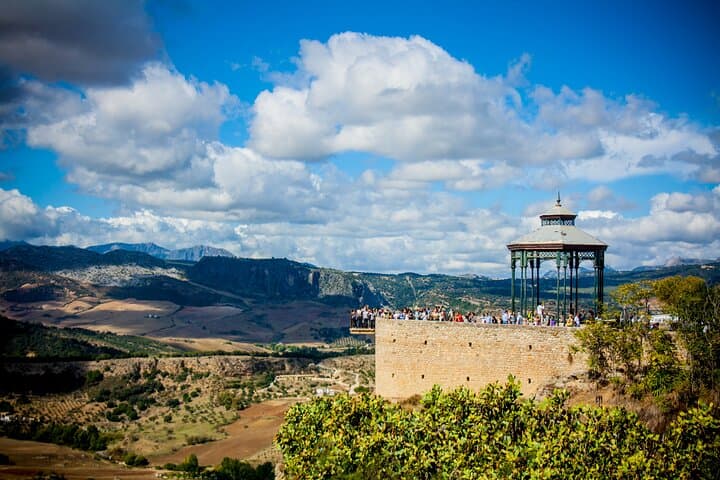
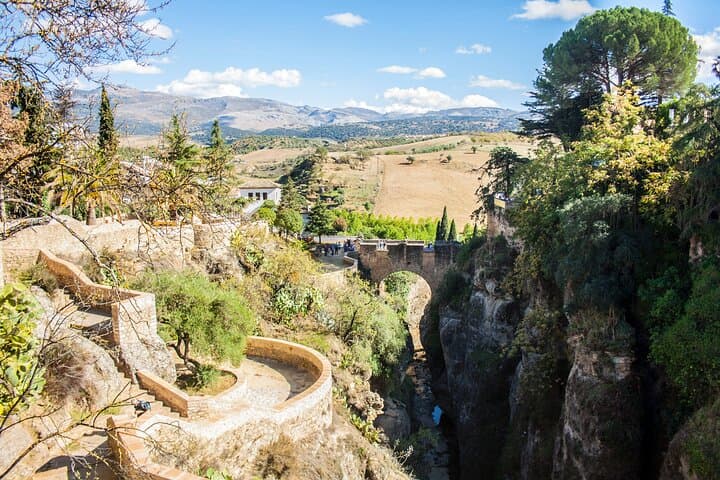
Ronda's story is compact but storied — Roman roads, an extended Moorish period, and an 18th-century resurgence that produced the Puente Nuevo over the Tajo gorge. The bridge watches the gorge like a watchful architect; the river carved the limestone over millennia and shaped the city's dramatic contours. Views sweep to the Sierra de Grazalema and the rolling pastures of the Serranía de Ronda, where limestone cliffs and karst formations register the region's geology.
Culturally, Ronda has long been a crossroads: bullfighting tradition here influenced Spanish literature and identity, while local white-washed neighborhoods preserve Andalusian customs and culinary rhythms.
Practical guidance: the tour runs about 80–95 minutes, starting in front of Nuestra Señora de la Merced near the bullring. Expect mostly paved streets, some short stair sections and viewpoints that can be crowded; bring a refillable water bottle, sun protection, and comfortable walking shoes. Morning and late-afternoon departures avoid the hottest sun and offer softer light for photos. The route is accessible for most fitness levels and the guide provides historical context at each stop — a compact, informative way to understand why Ronda still compels visitors.
easy.
1–1.5 hours.
Suitable for most fitness levels; requires steady walking and negotiating short stair sections.
The meeting point is in front of Nuestra Señora de la Merced church, and the tour returns there at the end.
Yes — the bridge (Puente Nuevo) is a primary stop with time to take photos and hear its history.
Yes; the tour is rated physically easy and allows strollers, though some stairs and narrow streets may require folding strollers.
The tour notes wheelchair accessibility, but steep sections may limit access to some viewpoints—check with the operator if you require full step-free access.
Ronda’s urban core grew around Roman and Moorish settlements; the Puente Nuevo completed in the 18th century linked two formerly separate quarters across the Tajo gorge.
Ronda balances tourism with preservation of its historic center and fragile limestone cliffs; visitors are asked to stick to paths, avoid littering, and respect signage at viewpoints.
Discovering Spain operates guided outdoor trips and adventures with an emphasis on safety, stewardship, and memorable experiences.
You step onto the sun-warmed stone outside the Plaza de Toros de Ronda and the city opens like a layered map: white houses clinging to a jaw of limestone, the Guadalevín River daring you from far below. The guide gathers the small group and, with the bullring at your back, leads you through alleys where centuries of trade and conquest are still readable in carved lintels and tiled facades.
You step onto the sun-warmed stone outside the Plaza de Toros de Ronda and the city opens like a layered map: white houses clinging to a jaw of limestone, the Guadalevín River daring you from far below. The guide gathers the small group and, with the bullring at your back, leads you through alleys where centuries of trade and conquest are still readable in carved lintels and tiled facades.
Ronda's story is compact but storied — Roman roads, an extended Moorish period, and an 18th-century resurgence that produced the Puente Nuevo over the Tajo gorge. The bridge watches the gorge like a watchful architect; the river carved the limestone over millennia and shaped the city's dramatic contours. Views sweep to the Sierra de Grazalema and the rolling pastures of the Serranía de Ronda, where limestone cliffs and karst formations register the region's geology.
Culturally, Ronda has long been a crossroads: bullfighting tradition here influenced Spanish literature and identity, while local white-washed neighborhoods preserve Andalusian customs and culinary rhythms.
Practical guidance: the tour runs about 80–95 minutes, starting in front of Nuestra Señora de la Merced near the bullring. Expect mostly paved streets, some short stair sections and viewpoints that can be crowded; bring a refillable water bottle, sun protection, and comfortable walking shoes. Morning and late-afternoon departures avoid the hottest sun and offer softer light for photos. The route is accessible for most fitness levels and the guide provides historical context at each stop — a compact, informative way to understand why Ronda still compels visitors.