THE ADVENTURE COLLECTIVE® · Independent discovery and booking for outdoor travel

A full-day private drive from Granada delivers Ronda’s dramatic Tajo gorge, Puente Nuevo views, and two hours of guided exploration through the town’s historic core. Expect limestone cliffs, bullring lore, tapas breaks, and practical walking over cobbled streets.
A full-day private drive from Granada delivers Ronda’s dramatic Tajo gorge, Puente Nuevo views, and two hours of guided exploration through the town’s historic core. Expect limestone cliffs, bullring lore, tapas breaks, and practical walking over cobbled streets.
You arrive on the edge of a wide chasm and the bridge answers first: Puente Nuevo spans the Tajo like a carved stone throat, and the town’s white houses crouch at the rim as if listening. The air smells faintly of rosemary and frying olive oil; a local dog pads past market stalls and the gorge drops away in layers of limestone and shadow.
Verified experiences and guided adventures in the surrounding area.
Operated by Yannat.com · Ronda, Andalusia
You arrive on the edge of a wide chasm and the bridge answers first: Puente Nuevo spans the Tajo like a carved stone throat, and the town’s white houses crouch at the rim as if listening. The air smells faintly of rosemary and frying olive oil; a local dog pads past market stalls and the gorge drops away in layers of limestone and shadow.
Ronda’s story is written in strata — Roman foundations, centuries of Moorish walls, and 18th-century urban projects that made the town a backdrop for bullfighting’s modern form. Walk the old quarter and you’ll cross streets once used by mule trains, peer into Arab baths, and stand where 19th-century writers admired the views that drew artists and travelers northward.
Geologically, the dramatic Tajo gorge cut through Jurassic limestone creates the dramatic vertical scenery; the Serranía de Ronda’s ridgelines are visible in the distance. Culturally, expect tapas bars with house-cured meats and conversations about local bullrings — Ronda claims a central role in the sport’s history.
Practical guidance: the trip is an 8–9 hour round trip from Granada (about 2 hours each way by car). If you choose the guided option you’ll get roughly two hours of walking commentary through the historic center. Wear comfortable, grippy shoes for cobbled streets, bring sun protection in summer and a light jacket for wind off the gorge. Plan to move at a steady but unhurried pace — viewpoints draw crowds midday, so mornings or late afternoons offer cooler light and fewer people.
Local advice: bring a refillable water bottle, a small amount of cash for markets, and a phone with extra battery for canyon photos. The route is suitable for most fitness levels, but some steps and narrow lanes are uneven and steep.
easy.
8–9 hours.
Suitable for most fitness levels — involves 1–2 hours of walking over uneven cobbles and stairs; minimal sustained exertion.
Expect about 2 hours each way by private vehicle, depending on traffic and stops along the route.
Admissions are generally not included; the guided option covers commentary but not paid entries to museums or private sites unless specified.
The drive is fine for most, but Ronda’s historic centre has cobbles and stairs that can be challenging for wheelchairs and strollers — contact the operator about pickup logistics and accessibility options.
Guided options typically include English and Spanish; confirm language preference at booking to ensure the right guide is assigned.
Ronda’s modern identity was shaped by Roman and Moorish occupation and it later became central to the formalization of bullfighting techniques in the 18th century.
The historic center and bridge experience visitor pressure; stick to marked paths, support local businesses, and avoid feeding wildlife to minimize impact.
Yannat.com operates guided outdoor trips and adventures with an emphasis on safety, stewardship, and memorable experiences.
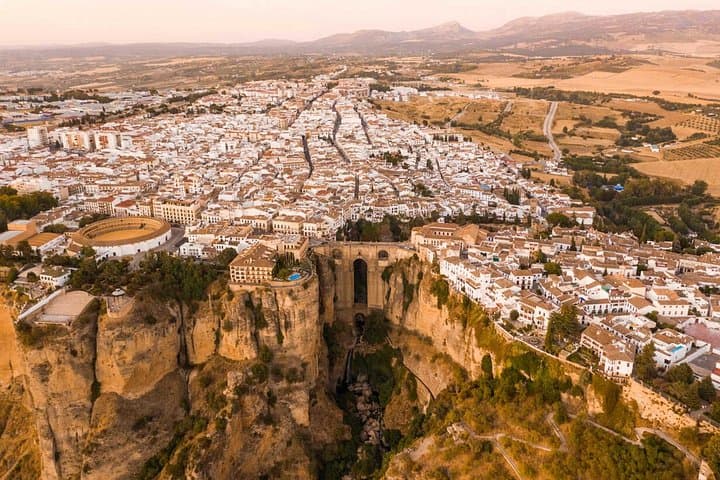
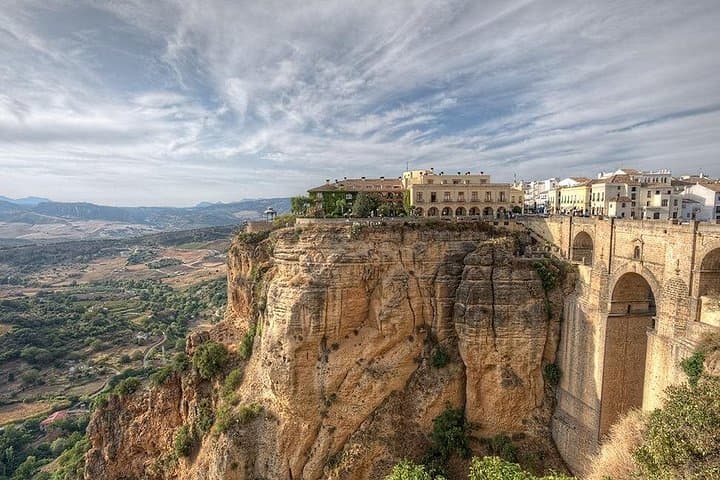
You arrive on the edge of a wide chasm and the bridge answers first: Puente Nuevo spans the Tajo like a carved stone throat, and the town’s white houses crouch at the rim as if listening. The air smells faintly of rosemary and frying olive oil; a local dog pads past market stalls and the gorge drops away in layers of limestone and shadow.
You arrive on the edge of a wide chasm and the bridge answers first: Puente Nuevo spans the Tajo like a carved stone throat, and the town’s white houses crouch at the rim as if listening. The air smells faintly of rosemary and frying olive oil; a local dog pads past market stalls and the gorge drops away in layers of limestone and shadow.
Ronda’s story is written in strata — Roman foundations, centuries of Moorish walls, and 18th-century urban projects that made the town a backdrop for bullfighting’s modern form. Walk the old quarter and you’ll cross streets once used by mule trains, peer into Arab baths, and stand where 19th-century writers admired the views that drew artists and travelers northward.
Geologically, the dramatic Tajo gorge cut through Jurassic limestone creates the dramatic vertical scenery; the Serranía de Ronda’s ridgelines are visible in the distance. Culturally, expect tapas bars with house-cured meats and conversations about local bullrings — Ronda claims a central role in the sport’s history.
Practical guidance: the trip is an 8–9 hour round trip from Granada (about 2 hours each way by car). If you choose the guided option you’ll get roughly two hours of walking commentary through the historic center. Wear comfortable, grippy shoes for cobbled streets, bring sun protection in summer and a light jacket for wind off the gorge. Plan to move at a steady but unhurried pace — viewpoints draw crowds midday, so mornings or late afternoons offer cooler light and fewer people.
Local advice: bring a refillable water bottle, a small amount of cash for markets, and a phone with extra battery for canyon photos. The route is suitable for most fitness levels, but some steps and narrow lanes are uneven and steep.