THE ADVENTURE COLLECTIVE® · Independent discovery and booking for outdoor travel

Walk the rim of Ronda’s great gorge with an art historian guide: New Bridge views, Don Bosco House, and the old medina condensed into two hours. Ideal for travelers who want geology, history and striking vistas without a long hike.
Walk the rim of Ronda’s great gorge with an art historian guide: New Bridge views, Don Bosco House, and the old medina condensed into two hours. Ideal for travelers who want geology, history and striking vistas without a long hike.
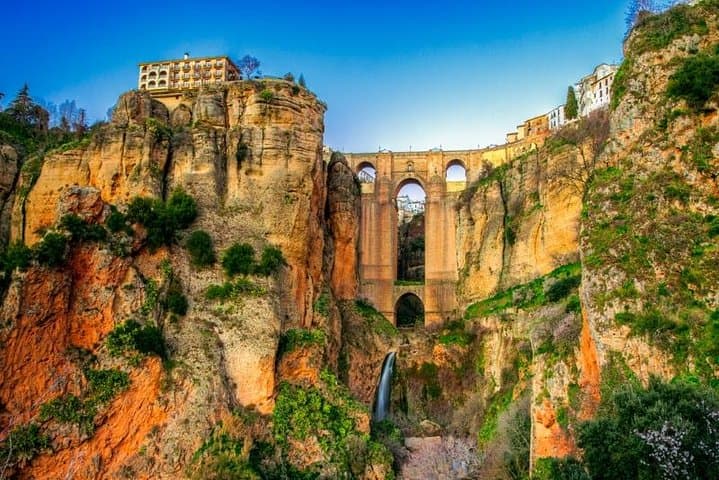
You step out of the Parador's doorway and the town opens like a cliff-side map: white houses clinging to rock, a river cutting a deep gorge, and the New Bridge towering between two halves of the city.
Verified experiences and guided adventures in the surrounding area.
Operated by Andalusia Tour Travel · Ronda, Málaga
You step out of the Parador's doorway and the town opens like a cliff-side map: white houses clinging to rock, a river cutting a deep gorge, and the New Bridge towering between two halves of the city.
Ronda's dramatic geography—where the Guadalevín has cleaved a 100-meter-deep gorge through limestone—shaped its history. Romans, Visigoths and Moors all occupied this strategic ridge; what visitors see today mixes Moorish street patterns, 18th-century Neoclassical architecture and modern Andalusian life. The New Bridge (Puente Nuevo) is an engineering gamble from the 1700s that frames vertiginous views and offers a vantage into the geological story written in exposed strata.
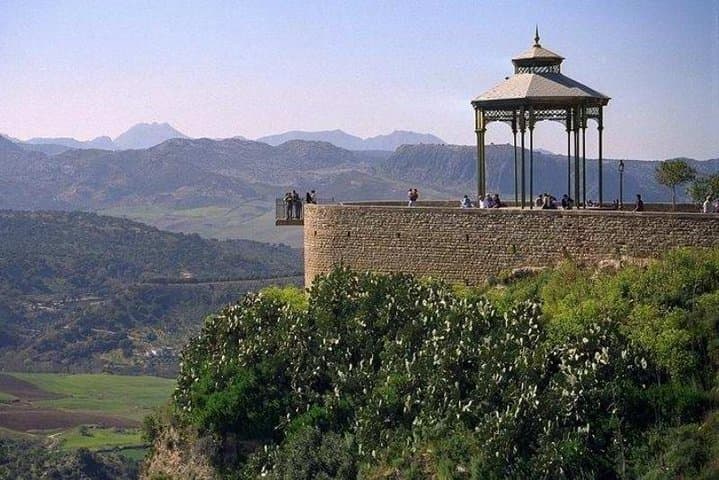
On this two-hour guided walk an art historian leads you from the Parador's doorway to the Don Bosco House, past the old medina and along overlooks that show both the bridge’s façade and the houses that appear to hang over the precipice.
Expect measured pacing—short uphill sections and paved historic lanes rather than technical trails. Cultural context is part of the draw: tilework, a 13th-century mosque remnant near the collegiate church, and neighborhood scales that speak to long-lived urban layers.
Practical notes: arrive five minutes early at the Parador, wear sturdy walking shoes for uneven sidewalks, and bring a refillable bottle—the sun can be strong even on cool days. The tour is wheelchair accessible in parts but some viewpoints involve steps. With a compact loop and strong interpretive commentary, this walk is an efficient introduction to Ronda’s geology, architecture and local rhythms.
easy.
2 hours.
Suitable for most fitness levels; walking on paved but uneven surfaces with short inclines.
The guide meets guests at the main door of the Parador de Ronda; contact instructions are provided after booking and you should arrive five minutes early.
Infants can use strollers on most streets, but expect some steps and uneven pavement near viewpoints—plan to carry small children when needed.
The itinerary includes a ticket to the Don Bosco House; other monument access may be subject to timing or delays and could be excluded on occasion.
Tours may be conducted in two languages on occasion; confirm language availability when booking and provide phone contact details as requested.
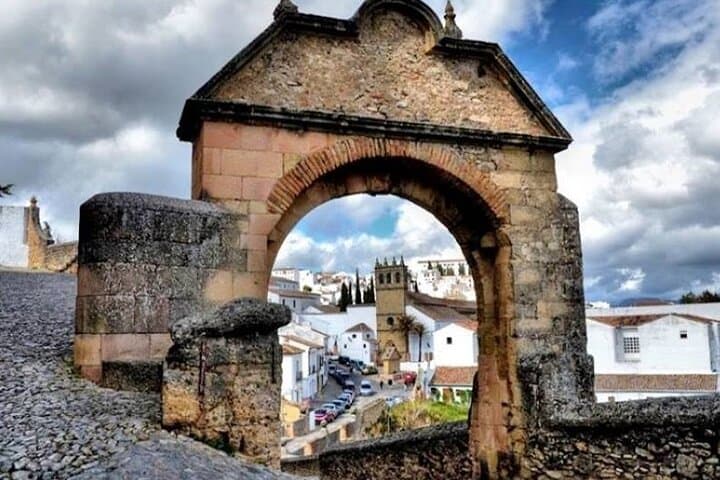
Ronda’s strategic ridge location produced layered occupations—Roman foundations, Moorish urban fabric, and the dramatic 18th-century Puente Nuevo that reshaped access across the gorge.
High visitor volumes can stress fragile viewpoints and historic facades; stick to marked paths, avoid climbing on masonry, and support local conservation efforts by respecting signage.
Andalusia Tour Travel operates guided outdoor trips and adventures with an emphasis on safety, stewardship, and memorable experiences.
You step out of the Parador's doorway and the town opens like a cliff-side map: white houses clinging to rock, a river cutting a deep gorge, and the New Bridge towering between two halves of the city.
You step out of the Parador's doorway and the town opens like a cliff-side map: white houses clinging to rock, a river cutting a deep gorge, and the New Bridge towering between two halves of the city.
Ronda's dramatic geography—where the Guadalevín has cleaved a 100-meter-deep gorge through limestone—shaped its history. Romans, Visigoths and Moors all occupied this strategic ridge; what visitors see today mixes Moorish street patterns, 18th-century Neoclassical architecture and modern Andalusian life. The New Bridge (Puente Nuevo) is an engineering gamble from the 1700s that frames vertiginous views and offers a vantage into the geological story written in exposed strata.
On this two-hour guided walk an art historian leads you from the Parador's doorway to the Don Bosco House, past the old medina and along overlooks that show both the bridge’s façade and the houses that appear to hang over the precipice.
Expect measured pacing—short uphill sections and paved historic lanes rather than technical trails. Cultural context is part of the draw: tilework, a 13th-century mosque remnant near the collegiate church, and neighborhood scales that speak to long-lived urban layers.
Practical notes: arrive five minutes early at the Parador, wear sturdy walking shoes for uneven sidewalks, and bring a refillable bottle—the sun can be strong even on cool days. The tour is wheelchair accessible in parts but some viewpoints involve steps. With a compact loop and strong interpretive commentary, this walk is an efficient introduction to Ronda’s geology, architecture and local rhythms.