THE ADVENTURE COLLECTIVE® · Independent discovery and booking for outdoor travel

Explore Ronda’s dramatic gorge, historic churches, and one of Spain’s oldest bullrings on a focused two-hour walking tour. This guided route combines clear historical context with easy urban walking and a dedicated visit inside the Plaza de Toros.
Explore Ronda’s dramatic gorge, historic churches, and one of Spain’s oldest bullrings on a focused two-hour walking tour. This guided route combines clear historical context with easy urban walking and a dedicated visit inside the Plaza de Toros.
A cool wind from the Guadalevín slips through the Tajo gorge as your guide leads the group across the Puente Nuevo, the bridge’s stonework humming with centuries of traffic. Streets drop away into whitewashed alleys, and the city’s layered past—Roman roads, Moorish walls, and 18th-century plazas—reveals itself block by block.
Verified experiences and guided adventures in the surrounding area.
Operated by Andalusia Tour Travel · Ronda, Andalusia
A cool wind from the Guadalevín slips through the Tajo gorge as your guide leads the group across the Puente Nuevo, the bridge’s stonework humming with centuries of traffic. Streets drop away into whitewashed alleys, and the city’s layered past—Roman roads, Moorish walls, and 18th-century plazas—reveals itself block by block.
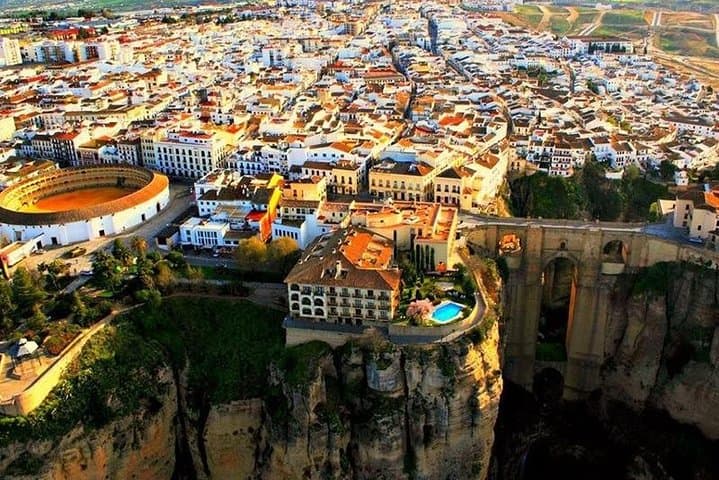
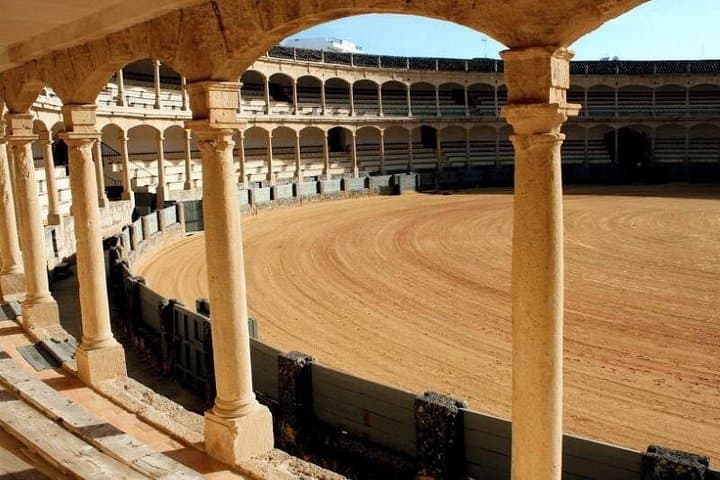
Ronda’s bullring, one of Spain’s oldest, opens a window onto the evolution of modern bullfighting; its sand-floor arena dates to 1785 and sits on a promontory that once divided Celtiberian and Roman routes. Geology is visible in the exposed limestone cliffs of the Tajo, carved by the river that dared settlers to build on opposite rims. Culture here is blunt and direct: flamenco rhythms from a nearby bar, the muted clink of café cups, and guides who explain contested traditions alongside architectural detail.
The walking tour blends these threads over about two hours, with a focused stop inside the Plaza de Toros and outdoor commentary at landmarks like Mondragon Palace and Nuestra Señora de la Paz. Expect cobbled streets and short flights of steps more than strenuous climbs—this is urban exploration with viewpoints.
Practical guidance: wear comfortable soles for uneven paving, carry water and sun protection in summer, and plan for quick photo stops at viewpoints. Small-group formats mean questions are encouraged; guides will note accessibility limitations and suggest quieter times to avoid crowds. For a compact cultural outing that pairs history, geology, and visible urban layers, this Ronda walk delivers context and vantage in a tidy two-hour package.
easy.
2 hours.
Suitable for all fitness levels; requires ability to walk on uneven urban terrain for two hours
The experience lasts approximately two hours, including a 20–30 minute stop inside the bullring.
Yes—entry to the Plaza de Toros de Ronda is included as part of the tour.
The provider lists the tour as wheelchair accessible, but some historic streets and viewpoints have uneven surfaces—contact the operator in advance for specific accessibility needs.
Children are permitted but must be accompanied by at least two adults per the operator’s policy; child rates apply when sharing with two paying adults.
Ronda’s Plaza de Toros, built in 1785, helped codify modern bullfighting and remains central to the city’s cultural narrative.
Historic sites face wear from heavy visitation; practice low-impact tourism by staying on paths and following guide instructions to protect fragile stonework and local habitats.
Andalusia Tour Travel operates guided outdoor trips and adventures with an emphasis on safety, stewardship, and memorable experiences.
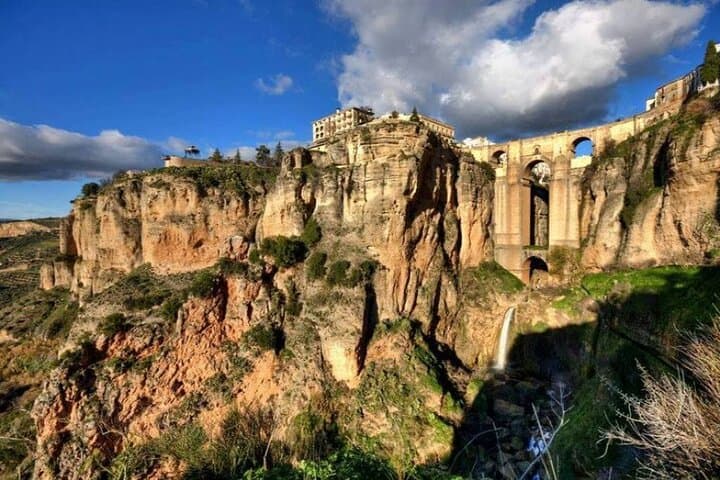
A cool wind from the Guadalevín slips through the Tajo gorge as your guide leads the group across the Puente Nuevo, the bridge’s stonework humming with centuries of traffic. Streets drop away into whitewashed alleys, and the city’s layered past—Roman roads, Moorish walls, and 18th-century plazas—reveals itself block by block.
A cool wind from the Guadalevín slips through the Tajo gorge as your guide leads the group across the Puente Nuevo, the bridge’s stonework humming with centuries of traffic. Streets drop away into whitewashed alleys, and the city’s layered past—Roman roads, Moorish walls, and 18th-century plazas—reveals itself block by block.
Ronda’s bullring, one of Spain’s oldest, opens a window onto the evolution of modern bullfighting; its sand-floor arena dates to 1785 and sits on a promontory that once divided Celtiberian and Roman routes. Geology is visible in the exposed limestone cliffs of the Tajo, carved by the river that dared settlers to build on opposite rims. Culture here is blunt and direct: flamenco rhythms from a nearby bar, the muted clink of café cups, and guides who explain contested traditions alongside architectural detail.
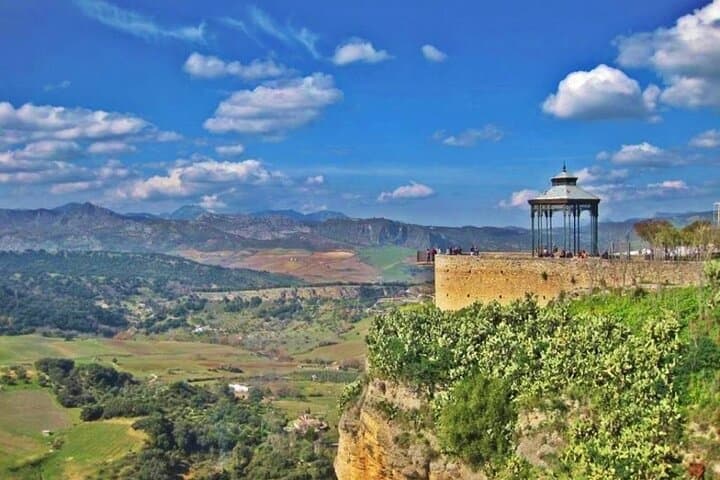
The walking tour blends these threads over about two hours, with a focused stop inside the Plaza de Toros and outdoor commentary at landmarks like Mondragon Palace and Nuestra Señora de la Paz. Expect cobbled streets and short flights of steps more than strenuous climbs—this is urban exploration with viewpoints.
Practical guidance: wear comfortable soles for uneven paving, carry water and sun protection in summer, and plan for quick photo stops at viewpoints. Small-group formats mean questions are encouraged; guides will note accessibility limitations and suggest quieter times to avoid crowds. For a compact cultural outing that pairs history, geology, and visible urban layers, this Ronda walk delivers context and vantage in a tidy two-hour package.