THE ADVENTURE COLLECTIVE® · Independent discovery and booking for outdoor travel

A private day trip that delivers dramatic gorge views, historic plazas and the birthplace of modern bullfighting. Expect guided walks across Puente Nuevo, visits to the bullring and free time for lunch in Ronda.
A private day trip that delivers dramatic gorge views, historic plazas and the birthplace of modern bullfighting. Expect guided walks across Puente Nuevo, visits to the bullring and free time for lunch in Ronda.
You step out of the coastal heat onto a twisting mountain road and, in an hour or two, Ronda opens up: a whitewashed town split by a throat of limestone whose cliffs push the town’s streets to the edge. The New Bridge (Puente Nuevo) hangs over El Tajo, and the gorge’s sheer walls frame farmland and scrub that roll toward the Sierra de las Nieves.
Verified experiences and guided adventures in the surrounding area.
Operated by Tours in Malaga · Ronda, Andalusia
You step out of the coastal heat onto a twisting mountain road and, in an hour or two, Ronda opens up: a whitewashed town split by a throat of limestone whose cliffs push the town’s streets to the edge. The New Bridge (Puente Nuevo) hangs over El Tajo, and the gorge’s sheer walls frame farmland and scrub that roll toward the Sierra de las Nieves.
Ronda’s geography shaped its history — a Moorish stronghold perched above a natural defensive chasm, later a frontier for bandits and romantic travelers in the 18th and 19th centuries. Stone, marble and Andalusian sun have left layers of architecture: Arab baths, a 15th‑century Collegiate church, and one of Spain’s oldest bullrings, where modern bullfighting codified ritual and spectacle.
Cultural threads are visible in narrow alleys, tilework and tapas bars serving oxtail stews and local wines. Geologically, the gorge is a product of karst limestone and river incision; the cliffs expose folded strata and small caves where vultures ride thermals.
Practically, expect several hours of walking on cobbles and stairs, short guided stops at viewpoints like Aldehuela, and time for a museum visit and lunch. Wear sturdy shoes, sun protection and layers for canyon winds. Bring a refillable bottle, and plan for uneven surfaces around lookout points — accessibility varies by site despite generally easy walking.
This private transfer format compresses travel logistics so you can focus on photos, stories and a relaxed lunch before returning to the Costa del Sol as daylight softens the gorge.
easy.
7 hours.
Suitable for most fitness levels; be prepared for 1–2 miles of walking over cobbles and steps.
Yes — the tour offers hotel or specified shore pickup across Costa del Sol; confirm your pickup point when booking.
The tour includes a stop at the Plaza de Toros and usually access to the museum, though final admission may depend on opening hours.
Transport and many public areas are accessible, but cobblestone streets and some viewpoints include steps; check specific needs with the operator in advance.
The itinerary typically allows 2–3 hours of free time in Ronda for lunch, shopping and optional museum visits.
Ronda’s recorded history stretches from Roman and Moorish periods to becoming a 18th‑century cultural touchstone; its bullring (Plaza de Toros) helped codify modern Spanish bullfighting.
The surrounding Sierra de las Nieves and regional landscapes face pressure from tourism and water scarcity — stick to paths, avoid single‑use plastics and support local conservation initiatives.
Tours in Malaga operates guided outdoor trips and adventures with an emphasis on safety, stewardship, and memorable experiences.
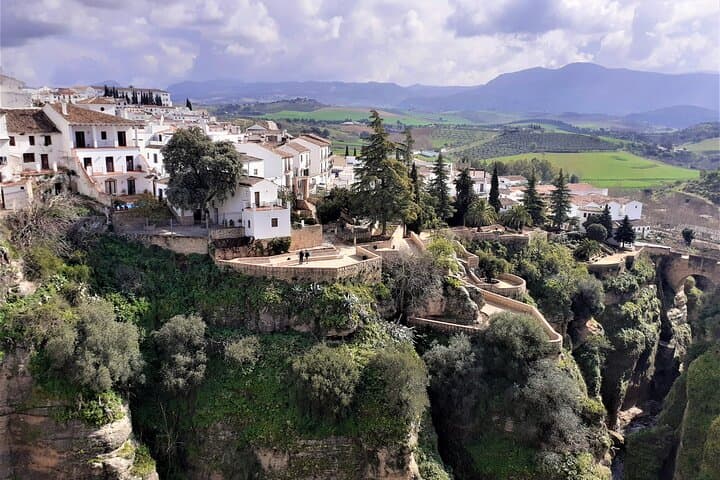
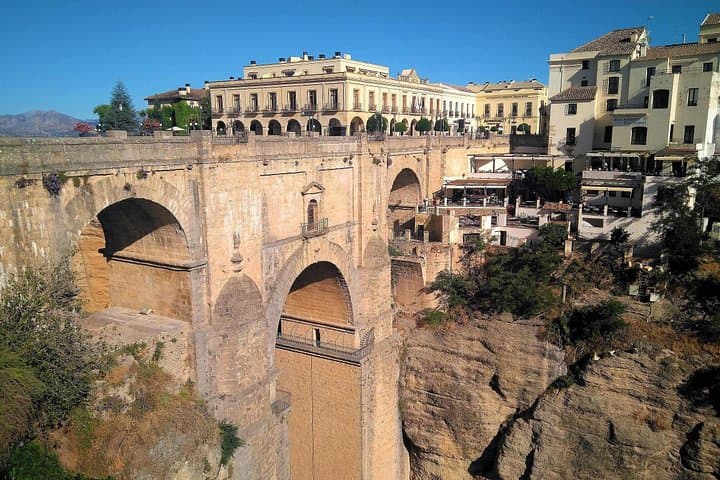
You step out of the coastal heat onto a twisting mountain road and, in an hour or two, Ronda opens up: a whitewashed town split by a throat of limestone whose cliffs push the town’s streets to the edge. The New Bridge (Puente Nuevo) hangs over El Tajo, and the gorge’s sheer walls frame farmland and scrub that roll toward the Sierra de las Nieves.
You step out of the coastal heat onto a twisting mountain road and, in an hour or two, Ronda opens up: a whitewashed town split by a throat of limestone whose cliffs push the town’s streets to the edge. The New Bridge (Puente Nuevo) hangs over El Tajo, and the gorge’s sheer walls frame farmland and scrub that roll toward the Sierra de las Nieves.
Ronda’s geography shaped its history — a Moorish stronghold perched above a natural defensive chasm, later a frontier for bandits and romantic travelers in the 18th and 19th centuries. Stone, marble and Andalusian sun have left layers of architecture: Arab baths, a 15th‑century Collegiate church, and one of Spain’s oldest bullrings, where modern bullfighting codified ritual and spectacle.
Cultural threads are visible in narrow alleys, tilework and tapas bars serving oxtail stews and local wines. Geologically, the gorge is a product of karst limestone and river incision; the cliffs expose folded strata and small caves where vultures ride thermals.
Practically, expect several hours of walking on cobbles and stairs, short guided stops at viewpoints like Aldehuela, and time for a museum visit and lunch. Wear sturdy shoes, sun protection and layers for canyon winds. Bring a refillable bottle, and plan for uneven surfaces around lookout points — accessibility varies by site despite generally easy walking.
This private transfer format compresses travel logistics so you can focus on photos, stories and a relaxed lunch before returning to the Costa del Sol as daylight softens the gorge.