THE ADVENTURE COLLECTIVE® · Independent discovery and booking for outdoor travel

Cycle the Queen of Roads from Rome’s center to the aqueduct park—Appian Way’s ruins, catacombs and Baths of Caracalla unfold on a 4–5 hour guided ride. Practical route details, surface notes and planning tips for a historically rich urban bike tour.
Cycle the Queen of Roads from Rome’s center to the aqueduct park—Appian Way’s ruins, catacombs and Baths of Caracalla unfold on a 4–5 hour guided ride. Practical route details, surface notes and planning tips for a historically rich urban bike tour.
The ride begins with the stones under your wheels and the ancient road stretching ahead—Appian Way opening like a living map of Rome’s past. Cyclists move through dappled umbrella pines, past sculpted tombs and aqueduct arches that cut a steady silhouette against the sky; the city’s hum becomes a backdrop rather than a destination.
Verified experiences and guided adventures in the surrounding area.
Operated by Rome's Ultimate Free Walking Tours · Rome, Lazio
The ride begins with the stones under your wheels and the ancient road stretching ahead—Appian Way opening like a living map of Rome’s past. Cyclists move through dappled umbrella pines, past sculpted tombs and aqueduct arches that cut a steady silhouette against the sky; the city’s hum becomes a backdrop rather than a destination.
This route traces layers of history: the Appian Way (built 312 BC) and the Aurelian Walls that marked imperial control, Baths of Caracalla’s monumental remains, and the great aqueduct lines that carried water into a booming metropolis. Geology is quiet here—limestone and travertine quarried for monuments, marl terraces that hold olive trees. Culturally, the corridor shows how Romans met nature and engineered around it: tombs and roads placed for visibility and procession rather than privacy.
Expect roughly 15–20 km of mixed surfaces—paved sections, compacted ancient basalt, and short gravel stretches—with only modest climbs (total gain ~100–200 m). The pace is steady and interpretive; stops include catacombs, Circus Maximus views, and the Parco degli Acquedotti’s intact arches.
Practically: bikes and helmets are provided; bring water, sun protection, and a light layer for coastal winds. Tours run about 4–5 hours and suit riders comfortable on city and gravel surfaces. Start early in summer to avoid heat, and use public transit to reach central meeting points. Stick to marked paths to protect fragile ruins and leave room for pedestrians and horses that still use parts of the Appian Way.
easy.
4–5 hours.
Suitable for riders with basic fitness and ability to cycle on mixed paved and gravel surfaces for several hours.
The tour lasts about 4–5 hours, covering roughly 15–20 km at a relaxed, interpretive pace with multiple stops for sites and photos.
No advanced skills are required—basic cycling comfort on mixed surfaces is sufficient; guides accommodate varied abilities.
Bicycle use and basic equipment (typically a helmet) are included; check the operator page for exact inclusions and any extras like e-bikes.
This tour is listed as suitable for most fitness levels but not recommended for those with serious spinal or cardiovascular problems—consult your doctor if unsure.
The Appian Way was Rome’s main artery to the south from 312 BC; the aqueducts in the Parco degli Acquedotti showcase Roman hydraulic engineering that supplied the city for centuries.
This corridor is a protected archaeological park—visitors are asked to stay on paths, avoid climbing ruins, and support local preservation through respectful behavior.
Rome's Ultimate Free Walking Tours operates guided outdoor trips and adventures with an emphasis on safety, stewardship, and memorable experiences.
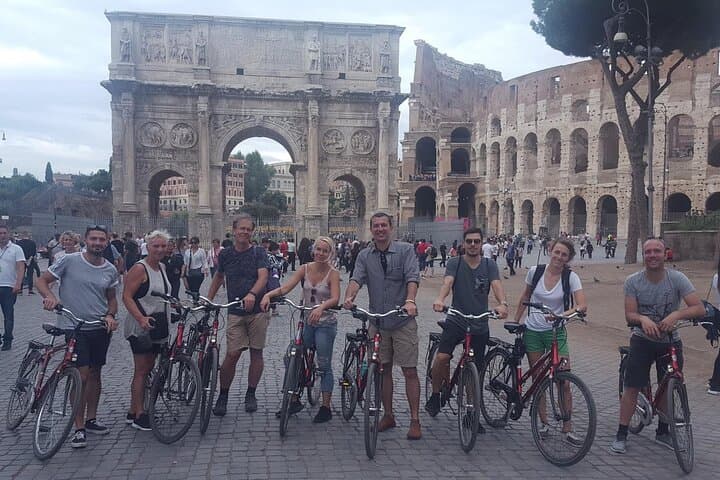
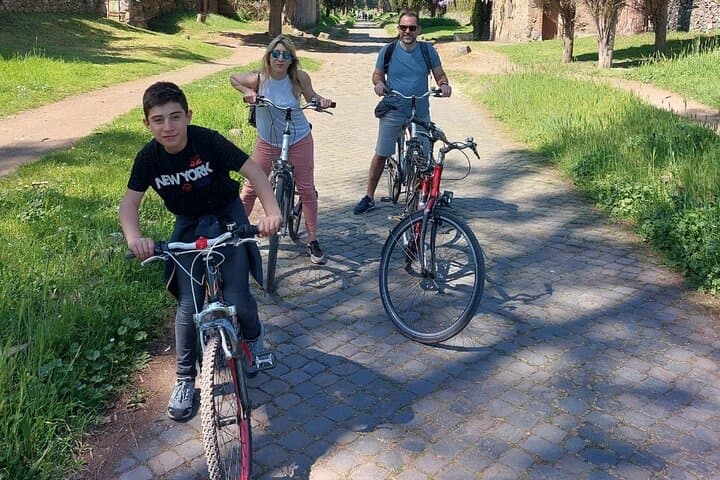
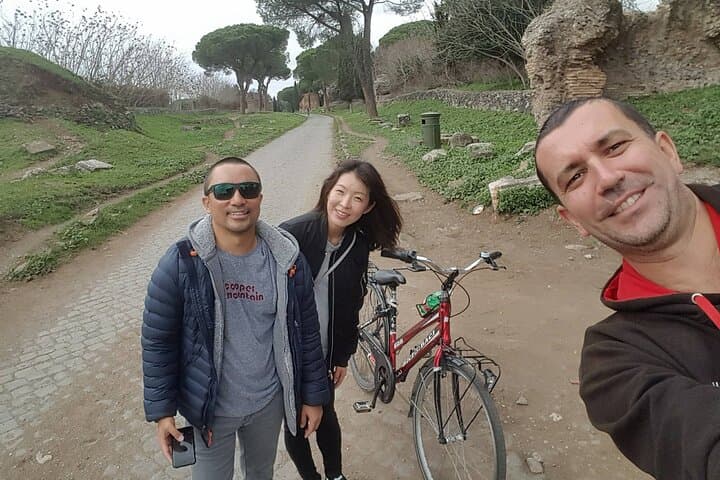
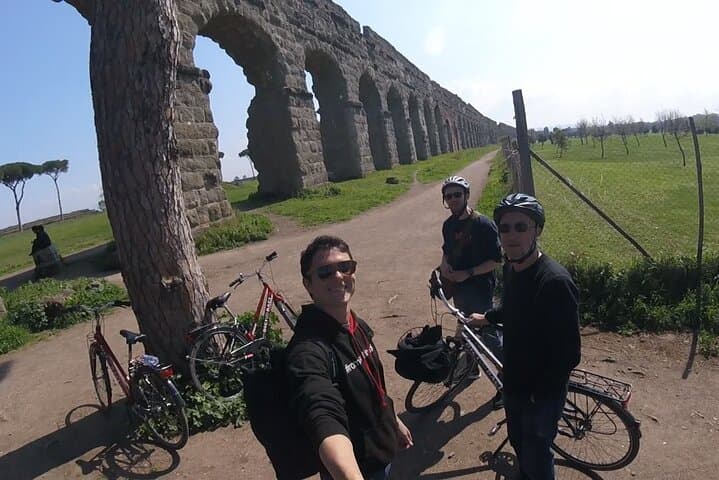
The ride begins with the stones under your wheels and the ancient road stretching ahead—Appian Way opening like a living map of Rome’s past. Cyclists move through dappled umbrella pines, past sculpted tombs and aqueduct arches that cut a steady silhouette against the sky; the city’s hum becomes a backdrop rather than a destination.
The ride begins with the stones under your wheels and the ancient road stretching ahead—Appian Way opening like a living map of Rome’s past. Cyclists move through dappled umbrella pines, past sculpted tombs and aqueduct arches that cut a steady silhouette against the sky; the city’s hum becomes a backdrop rather than a destination.
This route traces layers of history: the Appian Way (built 312 BC) and the Aurelian Walls that marked imperial control, Baths of Caracalla’s monumental remains, and the great aqueduct lines that carried water into a booming metropolis. Geology is quiet here—limestone and travertine quarried for monuments, marl terraces that hold olive trees. Culturally, the corridor shows how Romans met nature and engineered around it: tombs and roads placed for visibility and procession rather than privacy.
Expect roughly 15–20 km of mixed surfaces—paved sections, compacted ancient basalt, and short gravel stretches—with only modest climbs (total gain ~100–200 m). The pace is steady and interpretive; stops include catacombs, Circus Maximus views, and the Parco degli Acquedotti’s intact arches.
Practically: bikes and helmets are provided; bring water, sun protection, and a light layer for coastal winds. Tours run about 4–5 hours and suit riders comfortable on city and gravel surfaces. Start early in summer to avoid heat, and use public transit to reach central meeting points. Stick to marked paths to protect fragile ruins and leave room for pedestrians and horses that still use parts of the Appian Way.