THE ADVENTURE COLLECTIVE® · Independent discovery and booking for outdoor travel

Walk Rome's most iconic squares and fountains with an expert guide. In two hours you'll move from the Spanish Steps to the Pantheon and Trevi Fountain while learning the stories and stone behind each landmark.
Walk Rome's most iconic squares and fountains with an expert guide. In two hours you'll move from the Spanish Steps to the Pantheon and Trevi Fountain while learning the stories and stone behind each landmark.
You meet at the Colonna dell'Immacolata, the stone column catching morning light as the Spanish Steps rise ahead like a stairway through Rome's layered time. The guide leads the small group up to Trinità dei Monti where cobbled streets spread below — a city of marble, fresco and water that presses its history into every square.
Verified experiences and guided adventures in the surrounding area.
Operated by Guydeez · Rome, Lazio
You meet at the Colonna dell'Immacolata, the stone column catching morning light as the Spanish Steps rise ahead like a stairway through Rome's layered time. The guide leads the small group up to Trinità dei Monti where cobbled streets spread below — a city of marble, fresco and water that presses its history into every square.
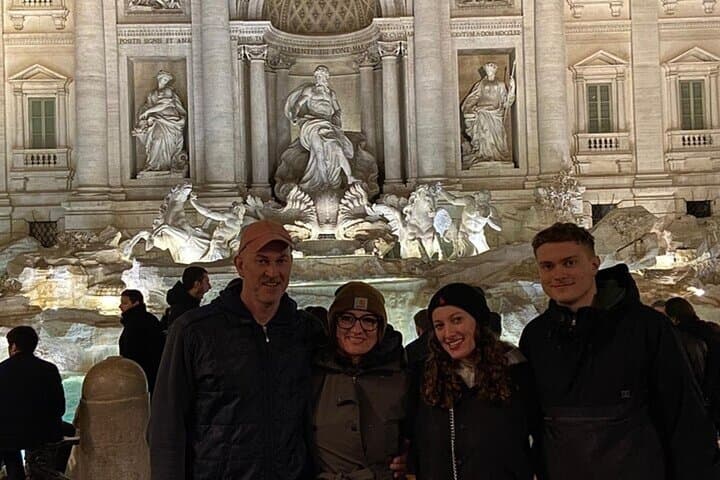
The walk folds ancient Rome into Baroque showmanship: the Pantheon’s concrete dome and oculus recall Roman engineering; Piazza Navona occupies an ancient stadium reshaped by Bernini and Borromini; the Trevi Fountain sprays theatrical marble and myth into the busy street. Geology shows in the travertine and tufa underfoot, quarried from nearby hills, while layers of urban life — churches, columns, markets — reveal how Rome repurposed its past.
Expect local color: gelato counters, vendor stalls, and the steady chorus of scooters. Guides weave cultural anecdotes — the coin-throwing ritual, the political history behind Marcus Aurelius' column, and the papal commissions that reassembled the city after late antiquity.
Practical guidance: the route is flat but paved; allow two hours, wear supportive shoes and bring water. Mornings are cooler and quieter; afternoons pack the squares. The tour is wheelchair-accessible on main streets but some alleys and steps are avoided. Keep valuables secure and plan a restroom stop before the Pantheon visit. For photographers, aim for early light on the Spanish Steps or evening glow at the Trevi.
easy.
2 hours.
Suitable for most fitness levels; requires standing and moderate walking on paved surfaces.
Meet at the Colonna dell'Immacolata in Piazza di Spagna, at the base of the Spanish Steps; guides usually wait near the column.
Yes—it's family-friendly and stroller-accessible on main streets, though some alleys and the Spanish Steps themselves are not stroller-friendly.
No—this is a city walking tour; entrances to interior monuments are typically not included unless specified in a private booking.
Tours normally run in light rain; heavy storms may prompt rescheduling—check the cancellation policy and contact the operator if conditions worsen.
The route traces layers of Rome from imperial monuments—like the Pantheon and Marcus Aurelius' Column—to Baroque reworkings by Bernini and Borromini in the 17th century.
High foot traffic stresses ancient stone and marble; stay on designated paths, avoid touching fragile reliefs, and use refillable water containers to reduce plastic waste.
Guydeez operates guided outdoor trips and adventures with an emphasis on safety, stewardship, and memorable experiences.


You meet at the Colonna dell'Immacolata, the stone column catching morning light as the Spanish Steps rise ahead like a stairway through Rome's layered time. The guide leads the small group up to Trinità dei Monti where cobbled streets spread below — a city of marble, fresco and water that presses its history into every square.
You meet at the Colonna dell'Immacolata, the stone column catching morning light as the Spanish Steps rise ahead like a stairway through Rome's layered time. The guide leads the small group up to Trinità dei Monti where cobbled streets spread below — a city of marble, fresco and water that presses its history into every square.
The walk folds ancient Rome into Baroque showmanship: the Pantheon’s concrete dome and oculus recall Roman engineering; Piazza Navona occupies an ancient stadium reshaped by Bernini and Borromini; the Trevi Fountain sprays theatrical marble and myth into the busy street. Geology shows in the travertine and tufa underfoot, quarried from nearby hills, while layers of urban life — churches, columns, markets — reveal how Rome repurposed its past.
Expect local color: gelato counters, vendor stalls, and the steady chorus of scooters. Guides weave cultural anecdotes — the coin-throwing ritual, the political history behind Marcus Aurelius' column, and the papal commissions that reassembled the city after late antiquity.
Practical guidance: the route is flat but paved; allow two hours, wear supportive shoes and bring water. Mornings are cooler and quieter; afternoons pack the squares. The tour is wheelchair-accessible on main streets but some alleys and steps are avoided. Keep valuables secure and plan a restroom stop before the Pantheon visit. For photographers, aim for early light on the Spanish Steps or evening glow at the Trevi.