THE ADVENTURE COLLECTIVE® · Independent discovery and booking for outdoor travel

Walk Rome after dark from Campo de’ Fiori to Castel Sant’Angelo and hear spine-chilling stories of executions, papal scandals and haunted homes. This 2-hour guided night walk pairs local lore with practical navigation of Rome’s cobbled streets.
Walk Rome after dark from Campo de’ Fiori to Castel Sant’Angelo and hear spine-chilling stories of executions, papal scandals and haunted homes. This 2-hour guided night walk pairs local lore with practical navigation of Rome’s cobbled streets.
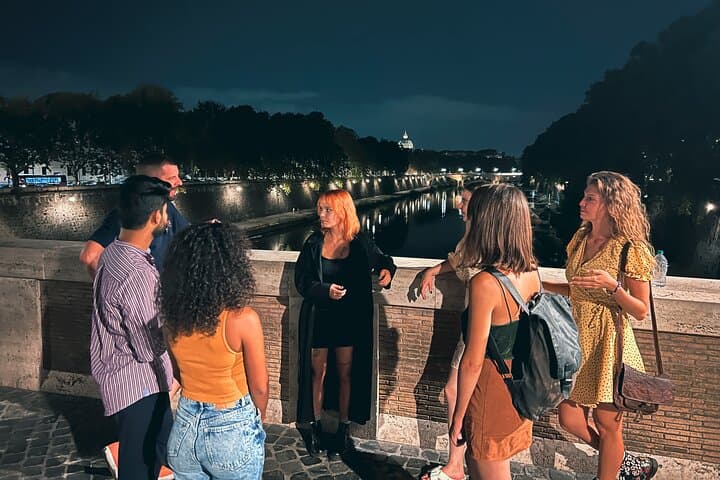
The piazza falls into shadow as lanterns blink on and the statue of Giordano Bruno watches the square change its mood. Footsteps on cobbles, the Tiber murmuring nearby, and the hush of narrow lanes set the stage for two hours of stories that make the city’s stonework feel alive — sometimes menacing, sometimes mournful.
Verified experiences and guided adventures in the surrounding area.
Operated by Carpe Diem Tours · Rome, Lazio
The piazza falls into shadow as lanterns blink on and the statue of Giordano Bruno watches the square change its mood. Footsteps on cobbles, the Tiber murmuring nearby, and the hush of narrow lanes set the stage for two hours of stories that make the city’s stonework feel alive — sometimes menacing, sometimes mournful.
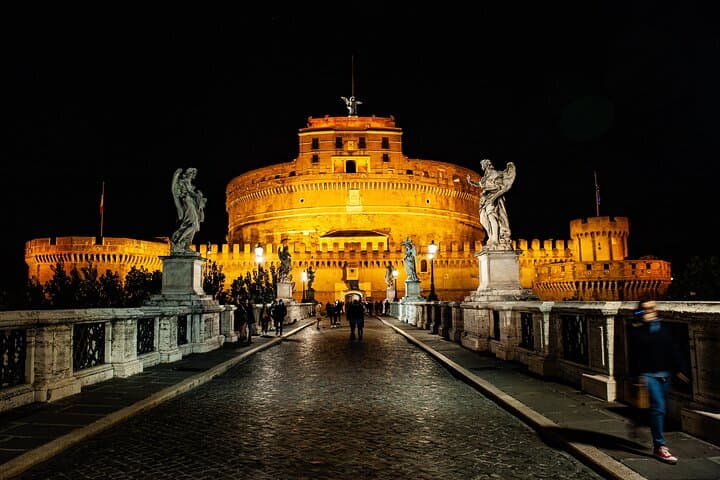
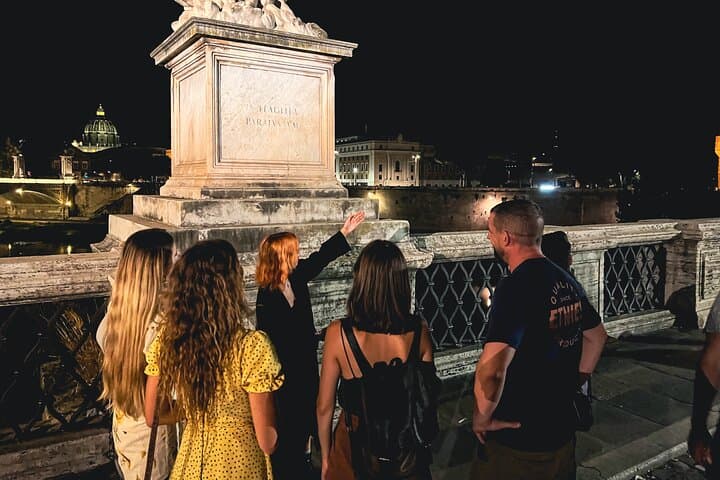
This walk threads through neighborhoods shaped by imperial power, papal intrigue and Renaissance remodeling. Campo de’ Fiori, once a site of public executions and the burning of Giordano Bruno, is where the evening begins; the route then moves past Via Giulia’s straight Renaissance planning, across Ponte Sisto — rebuilt under Pope Sixtus IV in the 15th century — and finishes by the hulking silhouette of Castel Sant’Angelo, once a mausoleum and later a papal fortress.
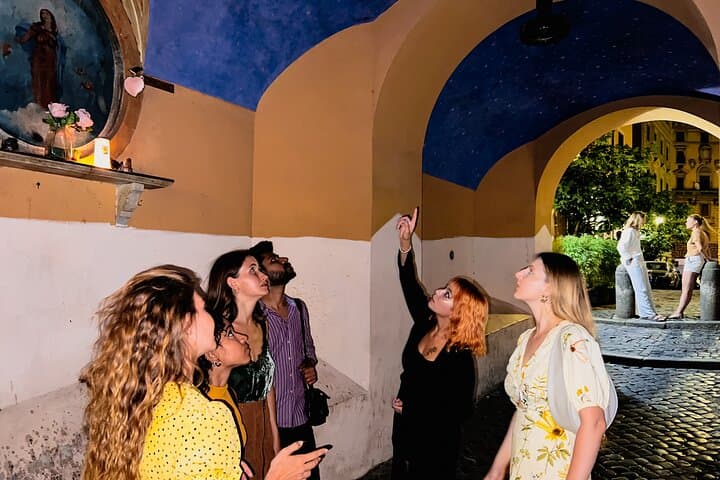
Expect cultural notes on madonnelle (small roadside shrines), tales of scandal tied to churches and homes, and references to Rome’s policing and punishments over centuries. The city’s geology — travertine and tufa underfoot — gives the streets a particular feel that guided narration often uses to set atmosphere.
Practical side: this is an easy, urban walking tour of roughly 2 hours on uneven cobbles and some narrow alleys. Meet at the Giordano Bruno statue in Campo de’ Fiori 10 minutes early; groups cap at about 20. Wear sturdy shoes, carry a light jacket and a small flashlight or phone light, and be prepared for close streets and intermittent traffic noise. Public transport and taxis are readily available to and from the meeting point, and the tour finishes near Castel Sant’Angelo if you want to continue exploring after dark.
easy.
2 hours.
Suitable for casual walkers who can stand and walk for two hours on cobblestones; minimal hills.
Meet in front of the Giordano Bruno statue at the center of Campo de’ Fiori; the guide will have an iPad or red sign.
Yes, the tour is physically easy and children can join in strollers, but stories may be graphic—use discretion for young listeners.
The tour generally runs in light rain; there’s no automatic cancellation for weather, so bring rain gear or check cancellation policy 24 hours ahead.
Expect roughly 1.5–2 miles (2.5–3.5 km) over two hours, with frequent stops for stories and sites.
Campo de’ Fiori was a market square and a site of public executions; Giordano Bruno’s 1600 execution here remains a notable historical moment. Castel Sant’Angelo began as Emperor Hadrian’s mausoleum and later became a papal refuge.
Stick to paved paths and avoid touching fragile stonework; heavy foot traffic in historic centers contributes to wear, so follow guides and local signage to help preserve surfaces.
Carpe Diem Tours operates guided outdoor trips and adventures with an emphasis on safety, stewardship, and memorable experiences.
The piazza falls into shadow as lanterns blink on and the statue of Giordano Bruno watches the square change its mood. Footsteps on cobbles, the Tiber murmuring nearby, and the hush of narrow lanes set the stage for two hours of stories that make the city’s stonework feel alive — sometimes menacing, sometimes mournful.
The piazza falls into shadow as lanterns blink on and the statue of Giordano Bruno watches the square change its mood. Footsteps on cobbles, the Tiber murmuring nearby, and the hush of narrow lanes set the stage for two hours of stories that make the city’s stonework feel alive — sometimes menacing, sometimes mournful.
This walk threads through neighborhoods shaped by imperial power, papal intrigue and Renaissance remodeling. Campo de’ Fiori, once a site of public executions and the burning of Giordano Bruno, is where the evening begins; the route then moves past Via Giulia’s straight Renaissance planning, across Ponte Sisto — rebuilt under Pope Sixtus IV in the 15th century — and finishes by the hulking silhouette of Castel Sant’Angelo, once a mausoleum and later a papal fortress.
Expect cultural notes on madonnelle (small roadside shrines), tales of scandal tied to churches and homes, and references to Rome’s policing and punishments over centuries. The city’s geology — travertine and tufa underfoot — gives the streets a particular feel that guided narration often uses to set atmosphere.
Practical side: this is an easy, urban walking tour of roughly 2 hours on uneven cobbles and some narrow alleys. Meet at the Giordano Bruno statue in Campo de’ Fiori 10 minutes early; groups cap at about 20. Wear sturdy shoes, carry a light jacket and a small flashlight or phone light, and be prepared for close streets and intermittent traffic noise. Public transport and taxis are readily available to and from the meeting point, and the tour finishes near Castel Sant’Angelo if you want to continue exploring after dark.