THE ADVENTURE COLLECTIVE® · Independent discovery and booking for outdoor travel

Explore Rome on foot with a private 4-hour tour of the Jewish Ghetto, Campo de' Fiori and Piazza Navona. Sample local dishes across seven stops while a guide connects food, architecture and centuries of history.
Explore Rome on foot with a private 4-hour tour of the Jewish Ghetto, Campo de' Fiori and Piazza Navona. Sample local dishes across seven stops while a guide connects food, architecture and centuries of history.
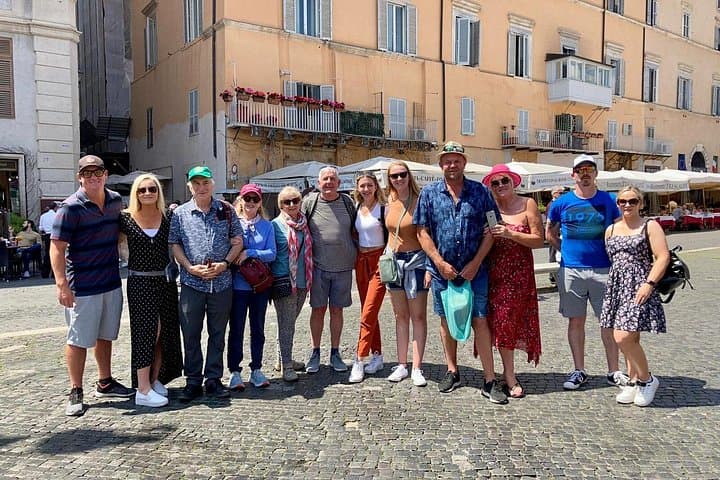
You step into Piazza Mattei and the Fountain of the Turtles glints under late-morning sunlight; your guide tucks a local map into your palm and the city begins to unfold as you walk. Cobbled lanes open to the compact Jewish Quarter where family-run trattorias smoke wood-fired flavors into the air, then expand to the Baroque drama of Piazza Navona and the market hum of Campo de' Fiori.
Verified experiences and guided adventures in the surrounding area.
Operated by Food Tours Of Rome · Rome, Lazio
You step into Piazza Mattei and the Fountain of the Turtles glints under late-morning sunlight; your guide tucks a local map into your palm and the city begins to unfold as you walk. Cobbled lanes open to the compact Jewish Quarter where family-run trattorias smoke wood-fired flavors into the air, then expand to the Baroque drama of Piazza Navona and the market hum of Campo de' Fiori.
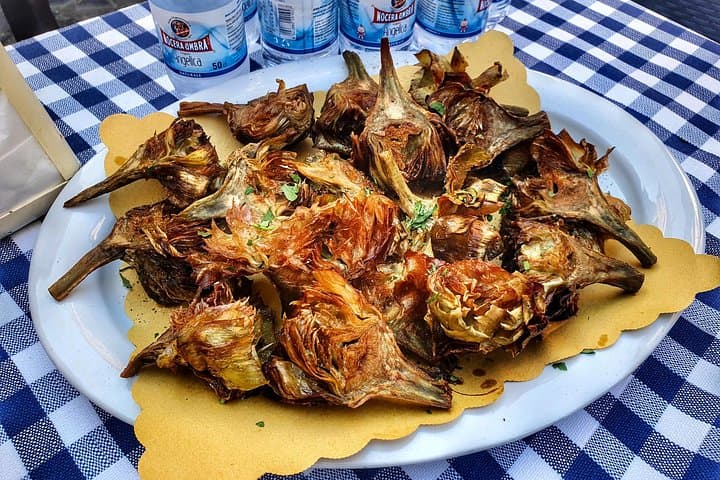
The route threads Roman history into every bite: the Portico d'Ottavia sits on ancient Republican foundations and nearby stones reveal travertine and volcanic tuff that built the city. The Jewish Ghetto, formalized in the 16th century, still carries culinary traditions—kosher bakeries and fried-artichoke specialists—alongside echoes of Rome's layered past. Navona occupies the stadium of Domitian; its fountains, designed in the 17th century, claim center stage.
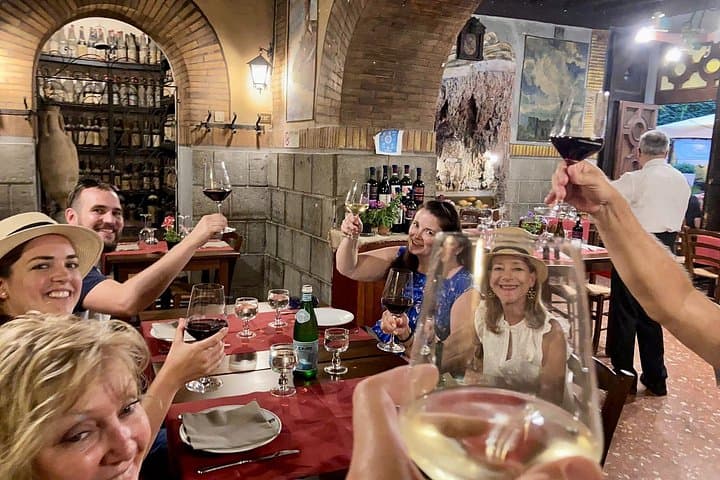
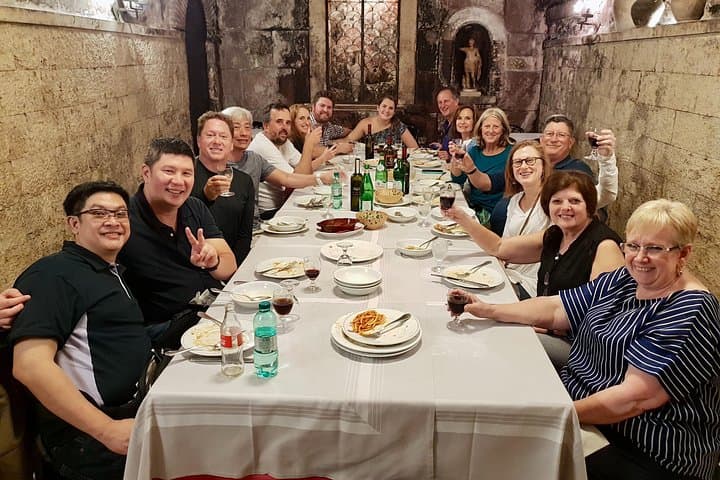
Expect a mix of sensory details—salted anchovies, olive oil, bright citrus desserts—woven with guide anecdotes about food provenance and family recipes. The walk covers mostly flat, narrow streets and lasts four hours, punctuated by seven tasting stops paired with wine or beer.
Practical notes: wear comfortable, grippy shoes for cobbles, carry a refillable water bottle, and flag dietary needs in advance. Plan for groups to move at a steady walking pace; the best times are late morning or early evening to avoid peak sun and market rush. Bring cash for small purchases, a compact umbrella in winter, and curiosity—the city gives up rewards to those who listen.
moderate.
4 hours.
Moderate level of fitness; comfortable walking for up to 3–4 miles on uneven cobbles.
No, this walking food tour does not include admission to the interior of the Synagogue; it focuses on street-level history and tastings.
Vegetarian options can be provided if requested in advance, but the tour notes it cannot fully accommodate vegan, gluten-free or dairy-free diets.
Expect roughly 2–3 miles over four hours across mostly flat but uneven cobblestones, with frequent stops for tastings.
No transfer is included; meeting is at Piazza Mattei—taxis and public transport are convenient options to reach the start point.
The Jewish Ghetto was formalized in the 16th century and sits atop layers of Roman and medieval urban fabric; Portico d'Ottavia dates to the Augustan period.
Support small family eateries and minimize single-use plastics; stick to marked walkways to protect fragile pavement and archaeological remains.
Food Tours Of Rome operates guided outdoor trips and adventures with an emphasis on safety, stewardship, and memorable experiences.
You step into Piazza Mattei and the Fountain of the Turtles glints under late-morning sunlight; your guide tucks a local map into your palm and the city begins to unfold as you walk. Cobbled lanes open to the compact Jewish Quarter where family-run trattorias smoke wood-fired flavors into the air, then expand to the Baroque drama of Piazza Navona and the market hum of Campo de' Fiori.
You step into Piazza Mattei and the Fountain of the Turtles glints under late-morning sunlight; your guide tucks a local map into your palm and the city begins to unfold as you walk. Cobbled lanes open to the compact Jewish Quarter where family-run trattorias smoke wood-fired flavors into the air, then expand to the Baroque drama of Piazza Navona and the market hum of Campo de' Fiori.
The route threads Roman history into every bite: the Portico d'Ottavia sits on ancient Republican foundations and nearby stones reveal travertine and volcanic tuff that built the city. The Jewish Ghetto, formalized in the 16th century, still carries culinary traditions—kosher bakeries and fried-artichoke specialists—alongside echoes of Rome's layered past. Navona occupies the stadium of Domitian; its fountains, designed in the 17th century, claim center stage.
Expect a mix of sensory details—salted anchovies, olive oil, bright citrus desserts—woven with guide anecdotes about food provenance and family recipes. The walk covers mostly flat, narrow streets and lasts four hours, punctuated by seven tasting stops paired with wine or beer.
Practical notes: wear comfortable, grippy shoes for cobbles, carry a refillable water bottle, and flag dietary needs in advance. Plan for groups to move at a steady walking pace; the best times are late morning or early evening to avoid peak sun and market rush. Bring cash for small purchases, a compact umbrella in winter, and curiosity—the city gives up rewards to those who listen.