THE ADVENTURE COLLECTIVE® · Independent discovery and booking for outdoor travel

Explore Rome by e‑bike over three days, from the hush of the Appian Way and the underground catacombs to leafy villas and Baroque squares. This guided ride pairs cultural depth with manageable daily distances—ideal for riders with basic bike experience.
Explore Rome by e‑bike over three days, from the hush of the Appian Way and the underground catacombs to leafy villas and Baroque squares. This guided ride pairs cultural depth with manageable daily distances—ideal for riders with basic bike experience.
Morning light spills across a cobbled piazza as the group mounts e-bikes and the city exhales. Riders move beside the Tiber, past Baroque fountains and narrow alleys where scooters hum and the past brushes the present. The tour unfolds at a steady, measured pace—urban avenues one moment, the quiet stretch of the Via Appia Antica the next—each pedal stroke connecting the modern city with layers of history.
Verified experiences and guided adventures in the surrounding area.
Operated by Bicycle Roma · Rome, Lazio
Morning light spills across a cobbled piazza as the group mounts e-bikes and the city exhales. Riders move beside the Tiber, past Baroque fountains and narrow alleys where scooters hum and the past brushes the present. The tour unfolds at a steady, measured pace—urban avenues one moment, the quiet stretch of the Via Appia Antica the next—each pedal stroke connecting the modern city with layers of history.
Rome’s streets are a classroom of stone: the Appian Way’s basalt slabs laid by Roman engineers, catacombs carved into volcanic tuff, and the landscaped villas that wealthy Romans set apart from the city’s bustle. Guides illuminate social and religious shifts—how pilgrims once walked the same routes, how aqueducts shaped settlement—and point out the Coppedè quarter’s odd Art Deco flourishes. The geology is immediate: tufa and travertine underfoot, the Tiber’s meander shaping neighborhoods, and the green lungs of Villa Borghese offering relief from asphalt heat.
Practically, expect 40–45 km across three days, mostly on low-traffic streets and gravel on the Appian Way. E-bikes smooth climbs but require basic handling experience; helmets and local bike cards are provided. Carry a small daypack, water, and a charged phone—guides will coordinate luggage transfers between modest bike-focused hotels.
Timing is everything: mornings and late afternoons are cooler and photographically richer. Respect protected areas, stick to designated paths in the Appia Regional Park, and follow the guide’s cues in traffic. For travelers who want history served with motion, this tour balances cultural depth with outdoor rhythm.
moderate.
3 days.
Suitable for people in regular physical condition who can ride a bike for 2–4 hours per day; e-bikes reduce strain on climbs.
Yes—e-bikes, helmets, and lights are provided; a brief orientation covers basic controls and safety before departure.
The full itinerary covers about 40–45 km over three days, with daily riding segmented into shorter loops and sightseeing stops.
Riders need basic cycling competency; specialized infant seats are available but minimum experience is expected—check with the operator for child-specific arrangements.
A luggage transfer from the bike-focused hotel to the final meeting point is included for one small/medium trolley per person; extra bags may incur a fee.
The Appian Way (Via Appia Antica) is one of the earliest Roman roads, built in 312 BCE; nearby catacombs record early Christian burial practices and community life.
Much of the Appia area is protected as part of a regional park—stick to marked paths, avoid disturbing archaeological remains, and follow guide instructions to minimize impact.
Bicycle Roma operates guided outdoor trips and adventures with an emphasis on safety, stewardship, and memorable experiences.
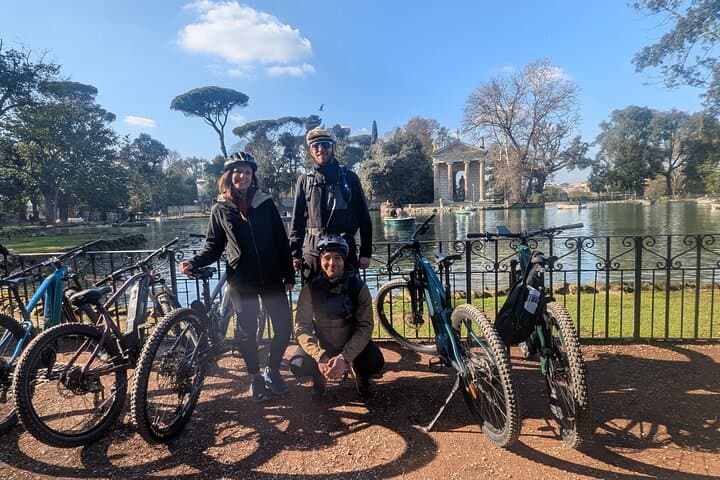
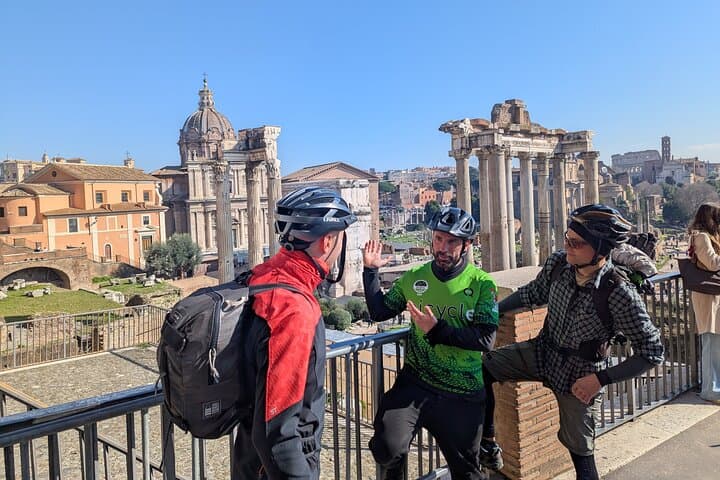
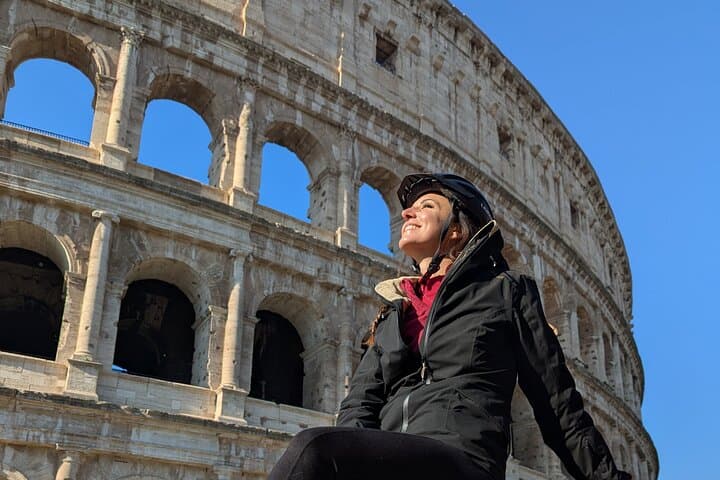
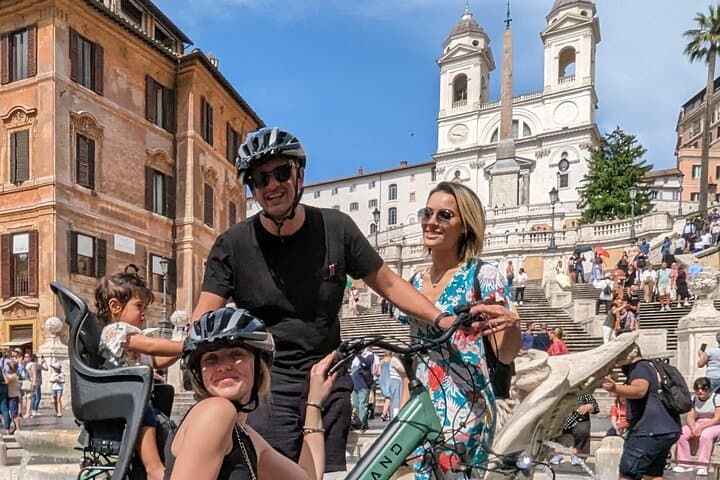
Morning light spills across a cobbled piazza as the group mounts e-bikes and the city exhales. Riders move beside the Tiber, past Baroque fountains and narrow alleys where scooters hum and the past brushes the present. The tour unfolds at a steady, measured pace—urban avenues one moment, the quiet stretch of the Via Appia Antica the next—each pedal stroke connecting the modern city with layers of history.
Morning light spills across a cobbled piazza as the group mounts e-bikes and the city exhales. Riders move beside the Tiber, past Baroque fountains and narrow alleys where scooters hum and the past brushes the present. The tour unfolds at a steady, measured pace—urban avenues one moment, the quiet stretch of the Via Appia Antica the next—each pedal stroke connecting the modern city with layers of history.
Rome’s streets are a classroom of stone: the Appian Way’s basalt slabs laid by Roman engineers, catacombs carved into volcanic tuff, and the landscaped villas that wealthy Romans set apart from the city’s bustle. Guides illuminate social and religious shifts—how pilgrims once walked the same routes, how aqueducts shaped settlement—and point out the Coppedè quarter’s odd Art Deco flourishes. The geology is immediate: tufa and travertine underfoot, the Tiber’s meander shaping neighborhoods, and the green lungs of Villa Borghese offering relief from asphalt heat.
Practically, expect 40–45 km across three days, mostly on low-traffic streets and gravel on the Appian Way. E-bikes smooth climbs but require basic handling experience; helmets and local bike cards are provided. Carry a small daypack, water, and a charged phone—guides will coordinate luggage transfers between modest bike-focused hotels.
Timing is everything: mornings and late afternoons are cooler and photographically richer. Respect protected areas, stick to designated paths in the Appia Regional Park, and follow the guide’s cues in traffic. For travelers who want history served with motion, this tour balances cultural depth with outdoor rhythm.