THE ADVENTURE COLLECTIVE® · Independent discovery and booking for outdoor travel

Spend a couple of hours exploring Nairobi’s skyline, parks and cultural stops on a private, romantic city tour. Panoramic views from KICC, reflective moments at August 7th Memorial Park and urban gardens make this an intimate introduction to Kenya’s capital.
Spend a couple of hours exploring Nairobi’s skyline, parks and cultural stops on a private, romantic city tour. Panoramic views from KICC, reflective moments at August 7th Memorial Park and urban gardens make this an intimate introduction to Kenya’s capital.
You step from the shade of a jacaranda into sunlit Nairobi traffic, the city’s skyline rising like a curious promise. From the circular viewing deck of the Kenyatta International Convention Centre the metropolis unfurls — red-tiled roofs, glass towers and distant ridgelines — while the breeze off the highland plateau teases your companion’s hair and the city feels intimate and immediate.
Verified experiences and guided adventures in the surrounding area.
Operated by Opatrip.com Kenya · Nairobi, Nairobi County
You step from the shade of a jacaranda into sunlit Nairobi traffic, the city’s skyline rising like a curious promise. From the circular viewing deck of the Kenyatta International Convention Centre the metropolis unfurls — red-tiled roofs, glass towers and distant ridgelines — while the breeze off the highland plateau teases your companion’s hair and the city feels intimate and immediate.
Nairobi began as a railway camp in the late 19th century and the route of that railroad still shapes the downtown: the Kenya Railway Museum preserves the steam-era artifacts that birthed the city, while the National Archives traces colonial and post-independence stories. Geologically, Nairobi sits on the East African highlands at roughly 1,700 m elevation; volcanic soils and nearby escarpments explain the cool evenings and fertile urban gardens like Jeevanjee.
Culturally the loop moves from solemn reflection at August 7th Memorial Park to the quiet sculpture corners of Jeevanjee Gardens, where shady benches invite conversation. Local guides interpret Swahili and Kikuyu influences, architecture and everyday rhythms that make the city feel lived-in rather than staged.
Practical guidance: plan for 2–3 hours, ideally early morning or late afternoon to avoid midday heat and traffic. Wear supportive walking shoes for uneven sidewalks, carry water and sunscreen, and bring a compact camera for rooftop panoramas. Public transport and ride-hail options are plentiful; confirm your private guide’s meeting point in advance. Respect memorial sites, tip your guide modestly, and leave no trace in green spaces — Nairobi’s small urban parks are treasured and fragile.
easy.
2–3 hours.
Suitable for all fitness levels; requires the ability to walk on paved and uneven surfaces for a few hours.
Yes — the tour is offered as a private experience for your party, allowing a flexible pace and personalized commentary.
No — admission fees are typically not included; check with your provider for specifics about museums or rooftop access.
The itinerary runs about 150 minutes (2.5 hours); operators commonly schedule morning or late-afternoon departures.
Portions of the route (KICC viewing deck and some museums) are accessible, but uneven sidewalks and steps at certain sites may limit full accessibility—confirm details with the tour operator.
Nairobi grew from a late-19th-century British railway depot; landmarks like the Kenya Railway Museum and KICC reflect its transport-driven origins and 20th-century growth.
Urban green spaces are limited and heavily used—stick to paths, carry out litter and support local guides who practice low-impact tourism.
Opatrip.com Kenya operates guided outdoor trips and adventures with an emphasis on safety, stewardship, and memorable experiences.



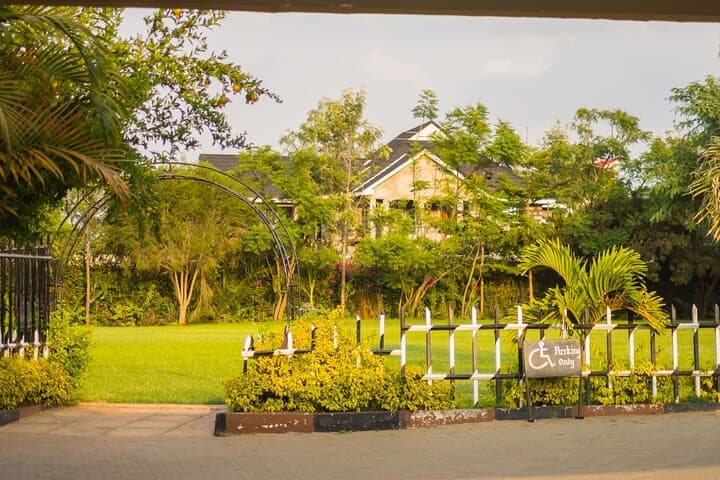
You step from the shade of a jacaranda into sunlit Nairobi traffic, the city’s skyline rising like a curious promise. From the circular viewing deck of the Kenyatta International Convention Centre the metropolis unfurls — red-tiled roofs, glass towers and distant ridgelines — while the breeze off the highland plateau teases your companion’s hair and the city feels intimate and immediate.
You step from the shade of a jacaranda into sunlit Nairobi traffic, the city’s skyline rising like a curious promise. From the circular viewing deck of the Kenyatta International Convention Centre the metropolis unfurls — red-tiled roofs, glass towers and distant ridgelines — while the breeze off the highland plateau teases your companion’s hair and the city feels intimate and immediate.
Nairobi began as a railway camp in the late 19th century and the route of that railroad still shapes the downtown: the Kenya Railway Museum preserves the steam-era artifacts that birthed the city, while the National Archives traces colonial and post-independence stories. Geologically, Nairobi sits on the East African highlands at roughly 1,700 m elevation; volcanic soils and nearby escarpments explain the cool evenings and fertile urban gardens like Jeevanjee.
Culturally the loop moves from solemn reflection at August 7th Memorial Park to the quiet sculpture corners of Jeevanjee Gardens, where shady benches invite conversation. Local guides interpret Swahili and Kikuyu influences, architecture and everyday rhythms that make the city feel lived-in rather than staged.
Practical guidance: plan for 2–3 hours, ideally early morning or late afternoon to avoid midday heat and traffic. Wear supportive walking shoes for uneven sidewalks, carry water and sunscreen, and bring a compact camera for rooftop panoramas. Public transport and ride-hail options are plentiful; confirm your private guide’s meeting point in advance. Respect memorial sites, tip your guide modestly, and leave no trace in green spaces — Nairobi’s small urban parks are treasured and fragile.