THE ADVENTURE COLLECTIVE® · Independent discovery and booking for outdoor travel

A private two-day loop from Bucharest that pairs UNESCO heritage, karst caves, and Brâncuși’s sculptural axis. Expect cool, humid caverns, painted monastery halls, and flexible pacing with a private guide.
A private two-day loop from Bucharest that pairs UNESCO heritage, karst caves, and Brâncuși’s sculptural axis. Expect cool, humid caverns, painted monastery halls, and flexible pacing with a private guide.
You step out of the private car where limestone cliffs drop toward a narrow valley and the air smells of cold spring water. Stalactites glint in the cave mouth like a suspended forest; further in, the passage narrows and the cave seems to inhale you. This two-day private tour from Bucharest threads together spiritual architecture, deep karst, and modern sculpture: Horezu Monastery’s painted walls, the humid galleries of Polovragi Cave, an overnight near Baia de Fier, then the Women’s Cave and Brâncuși’s sculptural axis in Târgu Jiu.
Verified experiences and guided adventures in the surrounding area.
Operated by Romania Private Guide · Baia de Fier, Vâlcea
You step out of the private car where limestone cliffs drop toward a narrow valley and the air smells of cold spring water. Stalactites glint in the cave mouth like a suspended forest; further in, the passage narrows and the cave seems to inhale you. This two-day private tour from Bucharest threads together spiritual architecture, deep karst, and modern sculpture: Horezu Monastery’s painted walls, the humid galleries of Polovragi Cave, an overnight near Baia de Fier, then the Women’s Cave and Brâncuși’s sculptural axis in Târgu Jiu.
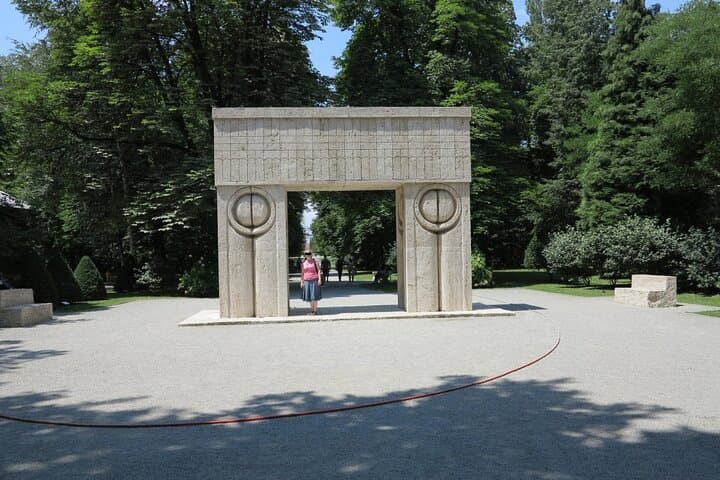
Horezu dates to the 17th century and is a UNESCO site known for Horezu ceramics and well-preserved Orthodox frescoes. The caves are classic Romanian karst—limestone dissolved over millennia into chambers, flowstone, and springs. Polovragi’s mapped galleries extend over 10 km though only about 800 m are open to visitors; expect features named for human shapes and mythic impressions. The Brâncuși ensemble (1,275 m axis) offers a cultural coda—minimalist forms that counterpoint the raw geology you’ll have walked through.
Practically: daily driving links the sites, with short guided walks and stepped cave trails. Caves are cool (often 8–12°C), humid, and dim—bring non-slip footwear and a light. Respect monastic dress codes and local customs; entrance fees and guided access vary by site. The private format means flexible timing—ideal for photographers or travelers who want slow, focused exploration rather than a rushed group itinerary.
easy.
2 days.
Suitable for travelers in normal physical condition; includes short walks and standing in caves.
Accessible cave sections are short—typically 30–120 minutes per cave—with mostly level but uneven paths; expect up to 800 m of visited passages in Polovragi.
The tour includes car expenses and guide services, but entrance fees and accommodation are typically paid separately unless specified by the operator—confirm at booking.
The itinerary is rated easy but caves have steps, low passages, and wet floors; children and those with mobility limitations should check specifics with the operator before booking.
Meals are usually not included; your guide can recommend restaurants or arrange stops—pack snacks for cave visits if you prefer.
Horezu Monastery (17th century) is a UNESCO-listed site noted for original Horezu pottery and authentic Orthodox iconography; Brâncuși’s Târgu Jiu ensemble is a landmark of Romanian modernism.
Cave formations are fragile—avoid touching speleothems and follow marked routes; support local conservation by using established paths and minimizing waste.
Romania Private Guide operates guided outdoor trips and adventures with an emphasis on safety, stewardship, and memorable experiences.


You step out of the private car where limestone cliffs drop toward a narrow valley and the air smells of cold spring water. Stalactites glint in the cave mouth like a suspended forest; further in, the passage narrows and the cave seems to inhale you. This two-day private tour from Bucharest threads together spiritual architecture, deep karst, and modern sculpture: Horezu Monastery’s painted walls, the humid galleries of Polovragi Cave, an overnight near Baia de Fier, then the Women’s Cave and Brâncuși’s sculptural axis in Târgu Jiu.
You step out of the private car where limestone cliffs drop toward a narrow valley and the air smells of cold spring water. Stalactites glint in the cave mouth like a suspended forest; further in, the passage narrows and the cave seems to inhale you. This two-day private tour from Bucharest threads together spiritual architecture, deep karst, and modern sculpture: Horezu Monastery’s painted walls, the humid galleries of Polovragi Cave, an overnight near Baia de Fier, then the Women’s Cave and Brâncuși’s sculptural axis in Târgu Jiu.
Horezu dates to the 17th century and is a UNESCO site known for Horezu ceramics and well-preserved Orthodox frescoes. The caves are classic Romanian karst—limestone dissolved over millennia into chambers, flowstone, and springs. Polovragi’s mapped galleries extend over 10 km though only about 800 m are open to visitors; expect features named for human shapes and mythic impressions. The Brâncuși ensemble (1,275 m axis) offers a cultural coda—minimalist forms that counterpoint the raw geology you’ll have walked through.
Practically: daily driving links the sites, with short guided walks and stepped cave trails. Caves are cool (often 8–12°C), humid, and dim—bring non-slip footwear and a light. Respect monastic dress codes and local customs; entrance fees and guided access vary by site. The private format means flexible timing—ideal for photographers or travelers who want slow, focused exploration rather than a rushed group itinerary.