THE ADVENTURE COLLECTIVE® · Independent discovery and booking for outdoor travel

Step back 2,000 years on a 90-minute walking tour led by an authentic Roman soldier guide. Explore Chester’s massive Roman amphitheatre, surviving wall segments and hypocaust remains while learning the archaeological stories that shaped the city.
Step back 2,000 years on a 90-minute walking tour led by an authentic Roman soldier guide. Explore Chester’s massive Roman amphitheatre, surviving wall segments and hypocaust remains while learning the archaeological stories that shaped the city.
You begin on a cobbled street as a Roman soldier steps into the present — gladius at rest, voice trained in archaeology rather than combat — and Chester’s stones rearrange themselves into camps, barracks and an amphitheatre packed with noise.
Verified experiences and guided adventures in the surrounding area.
Operated by Roman Tours · Chester, Cheshire
You begin on a cobbled street as a Roman soldier steps into the present — gladius at rest, voice trained in archaeology rather than combat — and Chester’s stones rearrange themselves into camps, barracks and an amphitheatre packed with noise.
The 90‑minute walking tour threads through Britain’s largest known Roman fortress: walls that still rise in sections over five metres, an amphitheatre carved into sandstone, and relocated hypocaust pila that explain how Roman baths beat the British chill. Geology plays a role here — red sandstone underfoot was quarried locally and stacked into fortifications that have survived nearly two millennia. Culturally, Chester bears Roman, medieval and Victorian layers; the guide animates soldiers, merchants and local citizens using the latest excavation reports and museum finds.
Expect an easy urban stroll that mixes street-level archaeology with basement remains and reconstructed displays. The River Dee curves nearby, quietly challenging you to step away later for a riverside promenade. Local insights include where to see original masonry, which shop basements hide fragments, and how the Grosvenor Museum preserves artifacts from the site.
Practical guidance: wear cushioned walking shoes and a weatherproof layer; most of the route is flat but surfaces are uneven and include stairs and basements. The tour is wheelchair- and stroller-accessible on main sections—check accessibility points when booking. Arrive 10–15 minutes early to find the meeting point and ask about family-friendly adjustments. Bring a camera, curiosity, and a sense of inquiry: the soldier will point you to details that change how you see the city.
easy.
1.5 hours.
Suitable for most fitness levels; involves walking on uneven urban surfaces and some stairs.
Meeting details are provided at booking; typically the group assembles in central Chester near the amphitheatre or an agreed city‑centre landmark—arrive 10–15 minutes early.
Yes—this is a family-friendly, low-intensity walk; main sections are stroller-accessible though some basement areas involve stairs or limited space.
Parts of the route are wheelchair-accessible; notify the operator when booking to confirm accessible sections and any adjustments.
Tours may be canceled or rescheduled for severe weather; routine rain usually does not stop the tour, but bring a waterproof layer and check the cancellation policy.
Chester grew from a major Roman fortress and amphitheatre; archaeological finds show a permanent military presence and a town that serviced soldiers and civilians alike.
Local conservation focuses on protecting exposed masonry and archaeological deposits—stay on designated paths and support local museums that fund preservation.
Roman Tours operates guided outdoor trips and adventures with an emphasis on safety, stewardship, and memorable experiences.

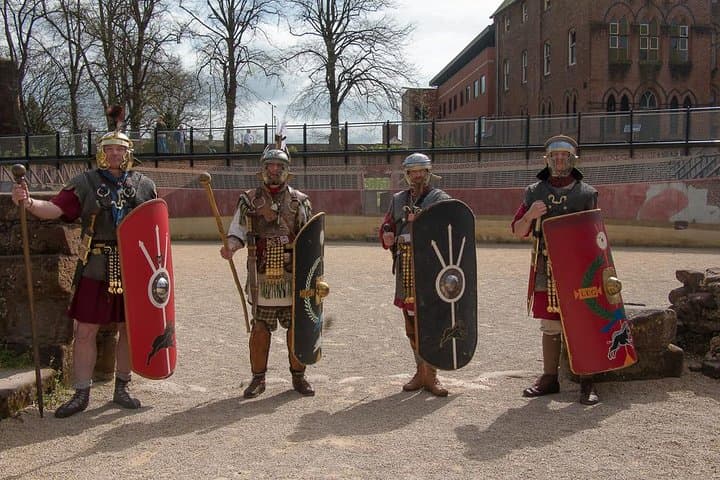
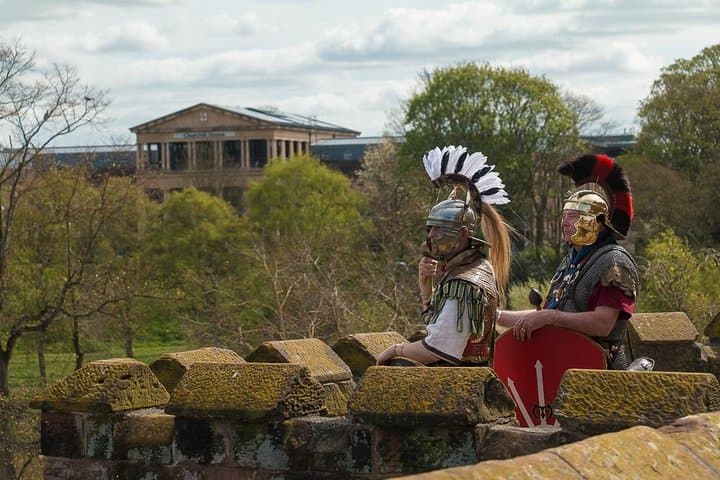
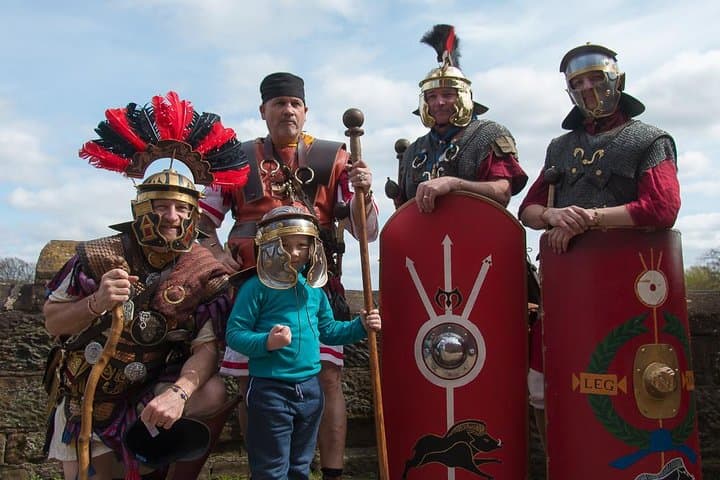
You begin on a cobbled street as a Roman soldier steps into the present — gladius at rest, voice trained in archaeology rather than combat — and Chester’s stones rearrange themselves into camps, barracks and an amphitheatre packed with noise.
You begin on a cobbled street as a Roman soldier steps into the present — gladius at rest, voice trained in archaeology rather than combat — and Chester’s stones rearrange themselves into camps, barracks and an amphitheatre packed with noise.
The 90‑minute walking tour threads through Britain’s largest known Roman fortress: walls that still rise in sections over five metres, an amphitheatre carved into sandstone, and relocated hypocaust pila that explain how Roman baths beat the British chill. Geology plays a role here — red sandstone underfoot was quarried locally and stacked into fortifications that have survived nearly two millennia. Culturally, Chester bears Roman, medieval and Victorian layers; the guide animates soldiers, merchants and local citizens using the latest excavation reports and museum finds.
Expect an easy urban stroll that mixes street-level archaeology with basement remains and reconstructed displays. The River Dee curves nearby, quietly challenging you to step away later for a riverside promenade. Local insights include where to see original masonry, which shop basements hide fragments, and how the Grosvenor Museum preserves artifacts from the site.
Practical guidance: wear cushioned walking shoes and a weatherproof layer; most of the route is flat but surfaces are uneven and include stairs and basements. The tour is wheelchair- and stroller-accessible on main sections—check accessibility points when booking. Arrive 10–15 minutes early to find the meeting point and ask about family-friendly adjustments. Bring a camera, curiosity, and a sense of inquiry: the soldier will point you to details that change how you see the city.