THE ADVENTURE COLLECTIVE® · Independent discovery and booking for outdoor travel

Hand-feed Jamaica’s celebrated Doctor Bird and watch orioles and finches land on your finger at Rockland’s Bird Sanctuary. This short, accessible stop near Lucea pairs close wildlife encounters with a concise naturalist walk.
Hand-feed Jamaica’s celebrated Doctor Bird and watch orioles and finches land on your finger at Rockland’s Bird Sanctuary. This short, accessible stop near Lucea pairs close wildlife encounters with a concise naturalist walk.
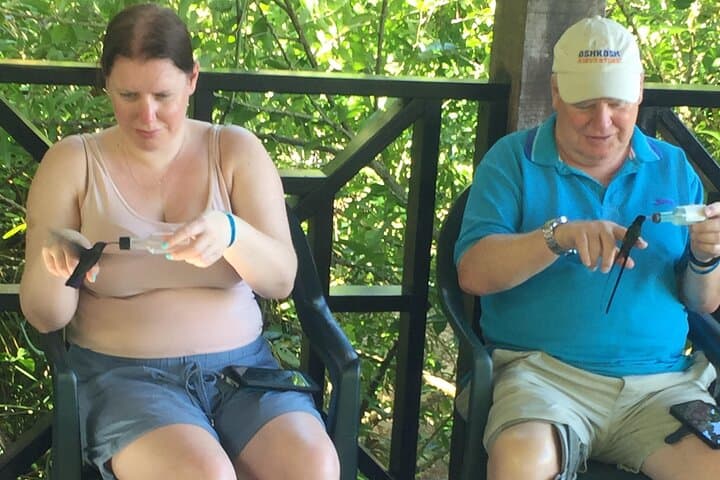
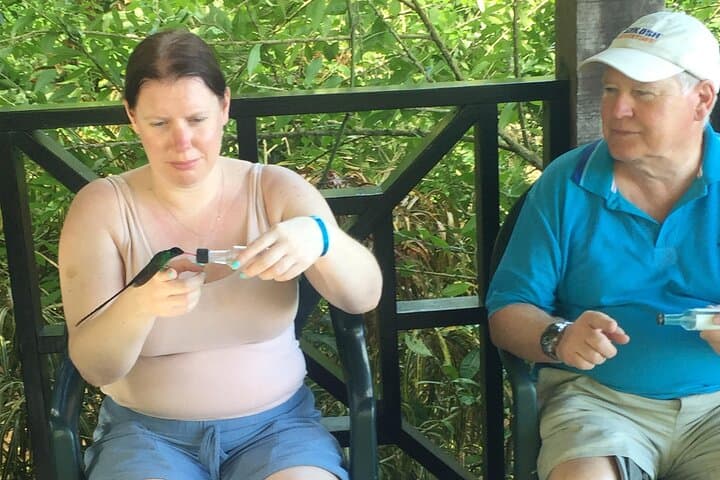
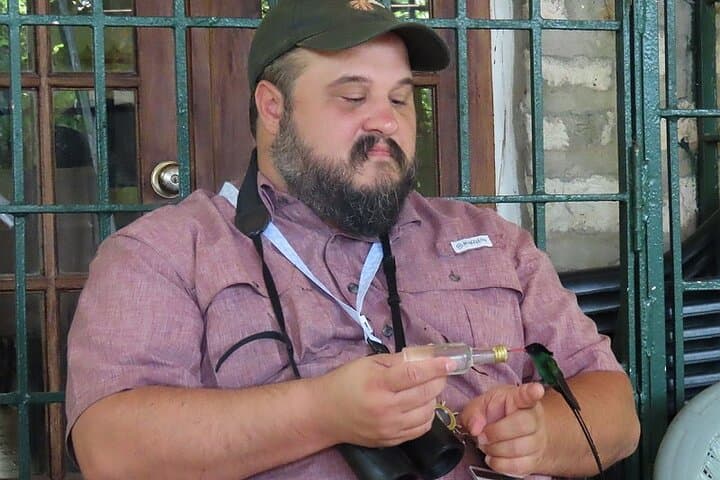
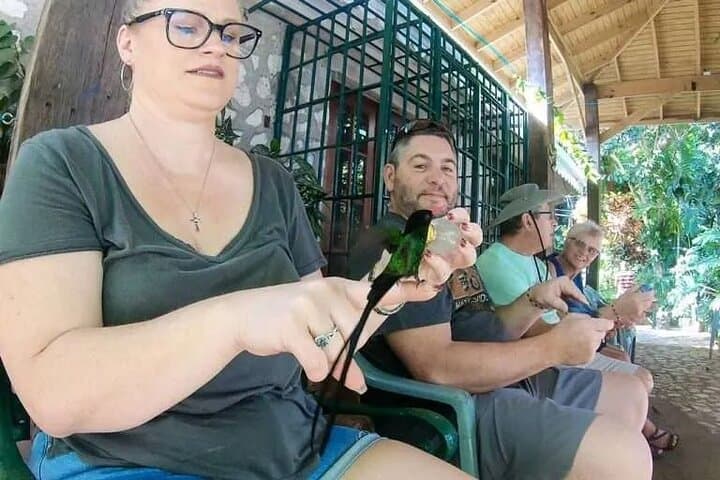
A low-slung wooden pavilion opens onto a small clearing where iridescent feathers flash like thrown coins. Visitors arrive by air-conditioned minivan from Montego Bay or Falmouth and are quickly handed a nectar bottle; within minutes, Doctor Birds (Jamaica’s national hummingbird) and orioles wheel in, perching on outstretched fingers and sipping greedily. The experience is immediate and tactile — wild birds choosing to join people in daylight.
Verified experiences and guided adventures in the surrounding area.
Operated by Ellis Tours & Transfers · Lucea, Hanover Parish
A low-slung wooden pavilion opens onto a small clearing where iridescent feathers flash like thrown coins. Visitors arrive by air-conditioned minivan from Montego Bay or Falmouth and are quickly handed a nectar bottle; within minutes, Doctor Birds (Jamaica’s national hummingbird) and orioles wheel in, perching on outstretched fingers and sipping greedily. The experience is immediate and tactile — wild birds choosing to join people in daylight.
The sanctuary sits on limestone soils typical of northwest Jamaica; shady woodland and cultivated native plants create a reliable nectar corridor. The keeper’s short guided walk highlights native trees used for medicine and construction, and points out how local plantings sustain the birds year-round. Culturally, the site ties into Lucea’s coastal community tradition of informal ecotourism — a small-scale operation built around daily feeding routines rather than caged display.
Expect a gentle, accessible outing: most visits last about an hour among the birds with another short interpretive walk. Ground is level but shaded and can be sandy or mulchy in places. Bring sun protection, a light rain layer in wet months, and a camera with a fast shutter if you want crisp shots of hovering hummingbirds. The sanctuary emphasizes minimal disturbance — keep voices low, avoid sudden movements, and use only provided nectar so birds don’t ingest inappropriate food.
For travelers staying in Montego Bay, this 2‑hour stop offers an intimate wildlife moment without a long hike — ideal for families, older visitors, or anyone wanting close-up bird encounters alongside a short natural history lesson.
easy.
2 hours.
Suitable for all fitness levels; involves standing and short walking on flat, shaded paths.
Yes — staff provide nectar bottles and often encourage guests to hold them; birds are wild and approach on their own terms.
Mostly level and compact, but surfaces can be uneven; accessibility may be limited—ask the operator about specific needs before booking.
Typical on-site time is about 60 minutes for the feeding experience plus a short interpretive walk in the woods.
No formal age limits, but children should be supervised and follow staff instructions to avoid startling the birds.
Rockland’s operation is part of a local tradition of private bird-feeding sites that grew from household gardens and community hospitality in Hanover Parish.
The sanctuary relies on planted native nectar sources and daily feeding to support local bird populations; visitors should avoid offering outside food and follow keeper guidance to minimize stress on wildlife.
Ellis Tours & Transfers operates guided outdoor trips and adventures with an emphasis on safety, stewardship, and memorable experiences.
A low-slung wooden pavilion opens onto a small clearing where iridescent feathers flash like thrown coins. Visitors arrive by air-conditioned minivan from Montego Bay or Falmouth and are quickly handed a nectar bottle; within minutes, Doctor Birds (Jamaica’s national hummingbird) and orioles wheel in, perching on outstretched fingers and sipping greedily. The experience is immediate and tactile — wild birds choosing to join people in daylight.
A low-slung wooden pavilion opens onto a small clearing where iridescent feathers flash like thrown coins. Visitors arrive by air-conditioned minivan from Montego Bay or Falmouth and are quickly handed a nectar bottle; within minutes, Doctor Birds (Jamaica’s national hummingbird) and orioles wheel in, perching on outstretched fingers and sipping greedily. The experience is immediate and tactile — wild birds choosing to join people in daylight.
The sanctuary sits on limestone soils typical of northwest Jamaica; shady woodland and cultivated native plants create a reliable nectar corridor. The keeper’s short guided walk highlights native trees used for medicine and construction, and points out how local plantings sustain the birds year-round. Culturally, the site ties into Lucea’s coastal community tradition of informal ecotourism — a small-scale operation built around daily feeding routines rather than caged display.
Expect a gentle, accessible outing: most visits last about an hour among the birds with another short interpretive walk. Ground is level but shaded and can be sandy or mulchy in places. Bring sun protection, a light rain layer in wet months, and a camera with a fast shutter if you want crisp shots of hovering hummingbirds. The sanctuary emphasizes minimal disturbance — keep voices low, avoid sudden movements, and use only provided nectar so birds don’t ingest inappropriate food.
For travelers staying in Montego Bay, this 2‑hour stop offers an intimate wildlife moment without a long hike — ideal for families, older visitors, or anyone wanting close-up bird encounters alongside a short natural history lesson.