THE ADVENTURE COLLECTIVE® · Independent discovery and booking for outdoor travel

Short on time but hungry for vertical? This guided rock-climbing experience near Lake Bled puts you on 25-meter limestone walls at Iglica, with all gear and instruction supplied. Learn rope skills, climb six routes, and descend with views of the waterfall and Julian Alps.
Short on time but hungry for vertical? This guided rock-climbing experience near Lake Bled puts you on 25-meter limestone walls at Iglica, with all gear and instruction supplied. Learn rope skills, climb six routes, and descend with views of the waterfall and Julian Alps.
A wind moves through the crags above Bohinjska Bela and the limestone face seems to speak—its thin edges and pockets daring a careful hand. Ten minutes from Bled’s lakeshore, a certified guide clips a rope and points up: six routes on a dry rock wall, each a short conversation between climber and stone. Climbers ascend, rappel, and repeat on climbs that top out at roughly 25 meters, with the 25-meter Iglica Waterfall nearby breaking the silence like a conversation partner of its own.
Verified experiences and guided adventures in the surrounding area.
Operated by Altitude Activities · Bled, Upper Carniola
A wind moves through the crags above Bohinjska Bela and the limestone face seems to speak—its thin edges and pockets daring a careful hand. Ten minutes from Bled’s lakeshore, a certified guide clips a rope and points up: six routes on a dry rock wall, each a short conversation between climber and stone. Climbers ascend, rappel, and repeat on climbs that top out at roughly 25 meters, with the 25-meter Iglica Waterfall nearby breaking the silence like a conversation partner of its own.
The cliffs here are part of the southern edge of the Julian Alps, formed in ancient shallow seas where marine sediments compressed into karst limestone. The rock’s texture gives sharp holds and small edges; it demands technique more than brute force. Culturally, Bled has long been a crossroads: Austro-Hungarian spa town turned modern adventure hub. Local climbing culture blends that genteel tourism with practical alpine know-how—guides teach ropework and safety in plain language so novices can climb with confidence.
On a clear day the view from the belay ledge includes spruce-stippled valleys and a sliver of Lake Bled below, its medieval castle perching on a cliff like a navigation mark. The guide will explain basic safeguarding, knotwork and how to rappel cleanly; you’ll learn to belay so you can support a partner. The routes vary from 3a to 7a+, so the group can progress quickly from easy top-ropes to more demanding moves if skill and appetite allow.
Practicalities are straightforward: the operation supplies helmets, harnesses, ropes and transport from Bled; bookings include pick-up within a 10 km radius. The activity runs about three hours—enough time for gear rigging, instruction, six climbs and a couple of guided descents. Footwear with good grip helps on approach paths and on the rock; bring water, sun protection and a light wind layer for the belay.
Weather shifts in the Alps, so morning starts generally offer better conditions and softer light for photos. The guide will cancel or reschedule for unsafe weather; cancellation is allowed up to 24 hours prior for a full refund. For travelers, this is a compact introduction to Slovenian crags—technical enough to teach important skills, accessible enough for curious beginners.
Expect to walk on uneven trail approaches, to feel your hands ache pleasantly after a sequence of moves, and to look down at the waterfall and think, briefly, that the landscape is a partner, not a backdrop. With clear instruction, conservative safety practice, and the kind of limestone that rewards finesse, climbing near Lake Bled is a practical, invigorating way to add vertical perspective to a classic Alpine visit.
moderate.
3 hours.
Moderate — basic mobility and upper-body strength helpful, but routes cater to beginners through intermediate climbers.
No—this is designed for beginners through intermediate climbers; guides will teach knots, belaying and rappelling.
Yes—helmets, harnesses, ropes and other climbing equipment are supplied and included in the tour price.
Approaches are short and on uneven trails; expect light uphill walking but no long hikes.
Children may join but must be accompanied by an adult; confirm age and ability with the operator when booking.
Activities may be rescheduled if conditions are unsafe; the cancellation policy allows a full refund if cancelled 24 hours prior.
Yes—transport from Bled to the climbing area and back is included, with free pickup within about 10 km of Bled.
The limestone faces around Bled are part of the Julian Alps, shaped by marine sedimentation and later uplift; climbing here sits at the intersection of long-standing alpine culture and modern outdoor recreation.
Stick to marked approaches and avoid leaving chalk traces; local operators emphasize low-impact practices and limit group sizes to protect rock and vegetation.
Altitude Activities operates guided outdoor trips and adventures with an emphasis on safety, stewardship, and memorable experiences.
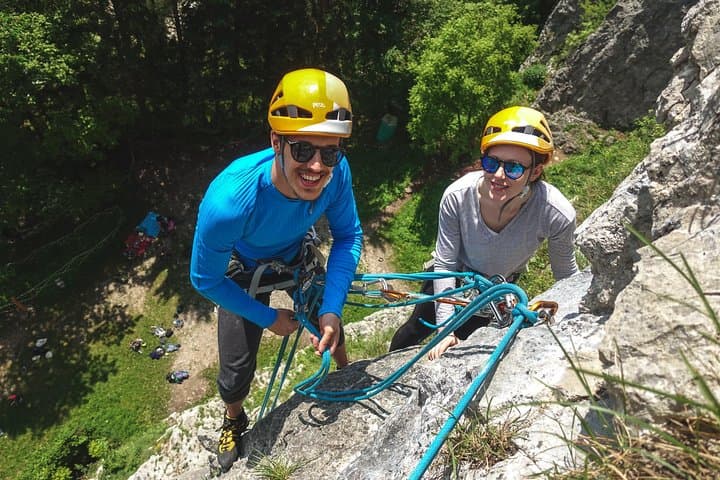
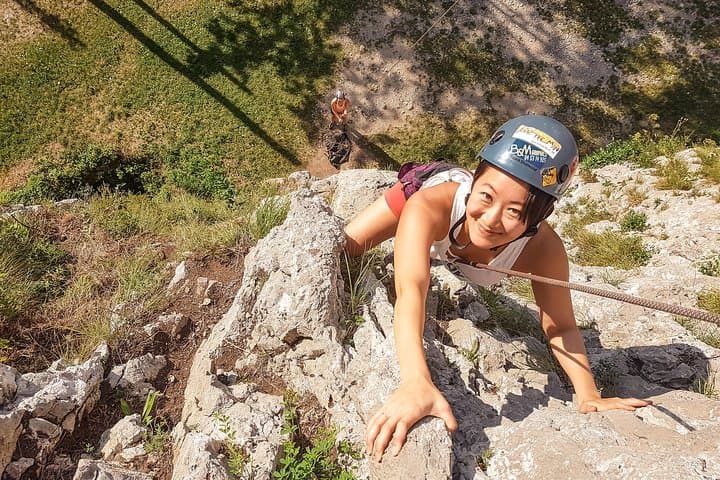
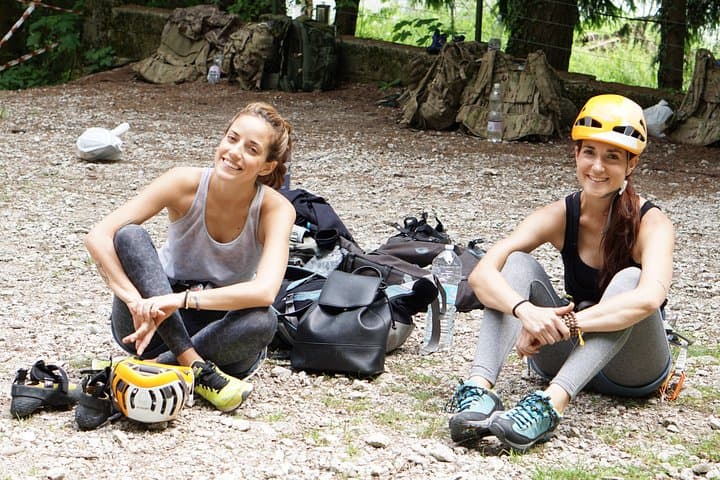
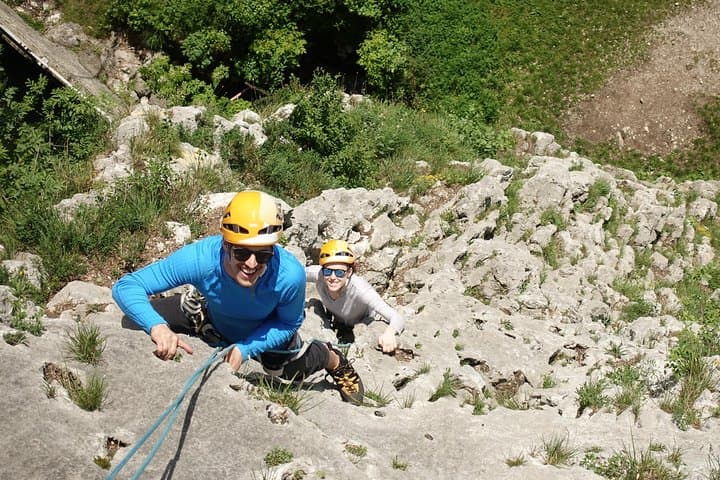
A wind moves through the crags above Bohinjska Bela and the limestone face seems to speak—its thin edges and pockets daring a careful hand. Ten minutes from Bled’s lakeshore, a certified guide clips a rope and points up: six routes on a dry rock wall, each a short conversation between climber and stone. Climbers ascend, rappel, and repeat on climbs that top out at roughly 25 meters, with the 25-meter Iglica Waterfall nearby breaking the silence like a conversation partner of its own.
A wind moves through the crags above Bohinjska Bela and the limestone face seems to speak—its thin edges and pockets daring a careful hand. Ten minutes from Bled’s lakeshore, a certified guide clips a rope and points up: six routes on a dry rock wall, each a short conversation between climber and stone. Climbers ascend, rappel, and repeat on climbs that top out at roughly 25 meters, with the 25-meter Iglica Waterfall nearby breaking the silence like a conversation partner of its own.
The cliffs here are part of the southern edge of the Julian Alps, formed in ancient shallow seas where marine sediments compressed into karst limestone. The rock’s texture gives sharp holds and small edges; it demands technique more than brute force. Culturally, Bled has long been a crossroads: Austro-Hungarian spa town turned modern adventure hub. Local climbing culture blends that genteel tourism with practical alpine know-how—guides teach ropework and safety in plain language so novices can climb with confidence.
On a clear day the view from the belay ledge includes spruce-stippled valleys and a sliver of Lake Bled below, its medieval castle perching on a cliff like a navigation mark. The guide will explain basic safeguarding, knotwork and how to rappel cleanly; you’ll learn to belay so you can support a partner. The routes vary from 3a to 7a+, so the group can progress quickly from easy top-ropes to more demanding moves if skill and appetite allow.
Practicalities are straightforward: the operation supplies helmets, harnesses, ropes and transport from Bled; bookings include pick-up within a 10 km radius. The activity runs about three hours—enough time for gear rigging, instruction, six climbs and a couple of guided descents. Footwear with good grip helps on approach paths and on the rock; bring water, sun protection and a light wind layer for the belay.
Weather shifts in the Alps, so morning starts generally offer better conditions and softer light for photos. The guide will cancel or reschedule for unsafe weather; cancellation is allowed up to 24 hours prior for a full refund. For travelers, this is a compact introduction to Slovenian crags—technical enough to teach important skills, accessible enough for curious beginners.
Expect to walk on uneven trail approaches, to feel your hands ache pleasantly after a sequence of moves, and to look down at the waterfall and think, briefly, that the landscape is a partner, not a backdrop. With clear instruction, conservative safety practice, and the kind of limestone that rewards finesse, climbing near Lake Bled is a practical, invigorating way to add vertical perspective to a classic Alpine visit.