THE ADVENTURE COLLECTIVE® · Independent discovery and booking for outdoor travel

Swap Thamel’s hustle for vertical terrain on a guided day climb in Kathmandu Valley. Choose from the beginner-friendly slabs of Nagarjun to the steeper pockets of Hattiban for a six-hour taste of Himalayan rock and local culture.
Swap Thamel’s hustle for vertical terrain on a guided day climb in Kathmandu Valley. Choose from the beginner-friendly slabs of Nagarjun to the steeper pockets of Hattiban for a six-hour taste of Himalayan rock and local culture.
You step out of a cramped Thamel lane into air that seems to open with the hills—jungle-scented, sharp with dust and distant temple bells. By 10 a.m. a private vehicle threads past rice terraces and suburban sprawl, depositing you at the foot of a slab of weathered rock where ropes and chalk bags promise something other than sightseeing. The guide tightens your harness; the city sounds recede as the cliff becomes the day’s conversation partner, grooves daring your hands and tiny ledges testing your balance.
Verified experiences and guided adventures in the surrounding area.
Operated by Alpine Club of Himalaya · Kathmandu, Bagmati Province
You step out of a cramped Thamel lane into air that seems to open with the hills—jungle-scented, sharp with dust and distant temple bells. By 10 a.m. a private vehicle threads past rice terraces and suburban sprawl, depositing you at the foot of a slab of weathered rock where ropes and chalk bags promise something other than sightseeing. The guide tightens your harness; the city sounds recede as the cliff becomes the day’s conversation partner, grooves daring your hands and tiny ledges testing your balance.
Kathmandu’s climbing sites are folded into the valley’s geology—ancient metamorphic outcrops and coarse sandstone cliffs that once lay beneath shallow seas, now tilted and exposed by tectonic uplift. Nagarjun Forest Reserve, a 30-minute ride northwest of Thamel, offers broad faces and short multi-pitch lines that suit top-rope beginners and trad climbers refining footwork. Hattiban, south toward the Dhaskinkali temple, serves steeper routes and pocketed walls; Bimal Nagar fills the middle ground with varied approaches and quieter sectors.
Climbing here is as much social as it is vertical. Guides from local clubs—often English-speaking climbers trained in Alpine techniques—lead, teach, and share local stories: how climbing scenes turned from informal bouldering sessions to regulated routes with permits, and how access now balances recreation with community needs. Rangers in Nagarjun track birdlife (ornithologists count more than 300 species in the area) while nearby temples remind you that these hills are lived-in landscapes, not wilderness.
Practically, the day runs about 4–6 hours: meet at the Alpine Club of Himalaya in Thamel or take arranged pickup, drive to your chosen crag, climb with instruction, break for a simple picnic lunch, and return by late afternoon. The operator supplies ropes, helmets, harnesses, and permits; bring sturdy approach shoes, a pair of climbing shoes if you have them, sun protection, and at least 2 liters of water. Expect dusty trails, some short scrambles, and sudden changes in sun exposure—plan layers.
Safety and etiquette are straightforward: listen to your guide during belay transitions, avoid leaving chalk on popular problems, and carry out any trash. Best months are autumn and spring for stable weather and visibility; monsoon swells the vegetation and makes some rock slick. Whether you’re trying your first top-rope or polishing leads, Kathmandu’s valley climbs deliver compact routes, cultural color, and a day that ends with the city’s skyline returning, somehow both familiar and new.
moderate.
4–6 hours.
Suitable for travelers with decent mobility and basic cardio; routes can be adjusted for beginners or experienced climbers.
No—this tour accommodates beginners with full instruction; experienced climbers can request more challenging routes.
Guiding, necessary climbing equipment, permits, private ground transport, lunch, and local taxes are included.
Nagarjun is roughly a 30-minute drive; Hattiban is closer to an hour depending on traffic and pick-up points.
Yes—the operator offers pickup within Kathmandu (Thamel) and will confirm your pickup time when you book.
Yes—monsoon rains make routes slippery and some sectors are closed or unsafe; autumn and spring are more reliable.
Yes—necessary climbing equipment including helmets, harnesses, and ropes are supplied and maintained by the guides.
Kathmandu Valley’s cliffs are part of an uplifted belt of ancient sedimentary and metamorphic rock; local climbing culture grew informally among university groups before organized guiding became common.
Access now requires permits in many sectors to limit erosion and protect bird habitat; pack out waste and stay on established trails.
Alpine Club of Himalaya operates guided outdoor trips and adventures with an emphasis on safety, stewardship, and memorable experiences.
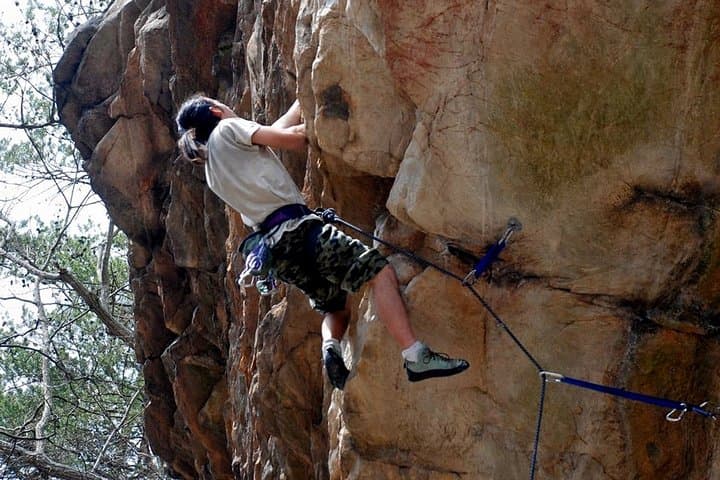
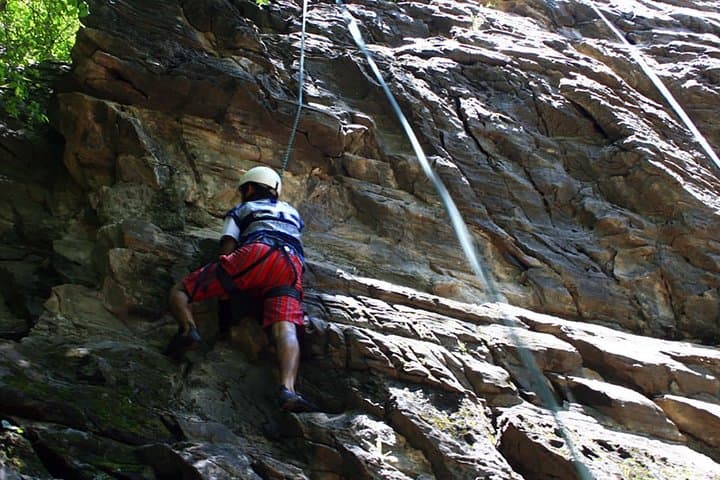
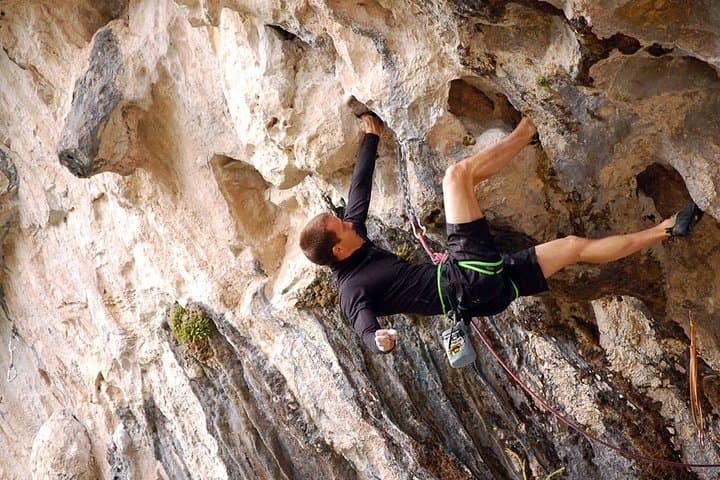
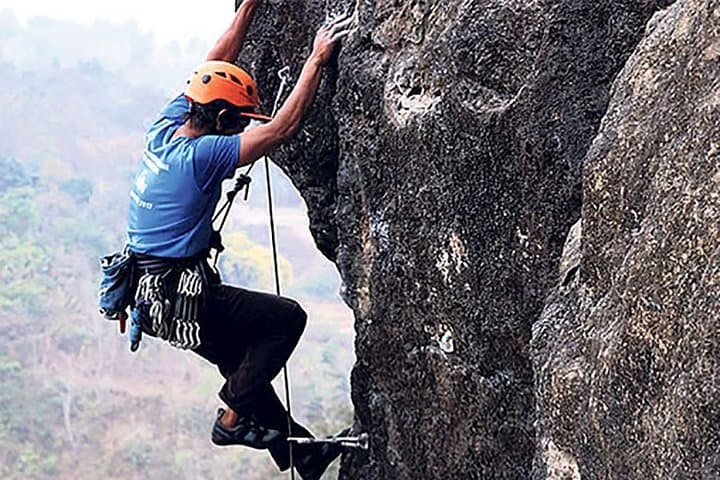
You step out of a cramped Thamel lane into air that seems to open with the hills—jungle-scented, sharp with dust and distant temple bells. By 10 a.m. a private vehicle threads past rice terraces and suburban sprawl, depositing you at the foot of a slab of weathered rock where ropes and chalk bags promise something other than sightseeing. The guide tightens your harness; the city sounds recede as the cliff becomes the day’s conversation partner, grooves daring your hands and tiny ledges testing your balance.
You step out of a cramped Thamel lane into air that seems to open with the hills—jungle-scented, sharp with dust and distant temple bells. By 10 a.m. a private vehicle threads past rice terraces and suburban sprawl, depositing you at the foot of a slab of weathered rock where ropes and chalk bags promise something other than sightseeing. The guide tightens your harness; the city sounds recede as the cliff becomes the day’s conversation partner, grooves daring your hands and tiny ledges testing your balance.
Kathmandu’s climbing sites are folded into the valley’s geology—ancient metamorphic outcrops and coarse sandstone cliffs that once lay beneath shallow seas, now tilted and exposed by tectonic uplift. Nagarjun Forest Reserve, a 30-minute ride northwest of Thamel, offers broad faces and short multi-pitch lines that suit top-rope beginners and trad climbers refining footwork. Hattiban, south toward the Dhaskinkali temple, serves steeper routes and pocketed walls; Bimal Nagar fills the middle ground with varied approaches and quieter sectors.
Climbing here is as much social as it is vertical. Guides from local clubs—often English-speaking climbers trained in Alpine techniques—lead, teach, and share local stories: how climbing scenes turned from informal bouldering sessions to regulated routes with permits, and how access now balances recreation with community needs. Rangers in Nagarjun track birdlife (ornithologists count more than 300 species in the area) while nearby temples remind you that these hills are lived-in landscapes, not wilderness.
Practically, the day runs about 4–6 hours: meet at the Alpine Club of Himalaya in Thamel or take arranged pickup, drive to your chosen crag, climb with instruction, break for a simple picnic lunch, and return by late afternoon. The operator supplies ropes, helmets, harnesses, and permits; bring sturdy approach shoes, a pair of climbing shoes if you have them, sun protection, and at least 2 liters of water. Expect dusty trails, some short scrambles, and sudden changes in sun exposure—plan layers.
Safety and etiquette are straightforward: listen to your guide during belay transitions, avoid leaving chalk on popular problems, and carry out any trash. Best months are autumn and spring for stable weather and visibility; monsoon swells the vegetation and makes some rock slick. Whether you’re trying your first top-rope or polishing leads, Kathmandu’s valley climbs deliver compact routes, cultural color, and a day that ends with the city’s skyline returning, somehow both familiar and new.