THE ADVENTURE COLLECTIVE® · Independent discovery and booking for outdoor travel

Explore Rocinha with a local guide on a 2.5‑hour mix of walking and motorcycle rides that opens private alleys, community projects, and live capoeira or samba. This experience emphasizes respectful interaction, supporting neighborhood businesses while revealing daily life on Rio’s steep hillside.
Explore Rocinha with a local guide on a 2.5‑hour mix of walking and motorcycle rides that opens private alleys, community projects, and live capoeira or samba. This experience emphasizes respectful interaction, supporting neighborhood businesses while revealing daily life on Rio’s steep hillside.
You step off the main road and the city shifts — alleys angle up the hillside, murals watch over narrow stairs, and the pulse of vendors sells coffee and conversation. The motorcycle hums like a guide through lanes too tight for cars, punctuating the rhythm of a community that moves on foot.
Verified experiences and guided adventures in the surrounding area.
Operated by Rio As A Local · Rio de Janeiro, Rio de Janeiro
You step off the main road and the city shifts — alleys angle up the hillside, murals watch over narrow stairs, and the pulse of vendors sells coffee and conversation. The motorcycle hums like a guide through lanes too tight for cars, punctuating the rhythm of a community that moves on foot.
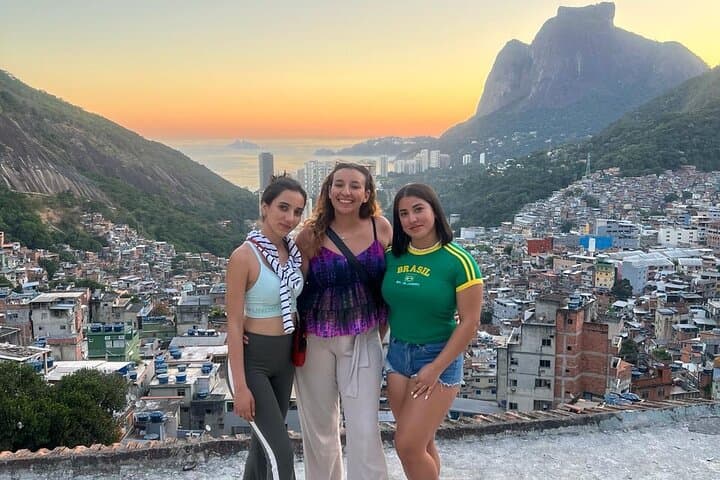
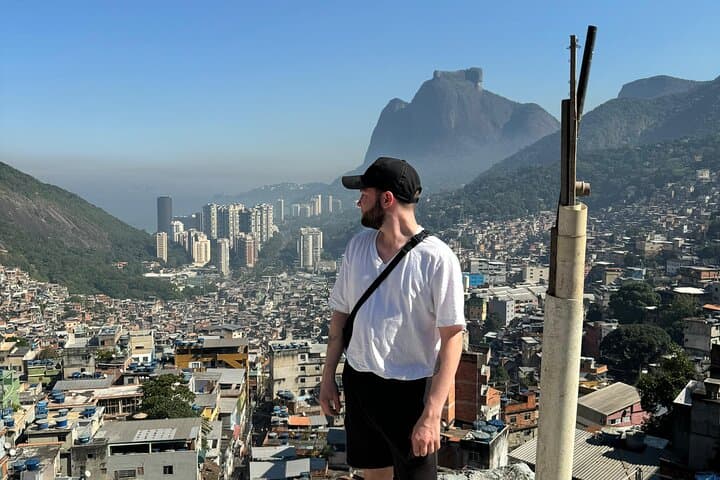
Rocinha grew from mid-20th-century informal settlements into Brazil’s largest favela, its buildings stacked on a steep granite slope that keeps the ocean in view. Geology matters here: rocky outcrops and steep grades shape routes and viewpoints, while the climate of Rio sends sudden showers that slick the cobbles.
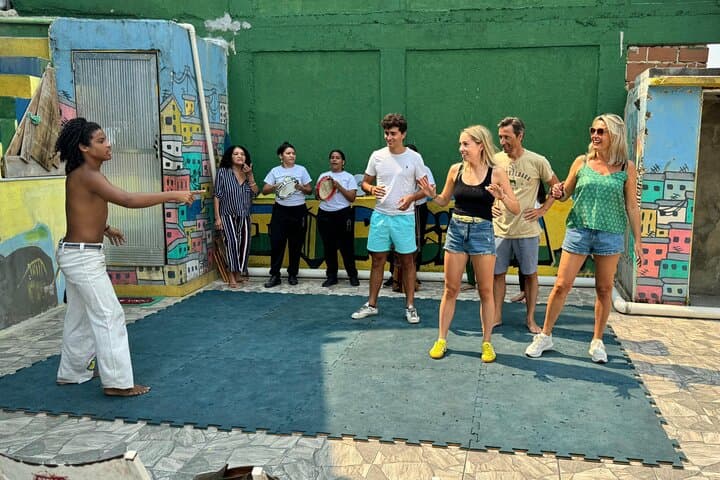
Culture is the tour’s core. Local guides introduce family-run workshops, a short capoeira demonstration, and a samba moment — practices passed down amid waves of migration and informal economies. You’ll visit homes and social projects; these stops reveal daily life more than any textbook can.
Practical guidance is straightforward: the route is urban but physically uneven — expect stairs, tight alleys, and brief motorcycle hops. Bring small bills for purchases and tips; ask before photographing people, and follow your guide’s lead in sensitive areas. Tours are roughly 2–3 hours, include an access fee, and support local hosts directly.
This is a cultural walking tour with motorcycle transfers — not a sightseeing bus. It rewards curiosity, respectful questions, and a readiness to move over uneven ground. Leave time after the tour to descend into nearby neighborhoods for a beachside view or a café, carrying with you a more complex picture of Rio than the postcards offer.
moderate.
2–3 hours.
Suitable for most people who can walk stairs and stand for short periods; not recommended for those with severe mobility or spinal issues.
Guided visits are generally safe when using a vetted local guide; stick with the group, follow guidance, and avoid showing expensive gear openly.
Ask permission before photographing people or private homes; your guide will point out public murals and approved photo spots.
Expect moderate walking with several flights of stairs and uneven surfaces; parts of the route include short motorcycle transfers for steeper sections.
Families with older children are usually welcome, but check with the operator about age limits and suitability for young kids.
Rocinha expanded during the 20th century as migrants built informal housing on a steep granite slope; it evolved complex social and economic networks amid limited formal infrastructure.
Tours that employ local guides and pay access fees help redirect tourism income to residents; visitors should minimize waste and avoid unregulated donations that can distort local markets.
Rio As A Local operates guided outdoor trips and adventures with an emphasis on safety, stewardship, and memorable experiences.
You step off the main road and the city shifts — alleys angle up the hillside, murals watch over narrow stairs, and the pulse of vendors sells coffee and conversation. The motorcycle hums like a guide through lanes too tight for cars, punctuating the rhythm of a community that moves on foot.
You step off the main road and the city shifts — alleys angle up the hillside, murals watch over narrow stairs, and the pulse of vendors sells coffee and conversation. The motorcycle hums like a guide through lanes too tight for cars, punctuating the rhythm of a community that moves on foot.
Rocinha grew from mid-20th-century informal settlements into Brazil’s largest favela, its buildings stacked on a steep granite slope that keeps the ocean in view. Geology matters here: rocky outcrops and steep grades shape routes and viewpoints, while the climate of Rio sends sudden showers that slick the cobbles.
Culture is the tour’s core. Local guides introduce family-run workshops, a short capoeira demonstration, and a samba moment — practices passed down amid waves of migration and informal economies. You’ll visit homes and social projects; these stops reveal daily life more than any textbook can.
Practical guidance is straightforward: the route is urban but physically uneven — expect stairs, tight alleys, and brief motorcycle hops. Bring small bills for purchases and tips; ask before photographing people, and follow your guide’s lead in sensitive areas. Tours are roughly 2–3 hours, include an access fee, and support local hosts directly.
This is a cultural walking tour with motorcycle transfers — not a sightseeing bus. It rewards curiosity, respectful questions, and a readiness to move over uneven ground. Leave time after the tour to descend into nearby neighborhoods for a beachside view or a café, carrying with you a more complex picture of Rio than the postcards offer.