THE ADVENTURE COLLECTIVE® · Independent discovery and booking for outdoor travel

Spend a full day in Rocafuerte learning how Ecuador’s prized Nacional cocoa becomes chocolate. Harvest pods, roast beans, and finish your own bar while tasting local culinary traditions.
Spend a full day in Rocafuerte learning how Ecuador’s prized Nacional cocoa becomes chocolate. Harvest pods, roast beans, and finish your own bar while tasting local culinary traditions.
You step off the air‑conditioned van into the humid hush of a coastal plantation, the land smelling of wet earth and citrus beneath the bright thump of cicadas. Mature cacao trees arch over narrow dirt lanes; pods hang like lanterns, daring you to pry open a living archive of flavor.
Verified experiences and guided adventures in the surrounding area.
Operated by Manta SOS · Manta, Manabí
You step off the air‑conditioned van into the humid hush of a coastal plantation, the land smelling of wet earth and citrus beneath the bright thump of cicadas. Mature cacao trees arch over narrow dirt lanes; pods hang like lanterns, daring you to pry open a living archive of flavor.
Rocafuerte sits in Ecuador’s coastal band where the Nacional cacao lineage—documented by genetic studies and archaeological work—survives in small plots and family farms. The soil here is young and alluvial, the geology shaped by rivers that push sediment from the Andes to the Pacific, creating the rich, loamy ground cacao prefers. Culturally, cocoa is woven into local livelihoods: hands that harvest pods also tend fishing nets and smallholder plots, and traditional tongas (plantain‑leaf meals) are part of the day.
On this full‑day tour you’ll harvest ripe pods, ferment and dry beans in the sun, and roast and grind to make your own bar and a cup of traditional hot chocolate—an exercise that makes the agricultural chain tangible. A factory visit contrasts craft methods with the mechanical steps of commercial production.
Practical note: expect humid, low‑elevation conditions and mostly flat terrain; the walking is gentle but lasts several hours and includes standing during demonstrations. Hydrate, wear closed‑toe shoes, and bring insect repellent and sun protection. Cameras and curiosity are essential—knowledgeable guides translate local farming practices into hands‑on learning—and you’ll leave with a clearer taste for how climate, soil, and culture shape Ecuador’s prized chocolate.
moderate.
6–7 hours.
Suitable for people with moderate fitness—standing and short walks throughout a half‑day, with some bending to harvest and process beans.
The tour runs about 6–7 hours and includes plantation visits, hands‑on bean processing, a factory tour, local lunch (tonga style), bottled water, and chocolate samples.
The walk is gentle but requires standing and some bending; infants in strollers can be accommodated, but travelers with serious back or heart problems are not recommended.
Yes—participants process a small craft bar during the workshop and receive samples and a hot chocolate cup.
Pickups are arranged from ports or nearby meeting points using an air‑conditioned vehicle; confirm pickup details at booking as times vary.
Ecuador has long been a center for fine cacao—Nacional genotypes found in coastal farms trace back centuries and shaped local agricultural traditions.
Smallholder cacao systems support shade trees and biodiversity; visitors are encouraged to stay on paths, avoid litter, and support farms that use sustainable planting and fair purchasing practices.
Manta SOS operates guided outdoor trips and adventures with an emphasis on safety, stewardship, and memorable experiences.

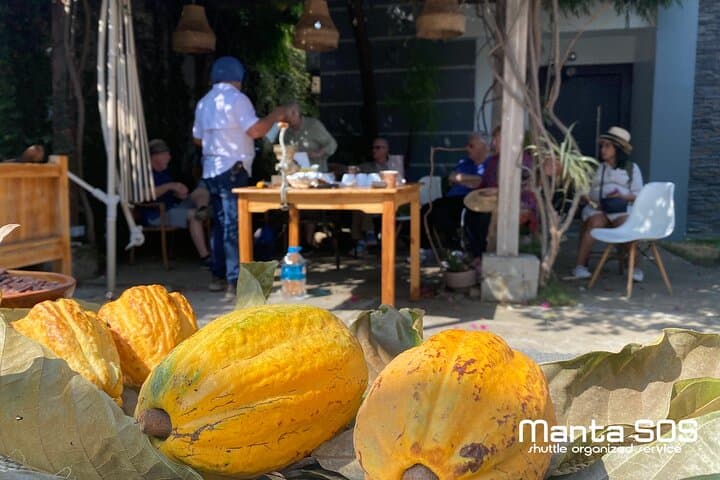


You step off the air‑conditioned van into the humid hush of a coastal plantation, the land smelling of wet earth and citrus beneath the bright thump of cicadas. Mature cacao trees arch over narrow dirt lanes; pods hang like lanterns, daring you to pry open a living archive of flavor.
You step off the air‑conditioned van into the humid hush of a coastal plantation, the land smelling of wet earth and citrus beneath the bright thump of cicadas. Mature cacao trees arch over narrow dirt lanes; pods hang like lanterns, daring you to pry open a living archive of flavor.
Rocafuerte sits in Ecuador’s coastal band where the Nacional cacao lineage—documented by genetic studies and archaeological work—survives in small plots and family farms. The soil here is young and alluvial, the geology shaped by rivers that push sediment from the Andes to the Pacific, creating the rich, loamy ground cacao prefers. Culturally, cocoa is woven into local livelihoods: hands that harvest pods also tend fishing nets and smallholder plots, and traditional tongas (plantain‑leaf meals) are part of the day.
On this full‑day tour you’ll harvest ripe pods, ferment and dry beans in the sun, and roast and grind to make your own bar and a cup of traditional hot chocolate—an exercise that makes the agricultural chain tangible. A factory visit contrasts craft methods with the mechanical steps of commercial production.
Practical note: expect humid, low‑elevation conditions and mostly flat terrain; the walking is gentle but lasts several hours and includes standing during demonstrations. Hydrate, wear closed‑toe shoes, and bring insect repellent and sun protection. Cameras and curiosity are essential—knowledgeable guides translate local farming practices into hands‑on learning—and you’ll leave with a clearer taste for how climate, soil, and culture shape Ecuador’s prized chocolate.