THE ADVENTURE COLLECTIVE® · Independent discovery and booking for outdoor travel

Take the ferry from Cape Town to Robben Island for a guided visit to the former prison where Nelson Mandela and other political prisoners were held. This 5-hour tour blends a short crossing, bus tour and an interpretive cellblock visit.
Take the ferry from Cape Town to Robben Island for a guided visit to the former prison where Nelson Mandela and other political prisoners were held. This 5-hour tour blends a short crossing, bus tour and an interpretive cellblock visit.
A salt wind meets the ferry as Cape Town shrinks to a rim of buildings and Table Mountain watches. The crossing to Robben Island cuts through Table Bay; gulls wheel and the ferry’s wake threads toward a low, stony island dotted with whitewashed buildings and a solitary lighthouse. Visitors step ashore at the Nelson Mandela Gateway and move through a landscape where landscape and human history are inseparable.
Verified experiences and guided adventures in the surrounding area.
Operated by Mutore Tours · Robben Island, Western Cape
A salt wind meets the ferry as Cape Town shrinks to a rim of buildings and Table Mountain watches. The crossing to Robben Island cuts through Table Bay; gulls wheel and the ferry’s wake threads toward a low, stony island dotted with whitewashed buildings and a solitary lighthouse. Visitors step ashore at the Nelson Mandela Gateway and move through a landscape where landscape and human history are inseparable.
Robben Island’s recorded history spans centuries—from early maritime charts to its role as a leper colony, military base and, most famously, a maximum-security prison during apartheid. The island’s geology is simple: wave-worn Cape granite and coastal limestone shelves exposed around its perimeter, with quarry scars a reminder of forced labor. Guides translate the place into people: inmates, warders and families whose stories shaped modern South Africa. The tour typically includes a ferry crossing, a guided bus loop, and a prison visit to a former cell and the limestone quarry where prisoners worked.
Practicalities matter. Tours depart from the V&A Waterfront via the Nelson Mandela Gateway; crossings can be rough and are weather-dependent. Plan at least five hours for the round-trip experience, carry government ID for boarding, and expect stairs and uneven surfaces inside the prison. Accessibility options exist but check in advance. Bring layered clothing, sun protection and water—the island offers little shade. Photography rules may apply in sensitive areas; follow your guide. Allow time afterward to reflect at the memorial and the museum displays back on the mainland. A visit here is quieter than a typical sightseeing stop: it asks for attention, patience and a willingness to listen to hard history.
easy.
5 hours.
Light-to-moderate: able to stand and walk short distances, navigate some stairs
Crossing time varies with conditions but generally takes 30–45 minutes each way; allow extra time for boarding.
The site offers accessibility to many outdoor and museum areas, but some prison sections include stairs—contact the operator to confirm accommodations.
Children are permitted but must be supervised; infants may need to sit on laps during the tour and check age restrictions with the operator.
Tours can be cancelled for unsafe sea conditions; confirm the operator’s cancellation policy when booking and consider travel insurance for non-refundable fares.
Robben Island served multiple roles over 500 years—navigation station, leper colony and, during apartheid, a maximum-security prison where Nelson Mandela spent 18 years of his 27-year imprisonment.
Robben Island is a UNESCO World Heritage Site managed for both heritage interpretation and ecological protection; visitors should stick to paths and avoid disturbing bird colonies and shoreline habitats.
Mutore Tours operates guided outdoor trips and adventures with an emphasis on safety, stewardship, and memorable experiences.
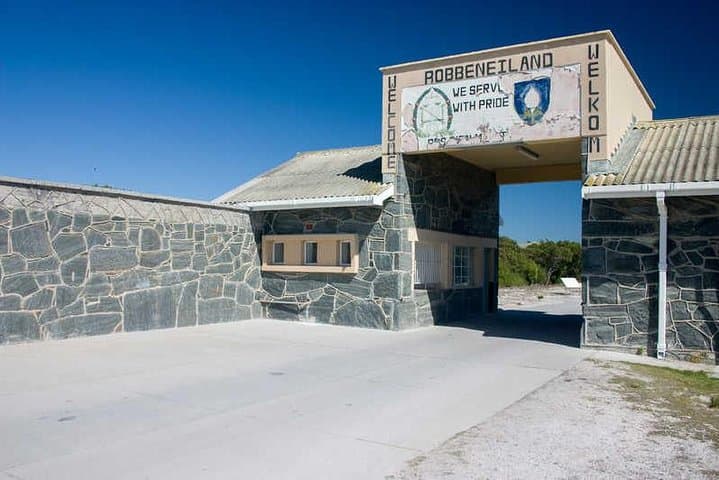
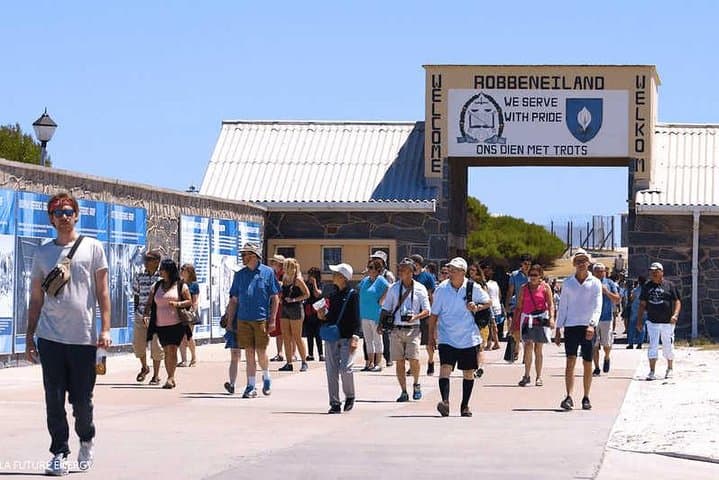
A salt wind meets the ferry as Cape Town shrinks to a rim of buildings and Table Mountain watches. The crossing to Robben Island cuts through Table Bay; gulls wheel and the ferry’s wake threads toward a low, stony island dotted with whitewashed buildings and a solitary lighthouse. Visitors step ashore at the Nelson Mandela Gateway and move through a landscape where landscape and human history are inseparable.
A salt wind meets the ferry as Cape Town shrinks to a rim of buildings and Table Mountain watches. The crossing to Robben Island cuts through Table Bay; gulls wheel and the ferry’s wake threads toward a low, stony island dotted with whitewashed buildings and a solitary lighthouse. Visitors step ashore at the Nelson Mandela Gateway and move through a landscape where landscape and human history are inseparable.
Robben Island’s recorded history spans centuries—from early maritime charts to its role as a leper colony, military base and, most famously, a maximum-security prison during apartheid. The island’s geology is simple: wave-worn Cape granite and coastal limestone shelves exposed around its perimeter, with quarry scars a reminder of forced labor. Guides translate the place into people: inmates, warders and families whose stories shaped modern South Africa. The tour typically includes a ferry crossing, a guided bus loop, and a prison visit to a former cell and the limestone quarry where prisoners worked.
Practicalities matter. Tours depart from the V&A Waterfront via the Nelson Mandela Gateway; crossings can be rough and are weather-dependent. Plan at least five hours for the round-trip experience, carry government ID for boarding, and expect stairs and uneven surfaces inside the prison. Accessibility options exist but check in advance. Bring layered clothing, sun protection and water—the island offers little shade. Photography rules may apply in sensitive areas; follow your guide. Allow time afterward to reflect at the memorial and the museum displays back on the mainland. A visit here is quieter than a typical sightseeing stop: it asks for attention, patience and a willingness to listen to hard history.