THE ADVENTURE COLLECTIVE® · Independent discovery and booking for outdoor travel

This full-day Cape Town outing pairs the sober history of Robben Island with the technicolor streets of Bo-Kaap and the wind-swept summit of Table Mountain. All ferry and cable-car tickets included — ideal for travelers who want a single-day, well-paced introduction to the city’s landscape and history.
This full-day Cape Town outing pairs the sober history of Robben Island with the technicolor streets of Bo-Kaap and the wind-swept summit of Table Mountain. All ferry and cable-car tickets included — ideal for travelers who want a single-day, well-paced introduction to the city’s landscape and history.
You step off the air-conditioned van at the V&A Waterfront and the city rearranges itself around you — gulls puncture the salt-sweet air, Table Mountain broods to the east, and the ferry rocks as if eager to be off. This full-day loop moves with purpose: a ferry ride to Robben Island, a neighborhood walk through Bo-Kaap, and a rotating cable car that lifts you onto Table Mountain’s flat shoulder. It’s an itinerary built for contrasts — the hard, tiled history of a prison island, the bright, cobbled cheer of Cape Malay streets, and the wind-polished silence at 1,086 meters.
Verified experiences and guided adventures in the surrounding area.
Operated by Remigeous Tsuro · Cape Town, Western Cape
You step off the air-conditioned van at the V&A Waterfront and the city rearranges itself around you — gulls puncture the salt-sweet air, Table Mountain broods to the east, and the ferry rocks as if eager to be off. This full-day loop moves with purpose: a ferry ride to Robben Island, a neighborhood walk through Bo-Kaap, and a rotating cable car that lifts you onto Table Mountain’s flat shoulder. It’s an itinerary built for contrasts — the hard, tiled history of a prison island, the bright, cobbled cheer of Cape Malay streets, and the wind-polished silence at 1,086 meters.
Robben Island sits roughly 7–8 kilometers offshore; the ferry crossing takes about 30–40 minutes each way with views back to the city and the serrated skyline of Devil’s Peak. On the island, ex-political prisoners — many of them guides — unfold the apartheid era with a directness that leaves little room for abstraction. The Blue Quarry, cramped cells and Nelson Mandela’s cell are tangible anchors to South Africa’s modern history.
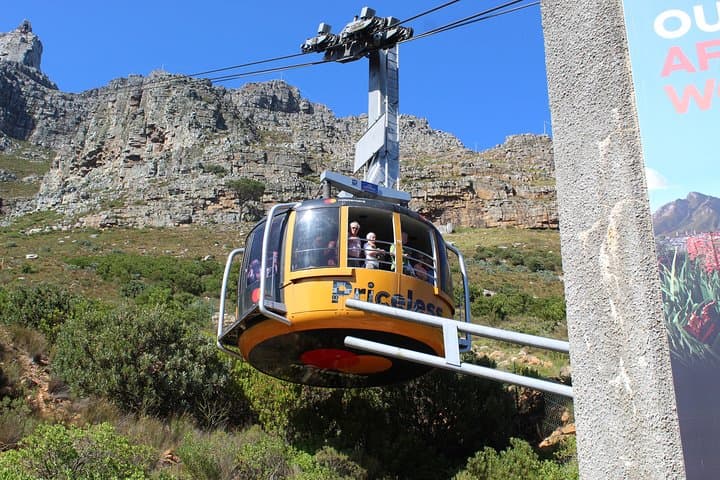
Bo-Kaap, once home to freed slaves and arrivals from Southeast Asia, reads like a street museum of color and resilience. Cobblestones and low mosques recall a layered cultural story; local cooks and craftspeople still preserve recipes and languages that arrived with early settlers. Then, the day turns vertical: the Table Mountain cable car is a 360-degree rotating carriage that reaches the top in about three to five minutes, depositing you onto wind-scrubbed paths and fynbos that fold into valleys and coastline. From the summit you can see the sweep of Table Bay, Clifton’s white beaches, and Robben Island as a small pale mark on the water.
Practical edge: this tour runs about eight hours total. Expect 30–60 minutes for the Waterfront segment, about four hours on Robben Island including the bus tour and museum, 30–60 minutes roaming Bo-Kaap, and roughly an hour for the Table Mountain visit plus cable car time. The walking is mostly moderate — cobbles, stone steps and short trails — and can include standing for guided talks. The ferry and the mountain are weather-dependent; wind can close the cable car and rough seas cancel sailings. The operator provides bottled water and hotel pickup; bring layered clothing, sun protection, comfortable shoes, and a light rain jacket just in case. Respect the island: no flash photography in certain museum areas, and follow guide directions.
This combination tour packs Cape Town’s civic, cultural and natural highlights into one day without the logistics work. It’s a brisk, illuminating way to step into the city’s geology and its story, from prison walls to panoramic ridgelines.
moderate.
8 hours.
Light to moderate fitness; you should be comfortable standing, walking short distances on uneven surfaces and climbing steps.
Pickup is offered from many central hotels and the Cape Town Cruise Terminal with a meeting option at the V&A Waterfront; confirm your pickup point when booking.
The crossing typically takes 30–40 minutes each way depending on sea conditions.
Many areas are wheelchair accessible and the operator notes wheelchair-accessible options, but some island paths and the prison cell buildings have steps—check specifics when booking.
The tour is weather-dependent; if the cable car or ferry is closed you will be offered a refund or rescheduling according to the operator’s 24-hour cancellation policy.
Yes — the tour includes return ferry tickets to Robben Island, a return cable car ticket, and guided museum access as listed in the inclusions.
Tipping is customary in South Africa; 10–15% for guides is appropriate if you felt the service was excellent.
Robben Island was used as a political prison for much of the 19th and 20th centuries; Nelson Mandela was incarcerated there for 18 of his 27 years in prison.
Table Mountain’s fynbos is a globally significant floral kingdom; visitors are asked to stay on paths and carry out litter to protect fragile plant communities.
Remigeous Tsuro operates guided outdoor trips and adventures with an emphasis on safety, stewardship, and memorable experiences.



You step off the air-conditioned van at the V&A Waterfront and the city rearranges itself around you — gulls puncture the salt-sweet air, Table Mountain broods to the east, and the ferry rocks as if eager to be off. This full-day loop moves with purpose: a ferry ride to Robben Island, a neighborhood walk through Bo-Kaap, and a rotating cable car that lifts you onto Table Mountain’s flat shoulder. It’s an itinerary built for contrasts — the hard, tiled history of a prison island, the bright, cobbled cheer of Cape Malay streets, and the wind-polished silence at 1,086 meters.
You step off the air-conditioned van at the V&A Waterfront and the city rearranges itself around you — gulls puncture the salt-sweet air, Table Mountain broods to the east, and the ferry rocks as if eager to be off. This full-day loop moves with purpose: a ferry ride to Robben Island, a neighborhood walk through Bo-Kaap, and a rotating cable car that lifts you onto Table Mountain’s flat shoulder. It’s an itinerary built for contrasts — the hard, tiled history of a prison island, the bright, cobbled cheer of Cape Malay streets, and the wind-polished silence at 1,086 meters.
Robben Island sits roughly 7–8 kilometers offshore; the ferry crossing takes about 30–40 minutes each way with views back to the city and the serrated skyline of Devil’s Peak. On the island, ex-political prisoners — many of them guides — unfold the apartheid era with a directness that leaves little room for abstraction. The Blue Quarry, cramped cells and Nelson Mandela’s cell are tangible anchors to South Africa’s modern history.
Bo-Kaap, once home to freed slaves and arrivals from Southeast Asia, reads like a street museum of color and resilience. Cobblestones and low mosques recall a layered cultural story; local cooks and craftspeople still preserve recipes and languages that arrived with early settlers. Then, the day turns vertical: the Table Mountain cable car is a 360-degree rotating carriage that reaches the top in about three to five minutes, depositing you onto wind-scrubbed paths and fynbos that fold into valleys and coastline. From the summit you can see the sweep of Table Bay, Clifton’s white beaches, and Robben Island as a small pale mark on the water.
Practical edge: this tour runs about eight hours total. Expect 30–60 minutes for the Waterfront segment, about four hours on Robben Island including the bus tour and museum, 30–60 minutes roaming Bo-Kaap, and roughly an hour for the Table Mountain visit plus cable car time. The walking is mostly moderate — cobbles, stone steps and short trails — and can include standing for guided talks. The ferry and the mountain are weather-dependent; wind can close the cable car and rough seas cancel sailings. The operator provides bottled water and hotel pickup; bring layered clothing, sun protection, comfortable shoes, and a light rain jacket just in case. Respect the island: no flash photography in certain museum areas, and follow guide directions.
This combination tour packs Cape Town’s civic, cultural and natural highlights into one day without the logistics work. It’s a brisk, illuminating way to step into the city’s geology and its story, from prison walls to panoramic ridgelines.