THE ADVENTURE COLLECTIVE® · Independent discovery and booking for outdoor travel

Board a ferry from the V&A Waterfront and cross Table Bay to Robben Island, where former prisoners now guide visitors through Nelson Mandela’s cell and the island’s difficult past. This half-day trip blends sharp history, coastal exposure, and first-person storytelling.
Board a ferry from the V&A Waterfront and cross Table Bay to Robben Island, where former prisoners now guide visitors through Nelson Mandela’s cell and the island’s difficult past. This half-day trip blends sharp history, coastal exposure, and first-person storytelling.
The ferry cuts through Table Bay with wind and salt spray that seem to push you toward the pale silhouette of Robben Island. From the deck you see low scrub, the whitewashed prison buildings, and the lighthouse watching the sea — the island’s shoreline dares you to imagine the long crossings that once carried prisoners to confinement.
Verified experiences and guided adventures in the surrounding area.
Operated by Remigeous Tsuro · Cape Town, Western Cape
The ferry cuts through Table Bay with wind and salt spray that seem to push you toward the pale silhouette of Robben Island. From the deck you see low scrub, the whitewashed prison buildings, and the lighthouse watching the sea — the island’s shoreline dares you to imagine the long crossings that once carried prisoners to confinement.
Robben Island is a place of layered history: a 17th‑century outpost, a leper colony, and for much of the 20th century, a maximum-security prison. Most visitors come to stand in Nelson Mandela’s cell and hear firsthand testimony — many of the guides are former political prisoners whose voices anchor the island’s story in memory and resilience. Geologically the island is flat, composed of limestone and sedimentary rock, exposed to fierce Atlantic weather that shapes sparse vegetation and strong seabird colonies.
The museum experience balances stark architecture and living testimony with open-air views of Cape Town across the water. Expect guided bus transfers on the island, a walking tour of the cellblocks, and time at the Blue Quarry where prisoners once worked. Guides often share cultural context about apartheid-era resistance and the island’s role in South Africa’s democratic transition.
Practicalities: the tour runs about four hours and departures are weather-dependent; bring windproof layers, sun protection, and sturdy shoes for uneven surfaces. Photography is allowed, but respect the guides and other visitors during sensitive recountings. Book morning sailings to avoid afternoon chop and allow time at the V&A Waterfront before or after your visit.
easy.
4 hours.
Suitable for most fitness levels; requires short walks and standing during tours
The whole experience takes about four hours; the ferry crossing is roughly 30–45 minutes each way depending on sea conditions.
The operator lists wheelchair accessibility, but some areas have uneven ground — contact the provider ahead to confirm arrangements and assistance.
Photography is permitted in outdoor areas; ex-prisoners often serve as guides and may pose for brief photos if comfortable — always ask first.
Sailings are weather-dependent; cancellations are typically announced before departure and eligible bookings can be rescheduled or refunded per the operator’s policy.
Robben Island served as a prison for political activists during apartheid; Nelson Mandela spent 18 of his 27 years imprisoned here, and the site is now a UNESCO World Heritage Site.
Visitor numbers and guided routes are managed to protect fragile island vegetation and nesting birds; follow stay-on-path rules and carry out all rubbish.
Remigeous Tsuro operates guided outdoor trips and adventures with an emphasis on safety, stewardship, and memorable experiences.
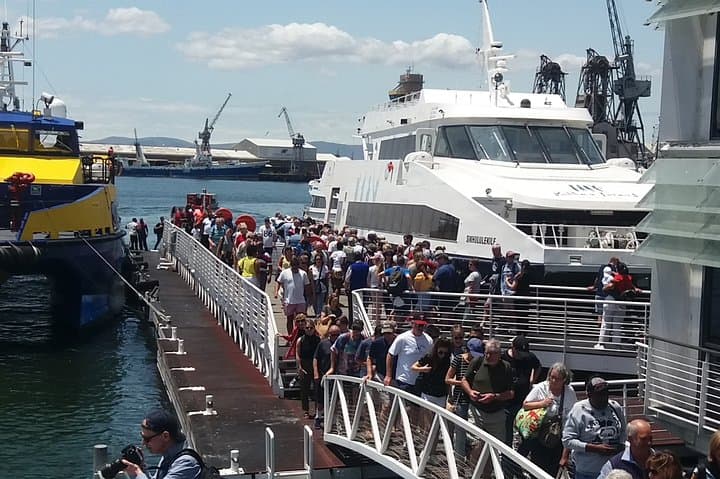


The ferry cuts through Table Bay with wind and salt spray that seem to push you toward the pale silhouette of Robben Island. From the deck you see low scrub, the whitewashed prison buildings, and the lighthouse watching the sea — the island’s shoreline dares you to imagine the long crossings that once carried prisoners to confinement.
The ferry cuts through Table Bay with wind and salt spray that seem to push you toward the pale silhouette of Robben Island. From the deck you see low scrub, the whitewashed prison buildings, and the lighthouse watching the sea — the island’s shoreline dares you to imagine the long crossings that once carried prisoners to confinement.
Robben Island is a place of layered history: a 17th‑century outpost, a leper colony, and for much of the 20th century, a maximum-security prison. Most visitors come to stand in Nelson Mandela’s cell and hear firsthand testimony — many of the guides are former political prisoners whose voices anchor the island’s story in memory and resilience. Geologically the island is flat, composed of limestone and sedimentary rock, exposed to fierce Atlantic weather that shapes sparse vegetation and strong seabird colonies.
The museum experience balances stark architecture and living testimony with open-air views of Cape Town across the water. Expect guided bus transfers on the island, a walking tour of the cellblocks, and time at the Blue Quarry where prisoners once worked. Guides often share cultural context about apartheid-era resistance and the island’s role in South Africa’s democratic transition.
Practicalities: the tour runs about four hours and departures are weather-dependent; bring windproof layers, sun protection, and sturdy shoes for uneven surfaces. Photography is allowed, but respect the guides and other visitors during sensitive recountings. Book morning sailings to avoid afternoon chop and allow time at the V&A Waterfront before or after your visit.