THE ADVENTURE COLLECTIVE® · Independent discovery and booking for outdoor travel

Take a half-day ferry from the V&A Waterfront to Robben Island and tour the prison with a former political prisoner as your guide. This visit pairs maritime scenery with a compact, intense lesson in South Africa’s history.
Take a half-day ferry from the V&A Waterfront to Robben Island and tour the prison with a former political prisoner as your guide. This visit pairs maritime scenery with a compact, intense lesson in South Africa’s history.
The ferry slips away from the V&A Waterfront, the city skyline shrinking as Robben Island’s low, wind-swept silhouette grows sharp against the Atlantic. Salt and diesel mingle with the guide’s first words; within minutes the island’s quarry faces and prison blocks come into focus, and the group readies to step into a pivotal chapter of South Africa’s story.
Verified experiences and guided adventures in the surrounding area.
Operated by Giraffe Horizons · Cape Town, Western Cape
The ferry slips away from the V&A Waterfront, the city skyline shrinking as Robben Island’s low, wind-swept silhouette grows sharp against the Atlantic. Salt and diesel mingle with the guide’s first words; within minutes the island’s quarry faces and prison blocks come into focus, and the group readies to step into a pivotal chapter of South Africa’s story.
Robben Island served for centuries as a place of isolation — a leper colony, a World War II fortress and, most infamously, a maximum-security prison during apartheid. Geologically modest, the island is made of coastal limestone and reclaimed land, its exposed rock and sparse soils shaped by strong winds and sea spray. Culturally, the site is both a memorial and a classroom: a guided walk led by a former political prisoner brings personal testimony to the institutional facts, connecting Mandela’s 18-year confinement with the wider struggle for freedom.
Practically, the tour is a half-day experience: expect a 30–45 minute ferry each way and roughly two hours on the island that combine a bus circuit with a walking tour of the prison compound. Weather dictates operations — ferries cancel in high winds — so plan flexibility into your schedule. Bring layered clothing, sun protection, and your ID; arrivals are required well before departure for manifest checks. The itinerary allows time to reflect and to return to the V&A Waterfront’s cafés and exhibits.
For travelers who want history with clear logistics, the Robben Island Museum visit is direct, intense and profoundly human — a short sea crossing that delivers a long-lasting perspective.
moderate.
4 hours (including ferry transfers).
Suitable for most fitness levels; expect short walks on uneven surfaces and standing during portions of the tour
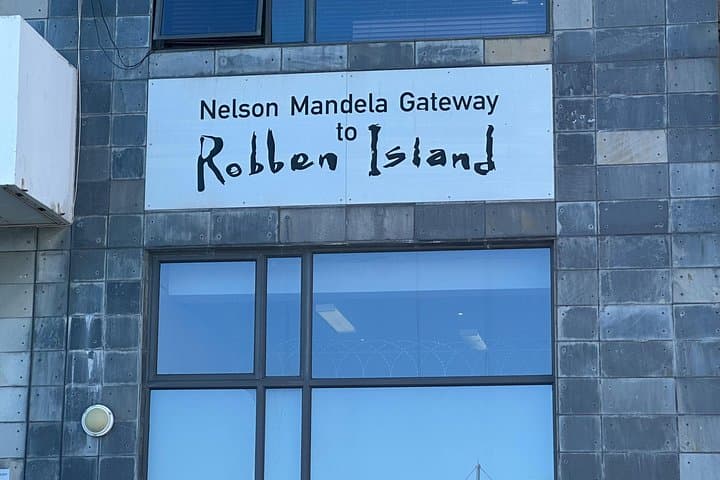
Ferry crossings from the Nelson Mandela Gateway to Robben Island are typically 30–45 minutes each way, depending on sea conditions.
Yes — this product includes a walking tour led by a former political prisoner who shares firsthand accounts of island life and incarceration.
If authorities cancel due to wind or rough seas, operators typically offer a full refund if within the cancellation window or may reschedule when possible; confirm policies when you book.
Many parts of the island and ferry access are wheelchair accessible, but some historic areas have uneven surfaces; contact the operator in advance to arrange assistance.
Robben Island was used as a prison for political detainees during apartheid; Nelson Mandela spent 18 of his 27 years there, making the site central to South Africa's liberation story.
The island hosts sensitive seabird colonies and fragile vegetation; visitors should stay on designated paths, avoid disturbing wildlife, and pack out all waste to reduce impacts.
Giraffe Horizons operates guided outdoor trips and adventures with an emphasis on safety, stewardship, and memorable experiences.
The ferry slips away from the V&A Waterfront, the city skyline shrinking as Robben Island’s low, wind-swept silhouette grows sharp against the Atlantic. Salt and diesel mingle with the guide’s first words; within minutes the island’s quarry faces and prison blocks come into focus, and the group readies to step into a pivotal chapter of South Africa’s story.
The ferry slips away from the V&A Waterfront, the city skyline shrinking as Robben Island’s low, wind-swept silhouette grows sharp against the Atlantic. Salt and diesel mingle with the guide’s first words; within minutes the island’s quarry faces and prison blocks come into focus, and the group readies to step into a pivotal chapter of South Africa’s story.
Robben Island served for centuries as a place of isolation — a leper colony, a World War II fortress and, most infamously, a maximum-security prison during apartheid. Geologically modest, the island is made of coastal limestone and reclaimed land, its exposed rock and sparse soils shaped by strong winds and sea spray. Culturally, the site is both a memorial and a classroom: a guided walk led by a former political prisoner brings personal testimony to the institutional facts, connecting Mandela’s 18-year confinement with the wider struggle for freedom.
Practically, the tour is a half-day experience: expect a 30–45 minute ferry each way and roughly two hours on the island that combine a bus circuit with a walking tour of the prison compound. Weather dictates operations — ferries cancel in high winds — so plan flexibility into your schedule. Bring layered clothing, sun protection, and your ID; arrivals are required well before departure for manifest checks. The itinerary allows time to reflect and to return to the V&A Waterfront’s cafés and exhibits.
For travelers who want history with clear logistics, the Robben Island Museum visit is direct, intense and profoundly human — a short sea crossing that delivers a long-lasting perspective.