THE ADVENTURE COLLECTIVE® · Independent discovery and booking for outdoor travel

Cross Table Bay to Robben Island for a half-day that pairs open-coast scenery with a guided tour of the former prison where Nelson Mandela was held. Expect a breezy ferry, concise historical narration and accessible transport from central Cape Town.
Cross Table Bay to Robben Island for a half-day that pairs open-coast scenery with a guided tour of the former prison where Nelson Mandela was held. Expect a breezy ferry, concise historical narration and accessible transport from central Cape Town.
The ferry slips away from the quay and the city shrinks into a band of roofs; Table Mountain watches over the crossing as wind sculpts the water. Salt spray and seabird calls set the tempo for a visit that alternates between open-air views and the hushed weight of history.
Verified experiences and guided adventures in the surrounding area.
Operated by Cape Alpha Travel · Cape Town, Western Cape
The ferry slips away from the quay and the city shrinks into a band of roofs; Table Mountain watches over the crossing as wind sculpts the water. Salt spray and seabird calls set the tempo for a visit that alternates between open-air views and the hushed weight of history.
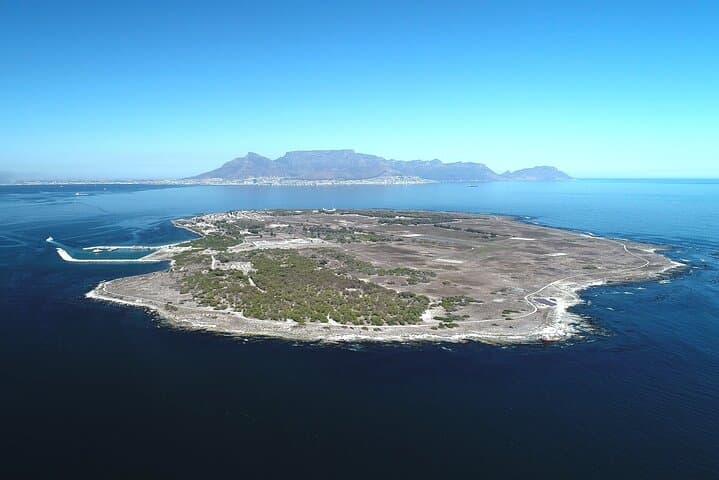
Robben Island’s stony shore and low, wind-scoured terrain tell a layered story: a maritime waypoint, a leper colony and, most prominently, a political prison where Nelson Mandela and other anti-apartheid activists were confined. The island’s geology is largely shale and sandstone, giving rise to flat expanses, rugged cliffs and vestiges of 19th- and 20th-century infrastructure—lighthouses, fortifications and quarry scars—each feature tied to the island’s shifting uses over centuries.
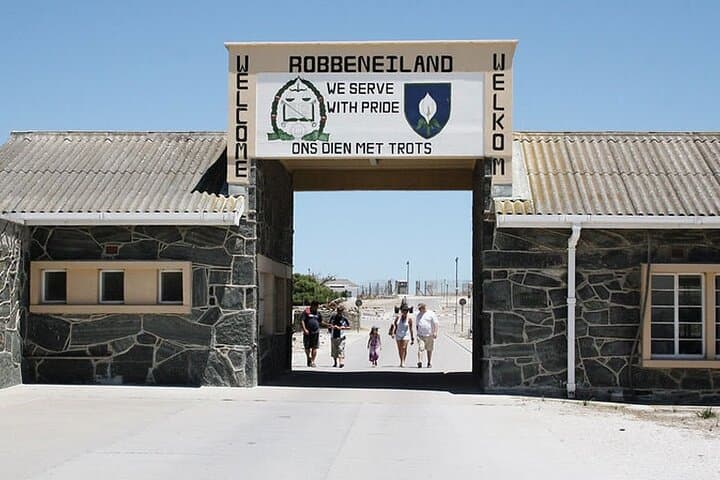
Guided stops move from outdoor panoramas—good vantage points for Cape Town and Robben Island’s sparse vegetation—to the former prison buildings and museum exhibits that frame South Africa’s struggle for democracy. Local guides, often with personal or community connections to the history, provide context that balances dates with human stories.
Practicalities: the trip is roughly 4–5 hours including transfers; dress for wind and sun, and expect boarding times to be strictly enforced for the ferry. Wheelchair access is available, but check ahead for assistance needs. Bring a windproof jacket, a charged camera and a small daypack; food service is limited so pack water and snacks if you need them. Allow time after the return for reflection—this excursion combines coastal scenery with a profound cultural visit.
easy.
4–5 hours.
Suitable for most fitness levels; involves short walks on uneven surfaces and standing during the ferry crossing.
The full experience, including hotel pickup and return, runs about 4 to 5 hours (approximately 270 minutes total).
Crossings are usually smooth but can be choppy in strong winds—passengers prone to seasickness should bring medication.
Guided visits include entry to designated historical areas and the memorial exhibits; some spaces are restricted to preserve the site.
Wheelchair access is available, but notify operators ahead so they can coordinate transfers and assistance.
Robben Island served various roles—from a 17th-century penal station to a 20th-century maximum-security prison for political detainees; its most famous inmate, Nelson Mandela, was held here for 18 years.
Robben Island is a UNESCO World Heritage Site; visitors should stick to paths, avoid disturbing wildlife and support conservation efforts through official channels.
Cape Alpha Travel operates guided outdoor trips and adventures with an emphasis on safety, stewardship, and memorable experiences.
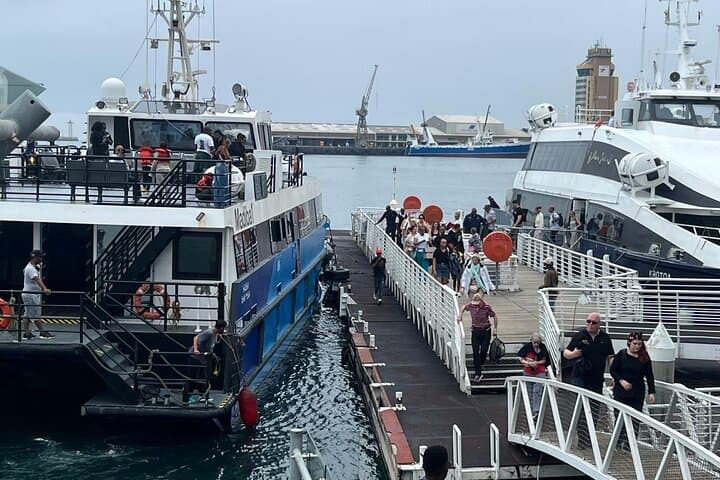

The ferry slips away from the quay and the city shrinks into a band of roofs; Table Mountain watches over the crossing as wind sculpts the water. Salt spray and seabird calls set the tempo for a visit that alternates between open-air views and the hushed weight of history.
The ferry slips away from the quay and the city shrinks into a band of roofs; Table Mountain watches over the crossing as wind sculpts the water. Salt spray and seabird calls set the tempo for a visit that alternates between open-air views and the hushed weight of history.
Robben Island’s stony shore and low, wind-scoured terrain tell a layered story: a maritime waypoint, a leper colony and, most prominently, a political prison where Nelson Mandela and other anti-apartheid activists were confined. The island’s geology is largely shale and sandstone, giving rise to flat expanses, rugged cliffs and vestiges of 19th- and 20th-century infrastructure—lighthouses, fortifications and quarry scars—each feature tied to the island’s shifting uses over centuries.
Guided stops move from outdoor panoramas—good vantage points for Cape Town and Robben Island’s sparse vegetation—to the former prison buildings and museum exhibits that frame South Africa’s struggle for democracy. Local guides, often with personal or community connections to the history, provide context that balances dates with human stories.
Practicalities: the trip is roughly 4–5 hours including transfers; dress for wind and sun, and expect boarding times to be strictly enforced for the ferry. Wheelchair access is available, but check ahead for assistance needs. Bring a windproof jacket, a charged camera and a small daypack; food service is limited so pack water and snacks if you need them. Allow time after the return for reflection—this excursion combines coastal scenery with a profound cultural visit.