THE ADVENTURE COLLECTIVE® · Independent discovery and booking for outdoor travel

Join a certified divemaster off Flowers Bay to hunt invasive lionfish on the Mesoamerican Reef, then enjoy your catch on a white-sand beach. This guided, sustainable spearfishing dive teaches safe techniques while supporting local reef health.
Join a certified divemaster off Flowers Bay to hunt invasive lionfish on the Mesoamerican Reef, then enjoy your catch on a white-sand beach. This guided, sustainable spearfishing dive teaches safe techniques while supporting local reef health.
A morning boat slips away from Flowers Bay and the reef hurries into focus: hard coral ledges, finger-sized gorgonians, and pockets where the lionfish hide like small, ornate predators daring you to look closer. Divers assemble on the stern—briefing done, tanks checked—then descend into clear Caribbean water where the Mesoamerican Reef reveals high color and tight crevices.
Verified experiences and guided adventures in the surrounding area.
Operated by Roatan Five Stars Tours · Roatán, Bay Islands
A morning boat slips away from Flowers Bay and the reef hurries into focus: hard coral ledges, finger-sized gorgonians, and pockets where the lionfish hide like small, ornate predators daring you to look closer. Divers assemble on the stern—briefing done, tanks checked—then descend into clear Caribbean water where the Mesoamerican Reef reveals high color and tight crevices.
Roatán’s reefs sit on one of the Western Hemisphere’s largest barrier systems. The island’s history is braided with Garifuna culture, mahogany-era shipping, and a modern dive economy built around those reefs. Geologically the island is an uplifted coral platform; the seafloor falls quickly away from shallow terraces to deeper walls where currents thread nutrients through the reef.
This trip pairs a guided SCUBA search for invasive lionfish with practical instruction in safe spearfishing techniques and reef stewardship. Expect dives generally in the 10–20 m (30–65 ft) range over mixed coral and rubble, moderate currents, and visibility commonly 15–30 m, depending on season.
Practical: be a certified diver (Open Water minimum), bring your certification card, and plan for roughly three hours including transit and surface intervals. Guides supply tanks, BCDs, and snorkeling gear; you should bring a dive computer, reef-safe sunscreen, and reef gloves if you’re comfortable using them. After the dive, the catch often becomes a beachfront lunch—simple, fresh, and an immediate connection between underwater work and coastal foodways.
Timing your dive early in the day reduces wind chop and maximizes visibility; listen to the divemaster on marine-protection practices and how to handle lionfish safely to leave the reef healthier than you found it.
moderate.
3 hours.
Moderate — comfortable swimming, able to perform basic SCUBA skills and surface swims
Yes — operators require an Open Water SCUBA certification or higher and will check your certification card before boarding.
Spearfishing carries risks from lionfish venomous spines and from handling spears; guides provide instruction and supervise all removals—follow their safety protocols.
The operator typically supplies tank, BCD, and basic fins; bring your mask, dive computer, and certification card if you prefer personal equipment.
Yes — many operators prepare a simple beachfront meal with the catch of the day, but follow local guidance on how much fish to take and handling procedures.
Roatán developed as a fishing and diving economy on uplifted coral platform geology; local Garifuna and bay-island communities shape coastal culture and cuisine.
The program supports invasive lionfish removal and teaches low-impact handling; use biodegradable sunscreen and follow dive-operator rules to minimize reef damage.
Roatan Five Stars Tours operates guided outdoor trips and adventures with an emphasis on safety, stewardship, and memorable experiences.
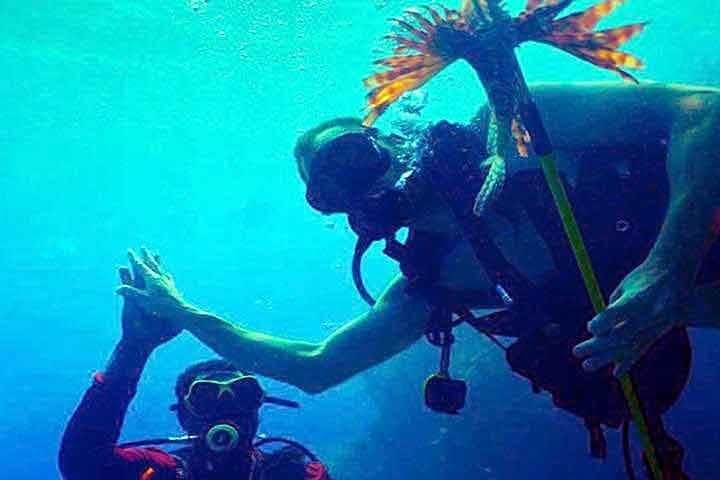
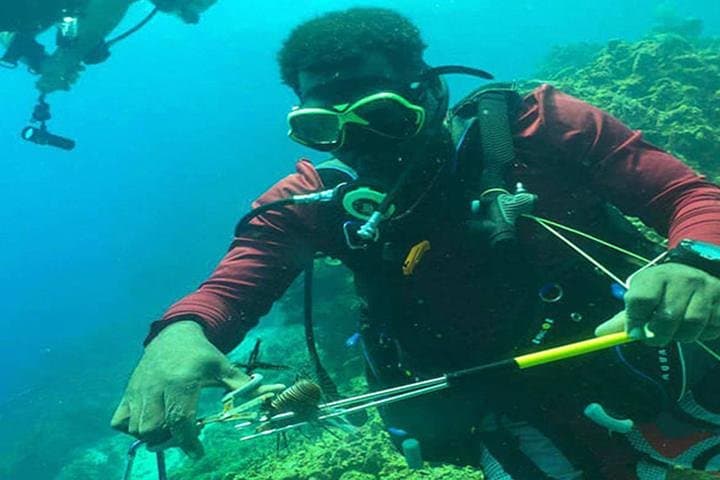
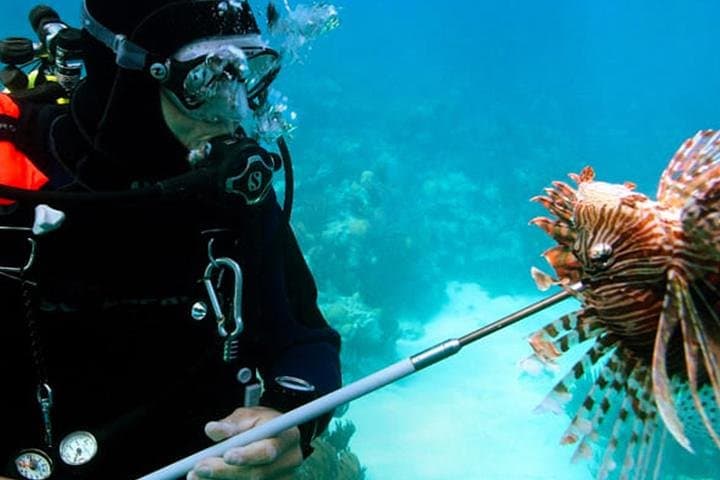
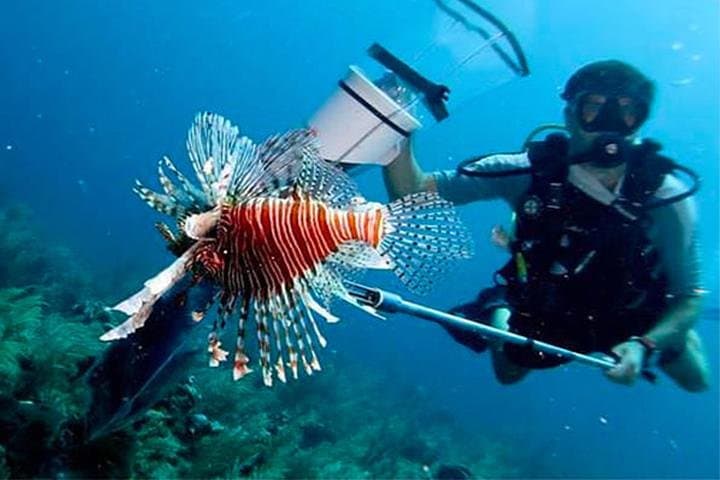
A morning boat slips away from Flowers Bay and the reef hurries into focus: hard coral ledges, finger-sized gorgonians, and pockets where the lionfish hide like small, ornate predators daring you to look closer. Divers assemble on the stern—briefing done, tanks checked—then descend into clear Caribbean water where the Mesoamerican Reef reveals high color and tight crevices.
A morning boat slips away from Flowers Bay and the reef hurries into focus: hard coral ledges, finger-sized gorgonians, and pockets where the lionfish hide like small, ornate predators daring you to look closer. Divers assemble on the stern—briefing done, tanks checked—then descend into clear Caribbean water where the Mesoamerican Reef reveals high color and tight crevices.
Roatán’s reefs sit on one of the Western Hemisphere’s largest barrier systems. The island’s history is braided with Garifuna culture, mahogany-era shipping, and a modern dive economy built around those reefs. Geologically the island is an uplifted coral platform; the seafloor falls quickly away from shallow terraces to deeper walls where currents thread nutrients through the reef.
This trip pairs a guided SCUBA search for invasive lionfish with practical instruction in safe spearfishing techniques and reef stewardship. Expect dives generally in the 10–20 m (30–65 ft) range over mixed coral and rubble, moderate currents, and visibility commonly 15–30 m, depending on season.
Practical: be a certified diver (Open Water minimum), bring your certification card, and plan for roughly three hours including transit and surface intervals. Guides supply tanks, BCDs, and snorkeling gear; you should bring a dive computer, reef-safe sunscreen, and reef gloves if you’re comfortable using them. After the dive, the catch often becomes a beachfront lunch—simple, fresh, and an immediate connection between underwater work and coastal foodways.
Timing your dive early in the day reduces wind chop and maximizes visibility; listen to the divemaster on marine-protection practices and how to handle lionfish safely to leave the reef healthier than you found it.