THE ADVENTURE COLLECTIVE® · Independent discovery and booking for outdoor travel

Head offshore from Roatán on a private speedboat with local captains who know the island wall like a map. In 3–4 hours you’ll chase tuna, mahi-mahi and snappers where reef gives way to deep water — with drinks, tackle and local knowledge included.
Head offshore from Roatán on a private speedboat with local captains who know the island wall like a map. In 3–4 hours you’ll chase tuna, mahi-mahi and snappers where reef gives way to deep water — with drinks, tackle and local knowledge included.
The wake hisses under a private speedboat as the shoreline of Roatán slides aft — palms give way to a hard blue ridge where the island wall drops and the Atlantic begins to tug. Local captains work like cartographers of current and reef, steering you toward the steep drop-offs and current seams where tuna and mahi-mahi patrol.
Verified experiences and guided adventures in the surrounding area.
The wake hisses under a private speedboat as the shoreline of Roatán slides aft — palms give way to a hard blue ridge where the island wall drops and the Atlantic begins to tug. Local captains work like cartographers of current and reef, steering you toward the steep drop-offs and current seams where tuna and mahi-mahi patrol.
This corner of the western Caribbean has a living geology: a coral platform built on limestone, sliced by underwater escarpments that funnel pelagics. The island’s culture is a rope of Garifuna, Bay Islander and Honduran influences; fishing is both livelihood and a craft passed through families. Older fishermen still point out landmarks on the water and trade stories about seasonal runs and notable catches.
Expect 3–4 hours on the water, lines cast over the island wall, and the occasional spray of spray from a chasing fish. The experience is straightforward — catch-oriented, social, and scenic — with cold drinks and tackle provided. The Atlantic here can be playful or insistently rough; currents dare you and the captains read them.
Practical guidance: book around mid-morning for steadier wind, bring motion-sickness prevention if you’re prone, and wear nonmarking shoes. Respect local catch limits and ask your captain which species are OK to keep. Charge cameras, secure loose items, and carry reef-safe sunscreen — the sun is insistent and reflection doubles its effect.
This trip is as much about the seam where reef meets open ocean as it is about the fish — a compact, direct day on water that teaches you local rhythms while you chase pelagics.
moderate.
3–4 hours.
Light to moderate fitness; ability to stand and brace on a moving boat for several hours.
Trips run roughly 3–4 hours; operators often quote a 4-hour window including transit to prime fishing grounds.
Policies vary; ask your captain before keeping fish — some species have local limits or are best released for conservation.
No — crews provide tackle and guidance; prior experience helps but novices are welcome with captain assistance.
Basic drinks (water, sodas, local beer) are typically included; bring snacks if you have dietary needs.
The Bay Islands have a mix of Garifuna and British colonial history; small-boat fishing has been central to island life for generations.
Use reef-safe sunscreen, follow captain guidance on catch-and-release, and avoid anchoring on live coral to reduce impact.
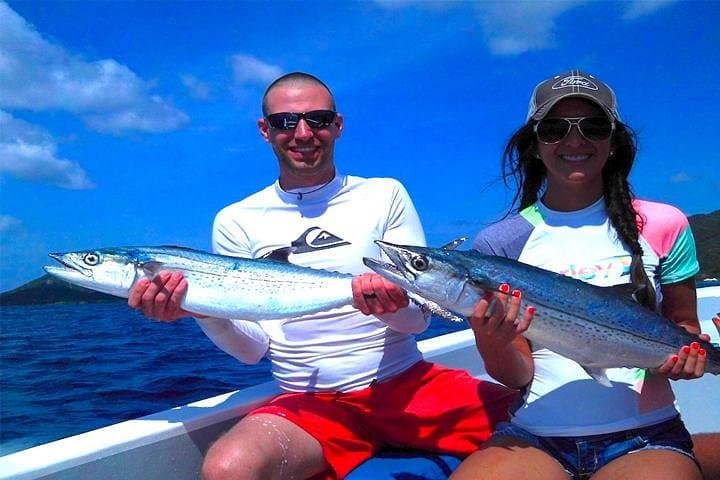
The wake hisses under a private speedboat as the shoreline of Roatán slides aft — palms give way to a hard blue ridge where the island wall drops and the Atlantic begins to tug. Local captains work like cartographers of current and reef, steering you toward the steep drop-offs and current seams where tuna and mahi-mahi patrol.
The wake hisses under a private speedboat as the shoreline of Roatán slides aft — palms give way to a hard blue ridge where the island wall drops and the Atlantic begins to tug. Local captains work like cartographers of current and reef, steering you toward the steep drop-offs and current seams where tuna and mahi-mahi patrol.
This corner of the western Caribbean has a living geology: a coral platform built on limestone, sliced by underwater escarpments that funnel pelagics. The island’s culture is a rope of Garifuna, Bay Islander and Honduran influences; fishing is both livelihood and a craft passed through families. Older fishermen still point out landmarks on the water and trade stories about seasonal runs and notable catches.
Expect 3–4 hours on the water, lines cast over the island wall, and the occasional spray of spray from a chasing fish. The experience is straightforward — catch-oriented, social, and scenic — with cold drinks and tackle provided. The Atlantic here can be playful or insistently rough; currents dare you and the captains read them.
Practical guidance: book around mid-morning for steadier wind, bring motion-sickness prevention if you’re prone, and wear nonmarking shoes. Respect local catch limits and ask your captain which species are OK to keep. Charge cameras, secure loose items, and carry reef-safe sunscreen — the sun is insistent and reflection doubles its effect.
This trip is as much about the seam where reef meets open ocean as it is about the fish — a compact, direct day on water that teaches you local rhythms while you chase pelagics.