THE ADVENTURE COLLECTIVE® · Independent discovery and booking for outdoor travel

A one‑day drive from Aswan connects two of Egypt’s most iconic temple sites: the colossal rock-cut façades of Abu Simbel and the island sanctuaries of Philae. This carefully paced tour mixes independent exploration and optional expert-guided insight—ideal for travelers who want maximum history with minimal logistics.
A one‑day drive from Aswan connects two of Egypt’s most iconic temple sites: the colossal rock-cut façades of Abu Simbel and the island sanctuaries of Philae. This carefully paced tour mixes independent exploration and optional expert-guided insight—ideal for travelers who want maximum history with minimal logistics.
You leave Aswan before dawn and the desert stretches out like a slow-moving sea—heat already whispering across the tarmac as the road pushes you toward two very different faces of ancient Egypt.
Verified experiences and guided adventures in the surrounding area.
Operated by Eyes of Egypt · Aswan, Aswan Governorate
You leave Aswan before dawn and the desert stretches out like a slow-moving sea—heat already whispering across the tarmac as the road pushes you toward two very different faces of ancient Egypt.
At Abu Simbel, sunlight climbs over four 20‑meter statues of Ramses II, revealing carved eyes and battle scenes that have watched the Nile’s changing fate for millennia. The monuments themselves are carved into Nubian sandstone and were painstakingly relocated in the 1960s when Lake Nasser rose after the High Dam—an engineering story as dramatic as the pharaoh’s carvings.
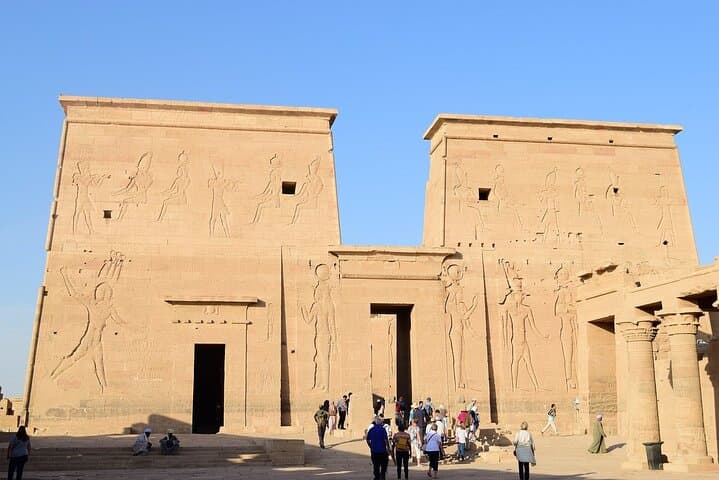
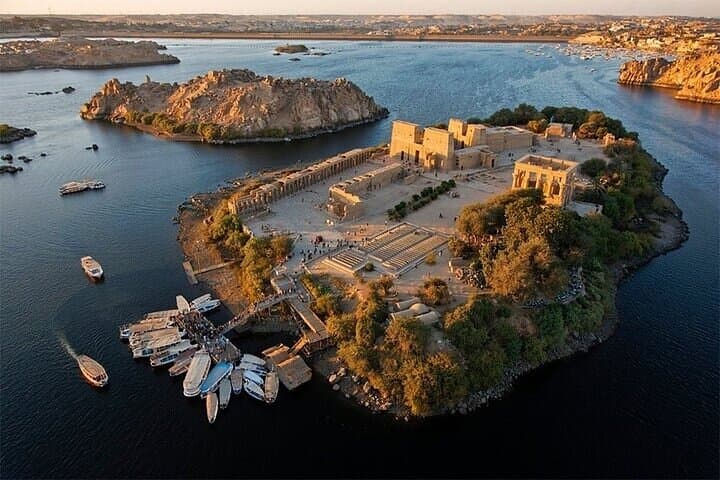
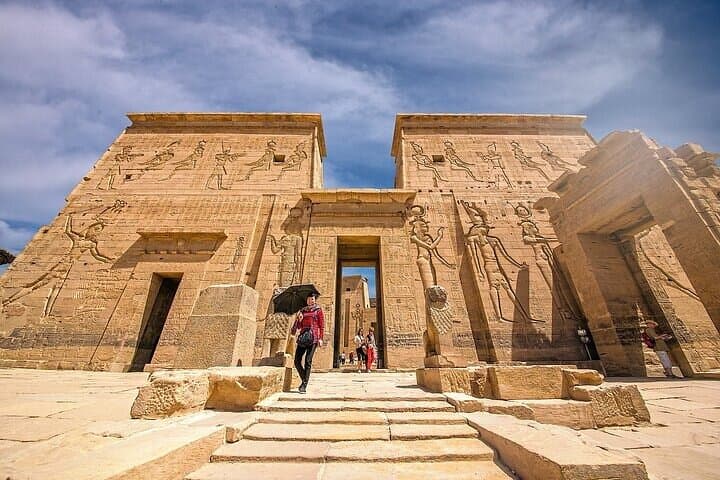
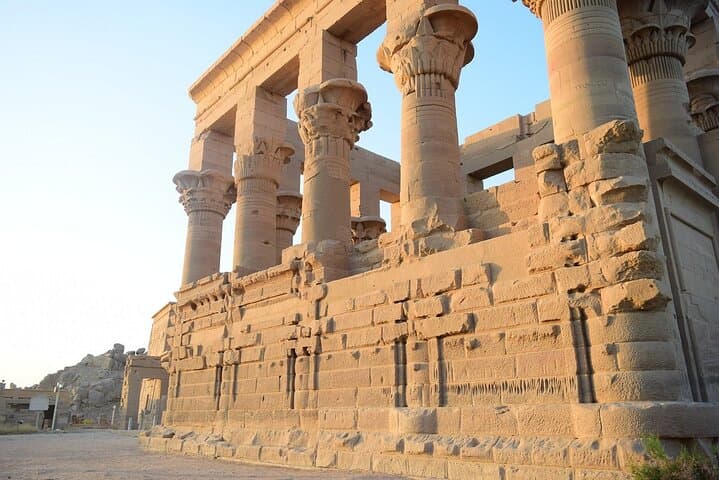
Hours later, Philae’s island complex reads more intimate: colonnades wrapped with ivy of history, the Temple of Isis with its well-preserved reliefs and a Nile shoreline that still hums with ritual and migration. Geology here is compact—ancient stones, granite outcrops and the slow, steady presence of the Nile that shaped settlement and faith.
Expect a long but gentle day: roughly 10–11 hours including about three hours each way on paved roads. You’ll move between guided segments and free time; the Premium option bundles entrance tickets and an Egyptologist guide. Bring sun protection and water, plan for early starts to beat midday heat, and expect some walking over uneven stone and steps.
This tour balances spectacle with context—monumental architecture, 20th‑century engineering, and a living river landscape—delivered in a single, immersive day from Aswan.
easy.
10–11 hours.
Suitable for most fitness levels; participants should be able to walk short distances on uneven stone and climb stairs.
The tour runs approximately 10–11 hours, including about 3 hours each way by road between Aswan and Abu Simbel and time at both temple sites.
Entrance tickets are included with the Premium Explorer option; other options may require you to purchase tickets or upgrades separately.
The itinerary is rated easy and transportation is wheelchair-accessible, but temple interiors include steps; contact the operator to arrange assistance or clarify accessibility needs.
Yes—options range from private transfers for independent exploration to Egyptologist-guided tours for in-depth interpretation.
Abu Simbel dates to the 13th century BCE under Ramses II; both sites reflect long histories from Pharaonic to Roman and Coptic eras, and Abu Simbel’s modern relocation in the 1960s saved it from Lake Nasser.
Relocation and ongoing conservation efforts protect these monuments from flooding and tourism pressures; visitors are asked to follow site rules to reduce wear on ancient stone.
Eyes of Egypt operates guided outdoor trips and adventures with an emphasis on safety, stewardship, and memorable experiences.
You leave Aswan before dawn and the desert stretches out like a slow-moving sea—heat already whispering across the tarmac as the road pushes you toward two very different faces of ancient Egypt.
You leave Aswan before dawn and the desert stretches out like a slow-moving sea—heat already whispering across the tarmac as the road pushes you toward two very different faces of ancient Egypt.
At Abu Simbel, sunlight climbs over four 20‑meter statues of Ramses II, revealing carved eyes and battle scenes that have watched the Nile’s changing fate for millennia. The monuments themselves are carved into Nubian sandstone and were painstakingly relocated in the 1960s when Lake Nasser rose after the High Dam—an engineering story as dramatic as the pharaoh’s carvings.
Hours later, Philae’s island complex reads more intimate: colonnades wrapped with ivy of history, the Temple of Isis with its well-preserved reliefs and a Nile shoreline that still hums with ritual and migration. Geology here is compact—ancient stones, granite outcrops and the slow, steady presence of the Nile that shaped settlement and faith.
Expect a long but gentle day: roughly 10–11 hours including about three hours each way on paved roads. You’ll move between guided segments and free time; the Premium option bundles entrance tickets and an Egyptologist guide. Bring sun protection and water, plan for early starts to beat midday heat, and expect some walking over uneven stone and steps.
This tour balances spectacle with context—monumental architecture, 20th‑century engineering, and a living river landscape—delivered in a single, immersive day from Aswan.