THE ADVENTURE COLLECTIVE® · Independent discovery and booking for outdoor travel

Take the Road to Hana without the stress of driving: a private small-group SUV tour that covers waterfalls, a black-sand beach, and a seaside brunch. Ideal for travelers who want local context and easy stops along one of Maui’s most famous coastal roads.
Take the Road to Hana without the stress of driving: a private small-group SUV tour that covers waterfalls, a black-sand beach, and a seaside brunch. Ideal for travelers who want local context and easy stops along one of Maui’s most famous coastal roads.
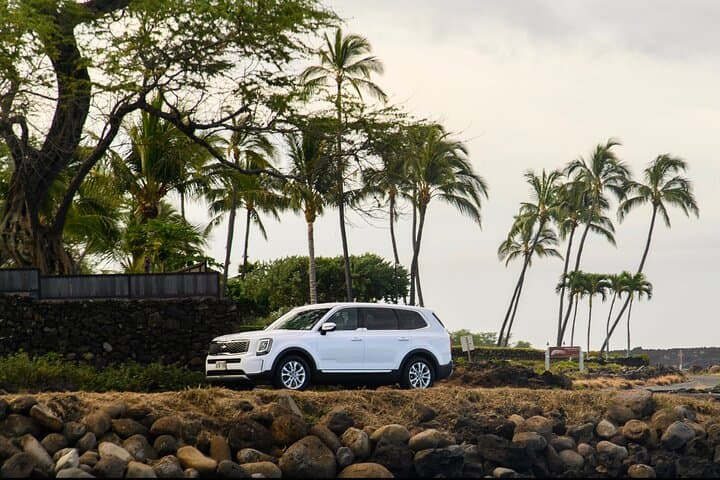
The van leaves Paia before the day softens; island light pours through rain-slicked eucalyptus and the driver’s voice slides into the cabin like a practiced storyteller. Curves count up quickly — 617, the guide says — and with each hairpin the landscape shifts: mango groves, braided waterfalls, stands of bamboo that hiss when the wind comes through. It’s a day built around motion and pause — the long, slow arc of the Road to Hana, with a private SUV and an included brunch giving the trip a relaxed rhythm.
Verified experiences and guided adventures in the surrounding area.
Operated by Maui Drivers · Paia, Hawaii
The van leaves Paia before the day softens; island light pours through rain-slicked eucalyptus and the driver’s voice slides into the cabin like a practiced storyteller. Curves count up quickly — 617, the guide says — and with each hairpin the landscape shifts: mango groves, braided waterfalls, stands of bamboo that hiss when the wind comes through. It’s a day built around motion and pause — the long, slow arc of the Road to Hana, with a private SUV and an included brunch giving the trip a relaxed rhythm.
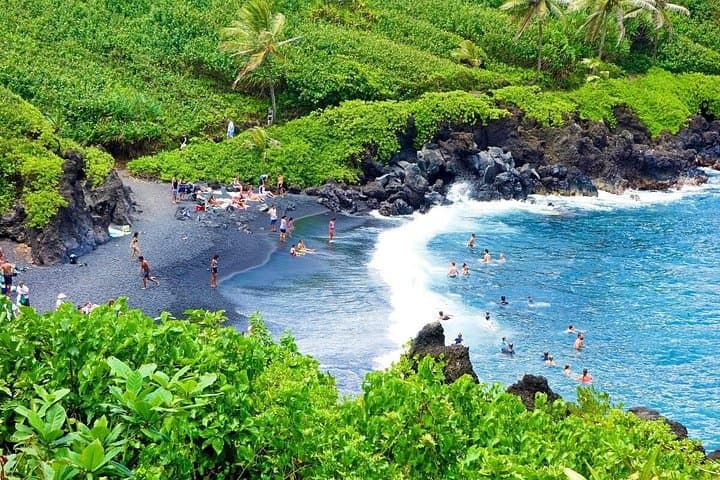
Geology here reads like a ledger of fire and water. Old lava flows from Haleakalā cooled into black stone, then centuries of tropical rain carved gullies and set waterfalls free. The black sand at Waiʻānapanapa is basalt made granular by waves; Ke'anae’s coastline keeps ancient taro lo‘i where Polynesian agriculture still marks the land. Cultural threads are visible everywhere — small stands selling banana bread, a profile of Hana town that still operates on local time, and sacred places where fishermen and families have worked for generations.
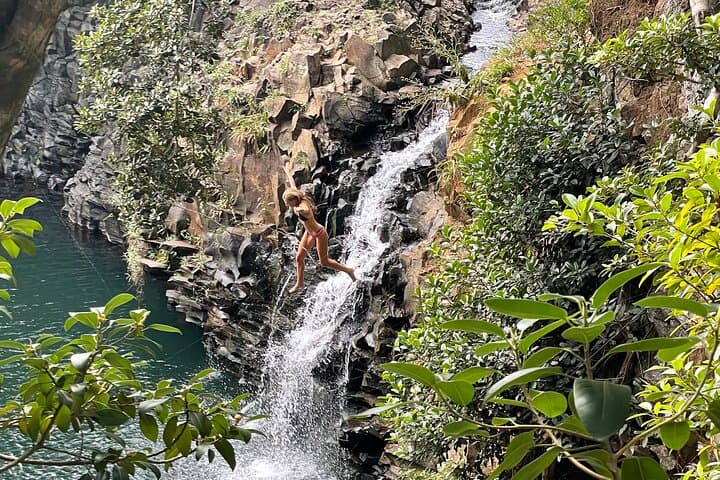
The itinerary balances famous stops and accessible detours: Twin Falls for a short wet-footed walk, the Ke'anae peninsula for a postcard view, the three bears falls when parking allows, Waiʻānapanapa State Park’s black sand and lava tube, and a long beach hour at Hamoa to close the loop. Guides share geology and oral history between stops, making the repetition of curves feel like chapters rather than just miles.
Practicality shapes the tour. Expect a full eight-hour day with lots of in-and-out of the vehicle and brief hikes on uneven surfaces. Bathrooms are sporadic — plan restroom stops early — and parking at popular viewpoints can be tight; arriving early at each stop is how the itinerary stays relaxed. The included brunch and bottled water take the edge off mid-day hunger, and the vehicle’s air conditioning is a small luxury on sunny stretches.
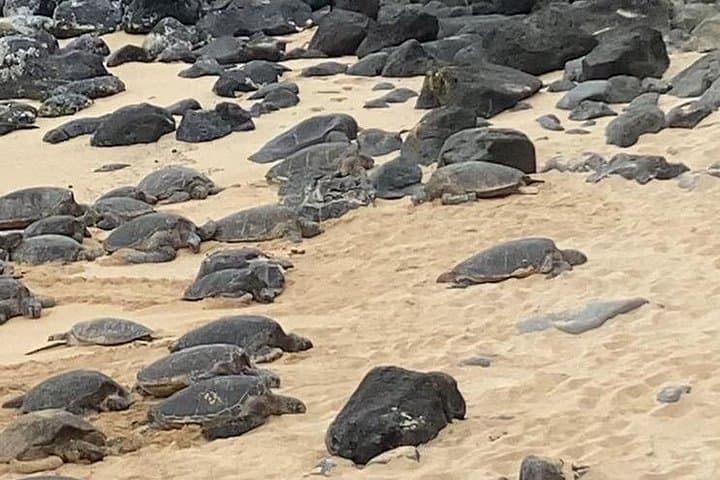
Safety and etiquette matter: don’t swim at powerful surf beaches, give sea turtles space, and follow state park rules at Waiʻānapanapa. For photographers, bring a waterproof cover and quick-access lens — waterfalls and spray mean you’ll want to keep gear dry while staying ready for a shot.
This tour is best for travelers who want an easy but immersive way to experience Hana’s coastline without driving themselves, who value local knowledge, and who are prepared for long days and short walks that lead to some of Maui’s most memorable views.
easy.
8 hours.
Suitable for most fitness levels — requires getting in and out of the vehicle and short, mostly easy walks.
The tour runs about 8 hours (480 minutes); exact pickup time depends on your hotel location — confirm with the operator at booking.
The route has many curves and one-lane bridges; passengers may experience motion sensitivity but the private SUV and stops make the day manageable.
Some stops allow wading and swimming when conditions are safe, but your guide will advise — avoid strong currents and heed posted warnings.
Restrooms are available at some larger stops and parks but are limited; use facilities at the start and during scheduled stops when possible.
The tour is marketed as accessible to most fitness levels and offers infant seats and wheelchair-accessible pickup; however, some short walks and uneven terrain may be challenging.
Bring shoes that can get sandy, a towel, and reef-safe sunscreen; avoid taking sand or rocks and follow park rules at Waiʻānapanapa.
The Hana coastline preserves traces of ancient Hawaiian agriculture like taro lo‘i and was an important regional hub long before plantation-era roads reshaped access.
Waiʻānapanapa and other coastal sites are ecologically sensitive—stick to marked paths, avoid collecting natural materials, and support local vendors to help sustain the community.
Maui Drivers operates guided outdoor trips and adventures with an emphasis on safety, stewardship, and memorable experiences.
The van leaves Paia before the day softens; island light pours through rain-slicked eucalyptus and the driver’s voice slides into the cabin like a practiced storyteller. Curves count up quickly — 617, the guide says — and with each hairpin the landscape shifts: mango groves, braided waterfalls, stands of bamboo that hiss when the wind comes through. It’s a day built around motion and pause — the long, slow arc of the Road to Hana, with a private SUV and an included brunch giving the trip a relaxed rhythm.
The van leaves Paia before the day softens; island light pours through rain-slicked eucalyptus and the driver’s voice slides into the cabin like a practiced storyteller. Curves count up quickly — 617, the guide says — and with each hairpin the landscape shifts: mango groves, braided waterfalls, stands of bamboo that hiss when the wind comes through. It’s a day built around motion and pause — the long, slow arc of the Road to Hana, with a private SUV and an included brunch giving the trip a relaxed rhythm.
Geology here reads like a ledger of fire and water. Old lava flows from Haleakalā cooled into black stone, then centuries of tropical rain carved gullies and set waterfalls free. The black sand at Waiʻānapanapa is basalt made granular by waves; Ke'anae’s coastline keeps ancient taro lo‘i where Polynesian agriculture still marks the land. Cultural threads are visible everywhere — small stands selling banana bread, a profile of Hana town that still operates on local time, and sacred places where fishermen and families have worked for generations.
The itinerary balances famous stops and accessible detours: Twin Falls for a short wet-footed walk, the Ke'anae peninsula for a postcard view, the three bears falls when parking allows, Waiʻānapanapa State Park’s black sand and lava tube, and a long beach hour at Hamoa to close the loop. Guides share geology and oral history between stops, making the repetition of curves feel like chapters rather than just miles.
Practicality shapes the tour. Expect a full eight-hour day with lots of in-and-out of the vehicle and brief hikes on uneven surfaces. Bathrooms are sporadic — plan restroom stops early — and parking at popular viewpoints can be tight; arriving early at each stop is how the itinerary stays relaxed. The included brunch and bottled water take the edge off mid-day hunger, and the vehicle’s air conditioning is a small luxury on sunny stretches.
Safety and etiquette matter: don’t swim at powerful surf beaches, give sea turtles space, and follow state park rules at Waiʻānapanapa. For photographers, bring a waterproof cover and quick-access lens — waterfalls and spray mean you’ll want to keep gear dry while staying ready for a shot.
This tour is best for travelers who want an easy but immersive way to experience Hana’s coastline without driving themselves, who value local knowledge, and who are prepared for long days and short walks that lead to some of Maui’s most memorable views.